Follow Me On Social Media!
Creamy Autumn Sausage Pasta with Squash (likely butternut)
A cozy fall pasta: farfalle tossed with roasted butternut squash, seared Italian sausage, Brussels sprouts and a silky Parmesan cream sauce. Make-ahead friendly and full of autumn flavor.

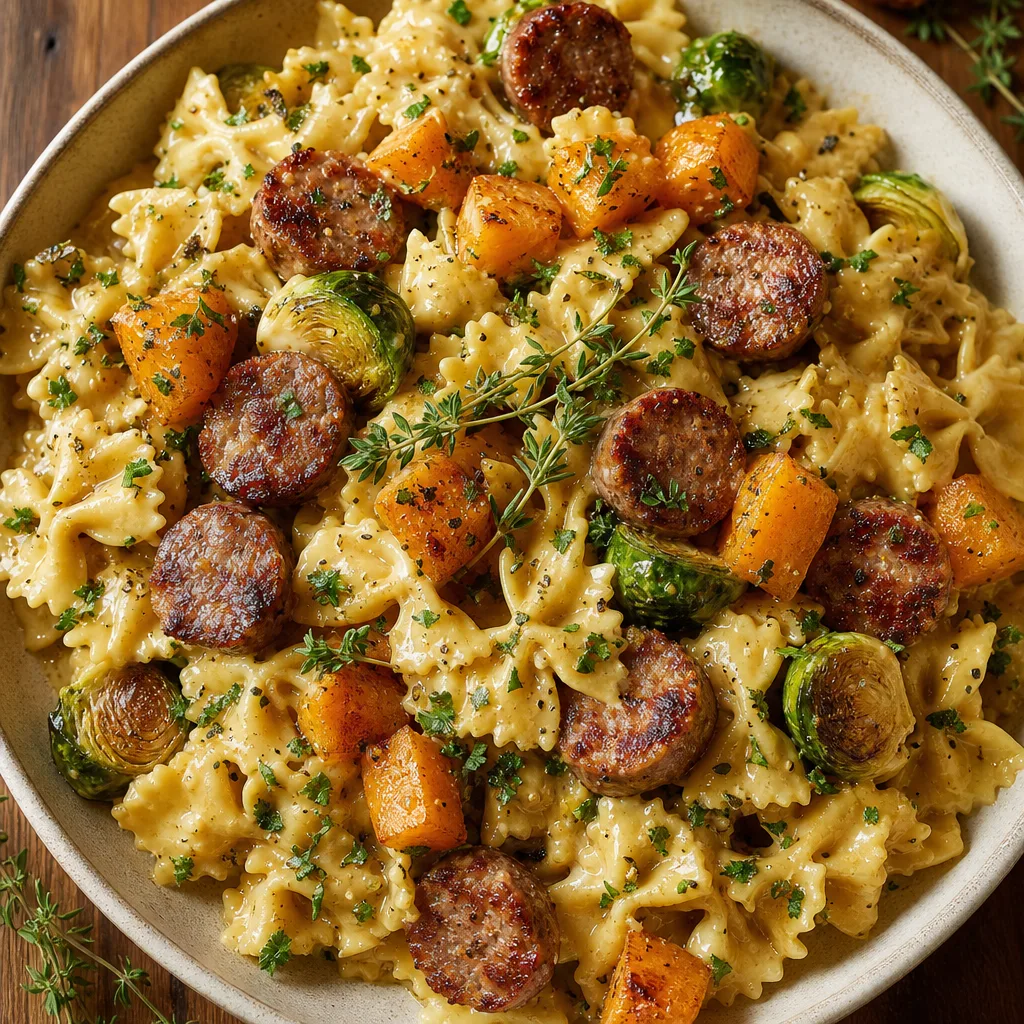
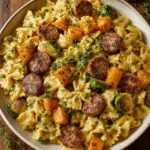
There’s something immediately comforting about a bowl of creamy pasta studded with roasted squash and browned sausage—warm colors, a glossy sauce, and a balance of sweet, savory and herbaceous notes that truly say “autumn dinner.” This Creamy Autumn Sausage Pasta with Squash (likely butternut) is built around those familiar fall flavors: nutty roasted squash cubes, caramelized edges on seared sausage, tender farfalle that holds sauce in its bow-tie pockets, and little pops of green from roasted Brussels sprouts. The combination feels both rustic and polished, perfect for weeknight family meals but impressive enough for guests.
I designed this recipe so the components can be prepped ahead of time, roasted quickly and then finished on the stovetop in one skillet for minimal cleanup. The sauce is a lightly enriched cream with chicken stock and Parmesan, just thick enough to cling to pasta without becoming heavy. Fresh thyme and lemon zest lift the richness and a final crack of black pepper gives a slightly peppery counterpoint. If you prefer more heat, a pinch of red pepper flakes wakes the whole dish up.
This is an adaptable, forgiving recipe. Swap sausage for a plant-based alternative, use pumpkin or kabocha instead of butternut, or choose a different short pasta shape if you can’t find farfalle—rigatoni, penne, or orecchiette all work well. In the instructions you’ll find timing and simple techniques for roasting squash and Brussels sprouts, searing sausage slices to develop a caramelized crust, and finishing everything together so the sauce absorbs savory sausage bits and the roasted vegetable sugars. Read on for the full ingredient list, step-by-step method, tips, make-ahead notes, variations and serving ideas to make this dish sing.
Why this combination works
The interplay of roasted squash, seared sausage and a lightly creamy sauce hits multiple flavor registers: sweet-roasted notes from the squash, savory and umami-rich fat from the sausage, and a silky mouthfeel from the cream and Parmesan. Farfalle is a smart pasta choice because its folds and pockets trap sauce and little bits of sausage and squash, so each bite contains multiple textures.
Roasting vegetables concentrates their natural sugars and creates caramelized edges which contrast the savory, slightly smoky crust on seared sausage. Fresh herbs like thyme and a finishing burst of lemon zest brighten the dish and prevent it from feeling one-dimensional. The final garnish—parsley, extra Parmesan and optional balsamic glaze—offers herbal lift, salty umami, and a hint of acidity.
Ingredient notes and substitutions
Butternut squash is recommended for its sweet, buttery flesh that roasts to a tender texture without falling apart too quickly. If you can’t find butternut, small sugar pumpkins, kabocha or even sweet potatoes can work; adjust roasting time for denser squash like kabocha.
For protein, Italian pork sausage gives a classic flavor profile; chicken or turkey sausages are leaner, while plant-based sausages maintain the dish’s texture for vegetarians. If using plant-based sausage, check salt levels and add seasoning at the end as needed.
Ingredients
- 12 ounces farfalle (bow-tie) pasta
- 1 pound Italian sausage links (mild or spicy), casings removed
- 1 small butternut squash (about 1.25–1.5 pounds), peeled, seeded and cut into 1-inch cubes
- 8 ounces Brussels sprouts, trimmed and halved
- 2 tablespoons olive oil
- 1 tablespoon unsalted butter
- 1 medium shallot, finely chopped
- 3 cloves garlic, minced
- 3/4 cup heavy cream
- 3/4 cup low-sodium chicken broth
- 3/4 cup grated Parmesan cheese, plus extra for serving
- 1 teaspoon fresh thyme leaves, plus extra sprigs for garnish
- 1/2 teaspoon lemon zest
- 1/4 teaspoon red pepper flakes (optional)
- Salt to taste
- Freshly ground black pepper to taste
- 1/4 cup chopped fresh parsley (for garnish)
- 1 tablespoon balsamic glaze (optional, for finishing)
- Water for pasta cooking
- 2 teaspoons olive oil (extra for drizzling over squash and sprouts before roasting)
Instructions
- Preheat the oven to 425°F (220°C). Line a rimmed baking sheet with parchment paper or foil and set aside. [ing3, ing4, ing2, ing18]
- Toss the butternut squash cubes with 1 teaspoon olive oil and a pinch of salt on one side of the baking sheet so they have room to roast rather than steam. Spread the halved Brussels sprouts on the other side of the sheet, drizzle with the remaining 1 teaspoon olive oil, and season with salt and pepper. [ing3, ing4, ing18, ing14]
- Roast squash and Brussels sprouts until tender and caramelized at the edges, about 20–25 minutes, turning once halfway through so both sides develop color. Remove from oven and keep warm. [ing3, ing4]
- Bring a large pot of salted water to a rolling boil and cook the farfalle until al dente according to package directions, usually 10–12 minutes. Reserve 1 cup of pasta cooking water, then drain the pasta. [ing1, ing17]
- While the pasta cooks, heat a large skillet over medium-high heat. Add 1 tablespoon olive oil and 1 tablespoon butter. Crumble the sausage into the skillet (or slice into medallions if you prefer) and cook until well browned with some seared crust, about 6–8 minutes. Break up larger pieces so you have a mix of small crumbles and bite-sized medallions. Transfer the cooked sausage to a bowl, leaving rendered fat in the skillet. [ing2, ing5, ing6]
- Reduce the heat to medium. Add the chopped shallot to the skillet and sauté in the sausage fat until translucent, 2–3 minutes. Add the minced garlic and cook 30–45 seconds until fragrant but not browned. [ing7, ing8]
- Pour in the chicken broth and heavy cream, stirring to deglaze the pan and lift flavorful browned bits from the bottom. Bring to a gentle simmer, then add the grated Parmesan cheese and stir until the sauce thickens slightly, 2–3 minutes. If the sauce becomes too thick, loosen it with some reserved pasta water, 1–2 tablespoons at a time. [ing9, ing10, ing11, ing17]
- Return the cooked sausage to the skillet along with the roasted squash and Brussels sprouts. Fold gently so squash cubes don’t fall apart, and heat through for 2–3 minutes so flavors marry. Taste and adjust seasoning with salt, pepper and red pepper flakes if using. [ing2, ing3, ing4, ing14, ing13]
- Add the drained farfalle to the skillet and toss everything together, adding up to 1/2 cup reserved pasta water if needed to achieve a glossy, clingy sauce that coats the pasta. Stir in the fresh thyme leaves and lemon zest. [ing1, ing10, ing12, ing14]
- Remove from heat and finish with chopped parsley and an extra grating of Parmesan. If desired, drizzle a little balsamic glaze over individual bowls for a subtle sweet-acid contrast. Garnish with whole thyme sprigs and serve immediately with additional black pepper. [ing15, ing11, ing12, ing19, ing14]
Pro Tips
- Cut your squash into uniform 1-inch cubes so they roast evenly; smaller pieces will caramelize and soften faster while larger pieces can stay underdone.
- If you’re short on oven space, roast squash and Brussels sprouts on separate baking sheets to avoid overcrowding; crowded vegetables steam instead of caramelize.
- Reserve a full cup of pasta water before draining—starchy pasta water is the secret to achieving a silky sauce that clings to the pasta.
- Don’t rush browning the sausage. Let it sear without constant stirring for a minute or two so it develops those flavorful mahogany edges.
- If the cream sauce tastes too rich, brighten it with an extra teaspoon of lemon zest or a splash of white wine while it simmers.
- Use freshly grated Parmesan rather than pre-shredded cheeses for the best melting and flavor; pre-shredded often contains anti-caking agents that affect texture.
- To make a lighter version, substitute half-and-half for heavy cream and reduce the Parmesan slightly; the sauce will be lighter but still flavorful.
- If the roasted squash begins to fall apart when tossed into the sauce, fold gently with a silicone spatula and add it at the end so it warms rather than cooks further.
- For easy weeknight prep, roast the squash and Brussels sprouts the day before and refrigerate; reheat briefly in the skillet when finishing the dish.
- Taste and adjust seasoning near the end—roasted squash can add sweetness that hides salt, so sample before serving and add salt or lemon accordingly.
Variations
- Vegetarian: Replace the sausage with chopped cremini mushrooms and toasted walnuts for an earthy, protein-rich alternative; sauté mushrooms until deeply browned and fold in toasted walnuts near the end.
- Sausage swap: Use spicy Italian sausage for a bolder kick or chicken sausage for a leaner profile; cooking method remains the same—brown well before combining with sauce.
- Pumpkin or kabocha variation: Swap butternut for cubed pumpkin or kabocha squash. Roast until caramelized—kabocha’s dense flesh holds up particularly well and adds a nuttier taste.
- Cheesy bake: After combining pasta and sauce, transfer to a baking dish, top with extra Parmesan and breadcrumbs, then broil briefly until golden for a gratin-style finish.
Serving Suggestions
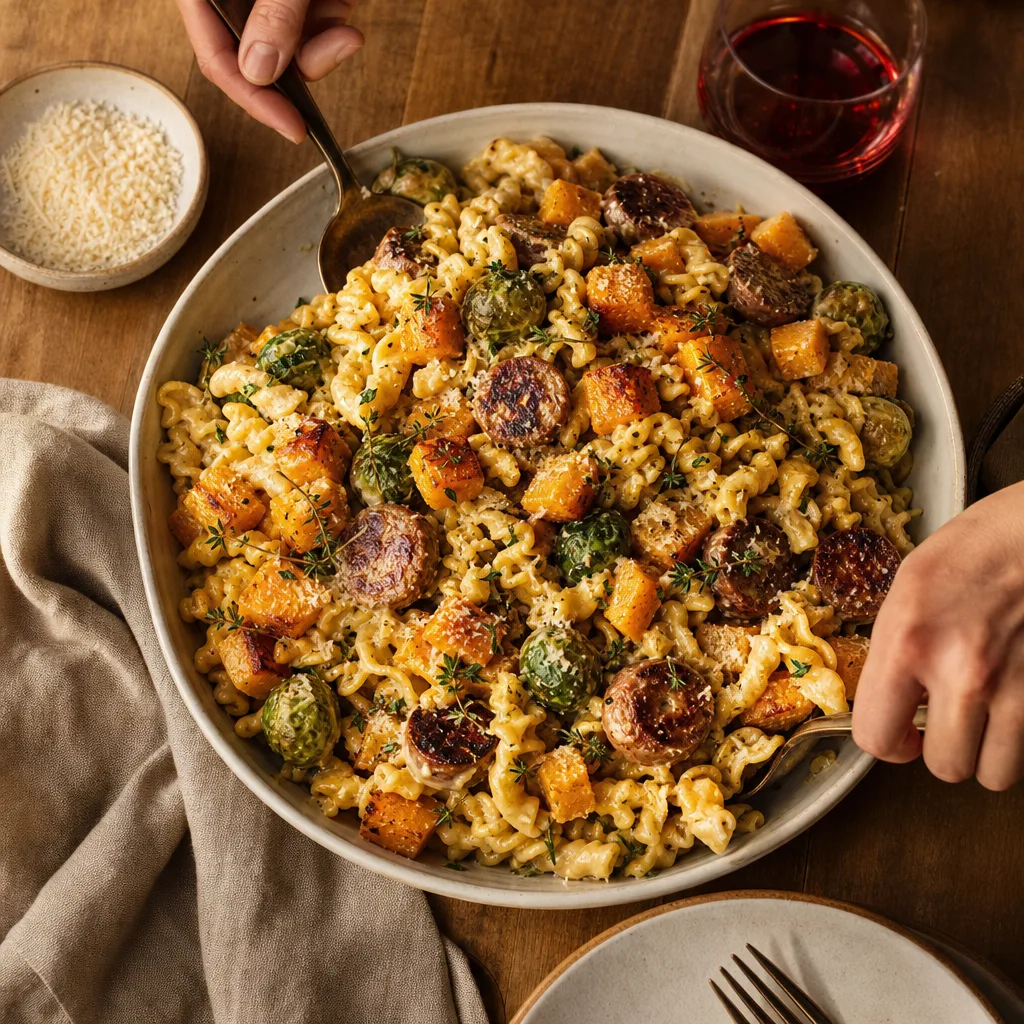
- Serve the pasta family-style in a shallow bowl with extra Parmesan in a small dish for guests to add to taste.
- Pair this dish with a crisp green salad dressed with lemon vinaigrette to cut through the creaminess and add a bright contrast.
- Offer crusty bread or garlic focaccia on the side to mop up any remaining sauce on the plate; a drizzle of extra-virgin olive oil over the bread is lovely.
- For wine pairing, choose a medium-bodied white like a Chardonnay with light oak or a light red such as Pinot Noir—both complement roasted squash and sausage.
Make-ahead and meal prep
Roast the squash and Brussels sprouts a day ahead and store them in airtight containers in the refrigerator. Keep cooked sausage in a separate container. On the day you want to serve, cook the pasta and finish everything together on the stovetop—this yields a fresher result than fully assembling and reheating the whole dish.
You can also prep the shallot and garlic in advance, and grate the Parmesan early. If serving for a crowd, double the roasted vegetables and sausage and combine in a large shallow pan, warming through before adding pasta to serve family-style.
Storage and Reheating
Store leftovers in an airtight container in the refrigerator for up to 3 days. Reheat gently in a skillet over low heat with a splash of chicken broth or water to loosen the sauce; heat just until warmed through to avoid overcooking the squash. Alternatively, reheat single portions in the microwave in 30-second intervals, stirring and adding a teaspoon of liquid between intervals to maintain a creamy texture.
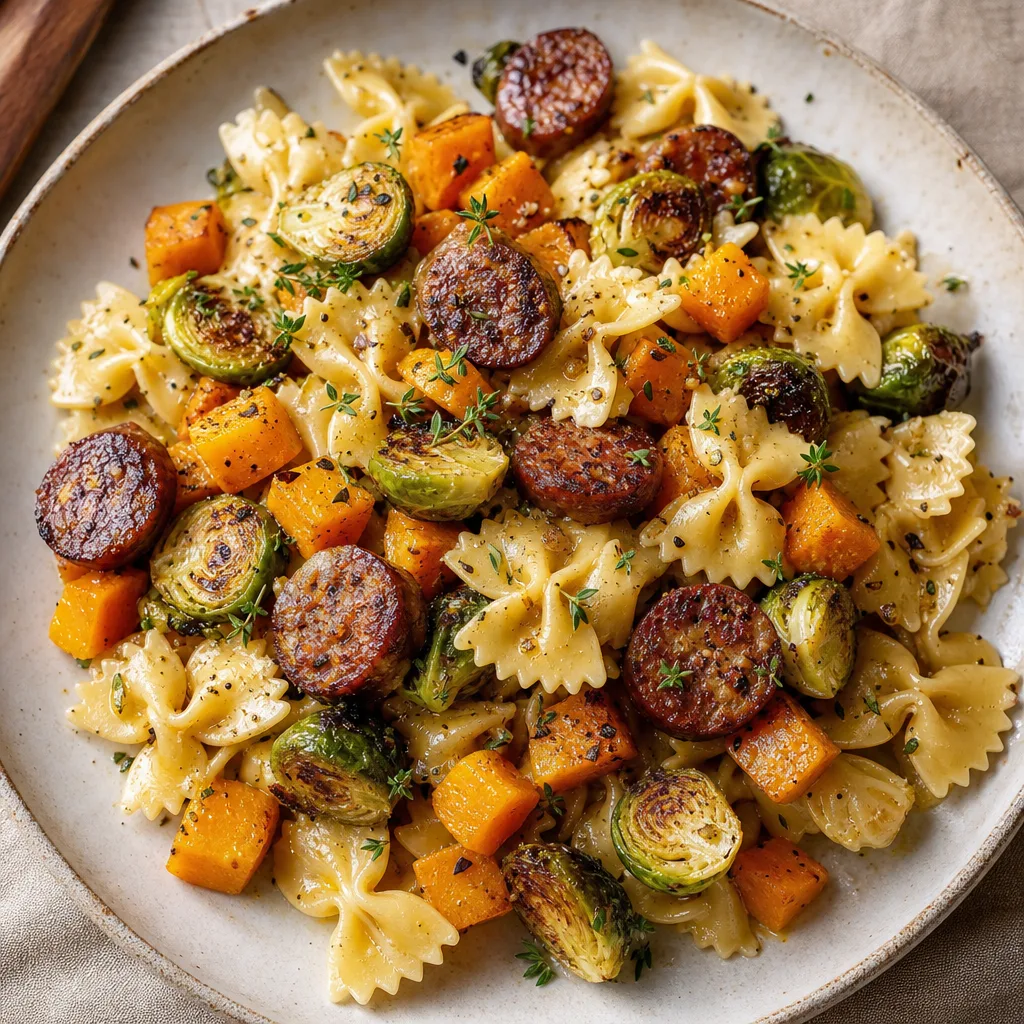
Creamy Autumn Sausage Pasta with Squash (likely butternut)
Short pasta tossed with roasted butternut squash, seared Italian sausage and Brussels sprouts in a light Parmesan cream sauce, finished with thyme and lemon zest for a bright autumn meal.
Ingredients
Equipment
Method
- Preheat the oven to 425°F (220°C). Line a rimmed baking sheet with parchment paper or foil and set aside.
- Toss the butternut squash cubes with 1 teaspoon olive oil and a pinch of salt on one side of the baking sheet so they have room to roast rather than steam. Spread the halved Brussels sprouts on the other side of the sheet, drizzle with the remaining 1 teaspoon olive oil, and season with salt and pepper.
- Roast squash and Brussels sprouts until tender and caramelized at the edges, about 20–25 minutes, turning once halfway through so both sides develop color. Remove from oven and keep warm.
- Bring a large pot of salted water to a rolling boil and cook the farfalle until al dente according to package directions, usually 10–12 minutes. Reserve 1 cup of pasta cooking water, then drain the pasta.
- While the pasta cooks, heat a large skillet over medium-high heat. Add 1 tablespoon olive oil and 1 tablespoon butter. Crumble the sausage into the skillet (or slice into medallions if you prefer) and cook until well browned with some seared crust, about 6–8 minutes. Break up larger pieces so you have a mix of small crumbles and bite-sized medallions. Transfer the cooked sausage to a bowl, leaving rendered fat in the skillet.
- Reduce the heat to medium. Add the chopped shallot to the skillet and sauté in the sausage fat until translucent, 2–3 minutes. Add the minced garlic and cook 30–45 seconds until fragrant but not browned.
- Pour in the chicken broth and heavy cream, stirring to deglaze the pan and lift flavorful browned bits from the bottom. Bring to a gentle simmer, then add the grated Parmesan cheese and stir until the sauce thickens slightly, 2–3 minutes. If the sauce becomes too thick, loosen it with some reserved pasta water, 1–2 tablespoons at a time.
- Return the cooked sausage to the skillet along with the roasted squash and Brussels sprouts. Fold gently so squash cubes don’t fall apart, and heat through for 2–3 minutes so flavors marry. Taste and adjust seasoning with salt, pepper and red pepper flakes if using.
- Add the drained farfalle to the skillet and toss everything together, adding up to 1/2 cup reserved pasta water if needed to achieve a glossy, clingy sauce that coats the pasta. Stir in the fresh thyme leaves and lemon zest.
- Remove from heat and finish with chopped parsley and an extra grating of Parmesan. If desired, drizzle a little balsamic glaze over individual bowls for a subtle sweet-acid contrast. Garnish with whole thyme sprigs and serve immediately with additional black pepper.
Notes
Quantities and times are authored for this recipe and not inferred from any image.
Adjust seasoning to your taste and consider dietary substitutions if needed.
Frequently Asked Questions
Can I make this dairy-free or vegan?
Yes. Replace the heavy cream with full-fat coconut milk or a cashew cream and use a dairy-free Parmesan alternative or nutritional yeast for cheesiness. Substitute sausage with a plant-based sausage or marinated tempeh. Be mindful that coconut milk will impart a slight sweetness and coconut flavor; cashew cream has a more neutral, creamy profile.
What is the best way to brown the sausage without it drying out?
Use medium-high heat and allow the sausage to sit undisturbed for the first minute or two of searing so it forms a crust. Cook in batches if necessary to avoid overcrowding the pan—too many pieces lower the pan temperature and cause steaming instead of browning. Remove the sausage slightly underdone if you’ll finish it in the sauce, since it will finish cooking during the final simmer.
Can I use dried herbs instead of fresh thyme?
Yes. Use about one-third of the amount of dried thyme compared to fresh because dried herbs are more concentrated: roughly 1/3 teaspoon dried thyme in place of 1 teaspoon fresh. Add dried herbs earlier in the cooking process to allow them to rehydrate and release their aroma.
How do I prevent the roasted squash from becoming mushy?
Don’t overcrowd the baking sheet and keep the cubes roughly the same size for even roasting. Roast at a hot temperature (around 425°F / 220°C) and avoid stirring too often—turn once halfway. Also, wait until the pasta is almost done before adding squash to the skillet so it isn’t heated excessively once combined.
Can I freeze leftover pasta with cream sauce?
Creamy pasta freezes, but texture can change—the sauce may separate slightly on thawing. If you plan to freeze, undercook the pasta by a minute, cool completely, and pack in a freezer-safe container with a little extra liquid (chicken broth). Thaw overnight in the refrigerator and reheat gently in a skillet with additional broth, whisking to reincorporate the sauce.