Follow Me On Social Media!
Biscoff-style cookie butter cinnamon rolls
Make glossy Biscoff-style cookie butter cinnamon rolls with a tender yeasted dough, brown-sugar filling, cookie-butter glaze and crunchy spiced cookie crumble. Step-by-step recipe for bakery-style breakfast rolls.

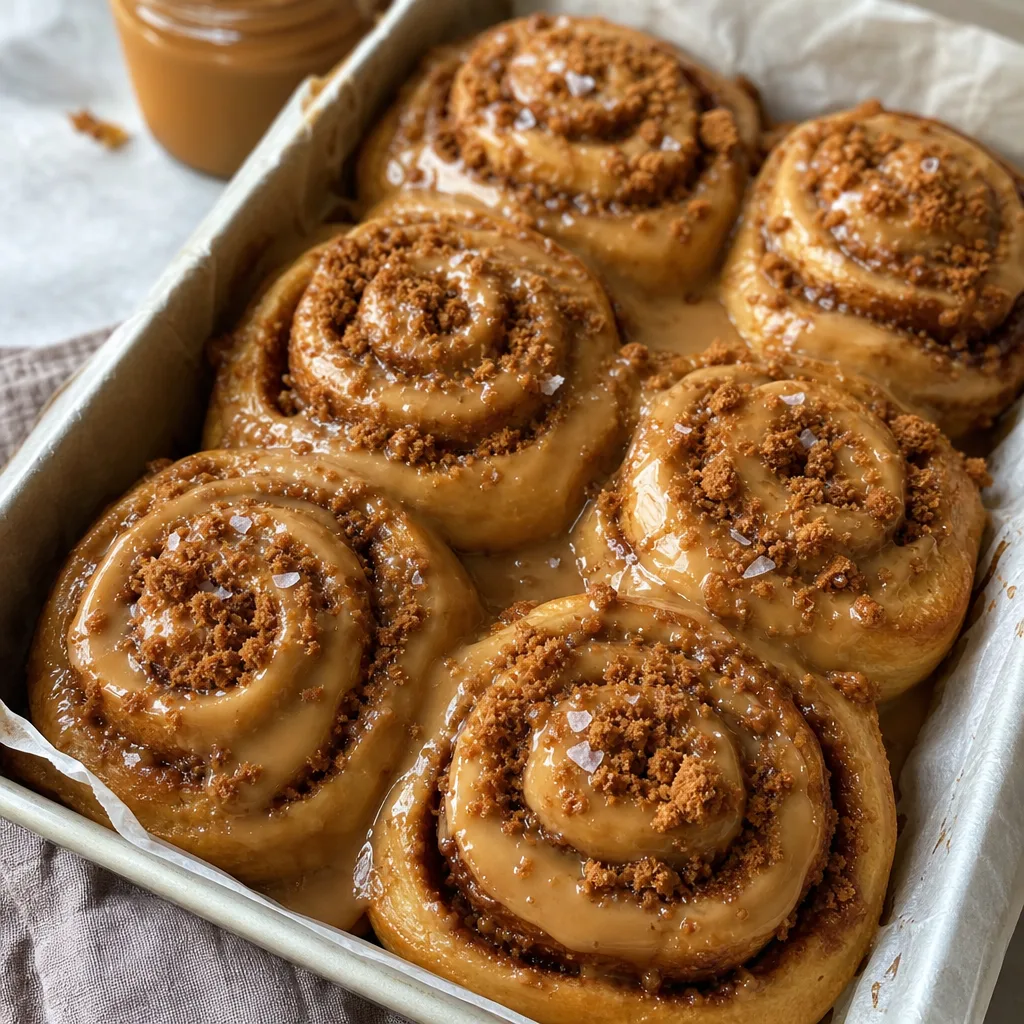
These Biscoff-style cookie butter cinnamon rolls combine the pillowy, yeasted dough of a classic cinnamon roll with the warm caramel-spiced flavor of cookie butter. The result is a decadent morning bun that feels both familiar and novel: a soft, layered roll swirled with a brown-sugar and cookie-butter-spiced filling, finished with a glossy tan cookie-butter glaze and a satisfying crumble of crushed spiced cookies on top. This version keeps the techniques approachable for home bakers while packing maximum flavor.
I developed this recipe to recreate that irresistible combination of soft, layered dough and the spice-forward, caramel-biscuit notes of cookie butter. The dough is enriched with butter and egg so the crumb stays tender and slightly rich. The filling is a simple mix of brown sugar, cinnamon and melted butter, boosted by a generous layer of cookie butter that melts into the spiral while the rolls bake. After baking, a creamy, pourable cookie-butter glaze is spooned over the warm rolls so it pools slightly and creates the glossy tan finish seen in the inspiration imagery. Finally, crushed spiced cookies add textural contrast and a crunchy spiced accent.
These rolls are ideal for weekend breakfasts, holiday brunches or whenever you want a bakery-style treat at home. They keep well for a couple of days at room temperature if stored properly and reheat beautifully. Below you'll find step-by-step instructions, ingredient notes, make-ahead options, tips to ensure the best rise and texture, plus variations to adjust sweetness and spice levels. Whether you make them as an indulgent single-batch or double the recipe for a crowd, these cookie butter cinnamon rolls are designed to deliver a glossy, aromatic, pull-apart tray of sweet buns that look as good as they taste.
Why this recipe works
This recipe balances structure and tenderness by using an enriched yeasted dough. The egg and softened butter add richness, which yields a soft, pillowy crumb that still holds the filling during rolling. The dough is firm enough to develop defined spirals but tender enough to provide that melt-in-your-mouth texture expected from a bakery-style roll.
The flavor architecture is layered: brown sugar and cinnamon form the classic base, while cookie butter contributes concentrated caramelized, spiced biscuit notes. Warming the cookie butter before spreading helps it meld into the sugar mixture during baking, creating pockets of intensified flavor that contrast with the soft dough. A pourable glaze made with cookie butter and powdered sugar finishes everything with the glossy tan appearance and the slightly viscous texture seen in the visual reference.
Ingredient notes and sensible substitutions
All-purpose flour gives structure without weighing the rolls down. For a slightly richer crumb, substitute up to 25% of the flour with bread flour, but avoid making the dough too strong or the rolls may feel chewy. Instant yeast is convenient and predictable; if you use active dry yeast, dissolve it in the warm milk with a teaspoon of sugar and let bloom for 5–10 minutes before mixing.
Cookie butter is the defining flavor here. If you substitute with peanut butter or almond butter, reduce the quantity slightly and increase the brown sugar for balance. If you prefer less sweetness, use a smaller amount of cookie butter in the glaze and balance with extra powdered sugar or milk until you reach the desired glaze thickness.
Ingredients
- All-purpose flour — 4 1/2 cups (540 g)
- Instant yeast — 2 1/4 teaspoons (one 7 g packet)
- Warm milk (about 110°F / 43°C) — 1 cup (240 ml)
- Granulated sugar — 1/4 cup (50 g)
- Salt — 1 1/2 teaspoons
- Unsalted butter, softened — 6 tablespoons (85 g) plus 3 tablespoons (45 g) melted
- Large egg — 1
- Brown sugar, packed — 1/2 cup (110 g)
- Ground cinnamon — 2 teaspoons
- Cookie butter (Biscoff-style) — 1 cup (250 g) divided (about 2/3 cup for filling, 1/3 cup for glaze)
- Powdered (confectioners') sugar — 1 1/2 cups (180 g)
- Vanilla extract — 1 teaspoon
- Milk (for glaze thinning) — 2 to 4 tablespoons (30–60 ml)
- Crushed spiced cookies (Biscoff or similar) — 1/2 cup (60 g) for topping
- Vegetable oil (or neutral oil) — 1 teaspoon
- Warm water — 2 tablespoons (30 ml) (if needed to loosen dough)
- Salt (for glaze) — a large pinch
- Optional coarse sea salt — to taste (for sprinkling)
- Nonstick cooking spray or extra butter — for pan
Instructions
- Prepare the dough base: In the bowl of a stand mixer fitted with the dough hook, combine 2 cups (240 g) of the all-purpose flour, the instant yeast, warm milk, granulated sugar, salt, softened butter (6 tablespoons / 85 g) and the egg. Start mixing on low speed until combined, about 1 minute. Increase speed to medium and add the remaining flour gradually, 1/2 cup (60 g) at a time, until a soft, slightly tacky dough forms. If the dough feels too dry, add up to 2 tablespoons (30 ml) warm water. If it is overly sticky, add a tablespoon of flour at a time until manageable. (Ingredients used: all-purpose flour — id_ing1, instant yeast — id_ing2, warm milk — id_ing3, granulated sugar — id_ing4, salt — id_ing5, unsalted butter (softened) — id_ing6, large egg — id_ing7, warm water — id_ing14)
- Knead and rest: Knead the dough in the mixer on medium speed for 6–8 minutes, or knead by hand on a lightly floured surface for about 8–10 minutes, until the dough is smooth, elastic and slightly springy. Shape into a ball. Lightly oil a large bowl with vegetable oil and place the dough inside, turning once to coat. Cover with plastic wrap or a clean towel and let rise in a warm, draft-free spot until doubled in size, about 60–75 minutes depending on ambient temperature. (Ingredients used: vegetable oil — id_ing13)
- Prepare the filling: While the dough rises, mix the brown sugar, ground cinnamon and 3 tablespoons (45 g) melted butter in a medium bowl until the mixture is crumbly and spreadable. Reserve the cookie butter for warming: transfer about 2/3 cup (approximately 165 g) of cookie butter to a small microwave-safe bowl and warm for 20–30 seconds until spreadable but not runny. Stir to smooth. Set both mixtures aside. (Ingredients used: brown sugar — id_ing8, ground cinnamon — id_ing9, unsalted butter (melted) — id_ing6, cookie butter — id_ing10)
- Shape and roll the dough: When the dough has doubled, gently punch it down and transfer to a lightly floured surface. Roll the dough into a large rectangle about 12 x 18 inches (30 x 45 cm) and roughly 1/4-inch (6 mm) thick, dusting with flour as needed to prevent sticking. Spread the warmed cookie butter evenly over the dough, leaving a 1/2-inch border on one long edge. Sprinkle the brown-sugar–cinnamon mixture evenly over the cookie butter layer, pressing lightly so it adheres. (Ingredients used: cookie butter — id_ing10, brown sugar — id_ing8, ground cinnamon — id_ing9, all-purpose flour — id_ing1)
- Roll and cut: Beginning at the long edge opposite the border, tightly roll the dough into a log. Pinch the seam and ends to seal. Using a sharp serrated knife or unflavored dental floss, cut the log into 12 equal pieces (for large rolls) or 15–16 for slightly smaller ones. Arrange the rolls spaced slightly apart in a parchment-lined 9 x 13-inch (23 x 33 cm) baking pan or in two 8-inch round pans for a clustered look, leaving a little room for expansion. Cover loosely with plastic wrap and allow to proof for 30–45 minutes, or until puffy. (Ingredients used: none additional)
- Preheat oven: About 15 minutes before baking, preheat the oven to 350°F (175°C). If you like a more caramelized finish, increase to 375°F (190°C) for the final 5–8 minutes of baking; watch carefully to avoid darkening. (Ingredients used: none)
- Bake the rolls: Bake the rolls on the middle rack for 22–28 minutes, until the tops are golden and the centers are cooked through. If the pan is dark, check at the lower end of the time range. Remove from the oven and let the rolls rest for 5–8 minutes so they settle slightly before glazing. (Ingredients used: none)
- Make the cookie-butter glaze: While the rolls rest, prepare the glaze. Whisk together the remaining cookie butter (about 1/3 cup / 85 g), powdered sugar, vanilla extract and a large pinch of salt. Add 2 tablespoons (30 ml) of milk and whisk until smooth and pourable. If the glaze is too thick, add milk 1 teaspoon at a time until you reach a glossy, slightly viscous consistency that will drizzle but still cling to the rolls. Taste and adjust a pinch more salt if needed to balance sweetness. (Ingredients used: cookie butter — id_ing10, powdered sugar — id_ing11, vanilla extract — id_ing12, milk — id_ing3, salt (for glaze) — id_ing15)
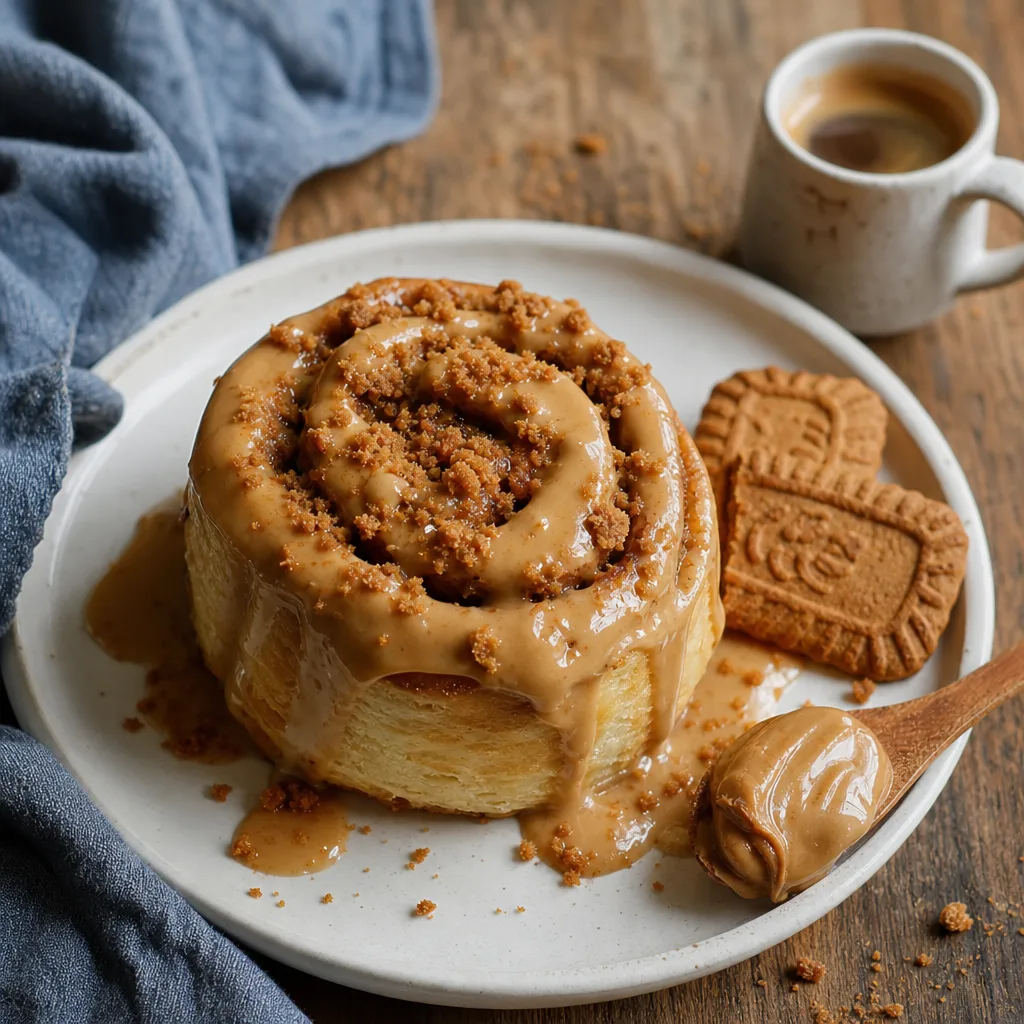
- Glaze and top: Spoon the glaze generously over the warm rolls so it pools in the spirals and drips down the sides. Immediately sprinkle the crushed spiced cookies evenly across the tops so they stick to the glaze. If desired, finish with a light sprinkling of coarse sea salt to enhance flavor contrast. Allow the glaze to set for 10–15 minutes before serving warm. (Ingredients used: crushed spiced cookies — id_ing16, coarse sea salt (optional) — id_ing17)
- Storage and reheating: Store leftover rolls in an airtight container at room temperature for up to 48 hours, or refrigerate for up to 4 days. To reheat, warm individual rolls in the microwave for 12–20 seconds or reheat in a 325°F (165°C) oven for 6–8 minutes until warmed through and the glaze softens. (Ingredients used: none)
Pro Tips
- Temperature matters: Aim for milk around 105–115°F (40–46°C) when activating yeast; too hot will kill yeast while too cool slows the rise.
- Use room-temperature butter and egg: These incorporate more evenly into the dough and help the dough rise predictably.
- Don’t over-flour the dough: Add just enough flour to make handling manageable; too much flour yields dense rolls.
- Warm the cookie butter slightly for easy spreading: Cookie butter can be thick at room temperature; warming it makes spreading consistent without thinning the filling too much.
- Cut with dental floss for clean slices: Unflavored floss produces neat edges without squashing delicate spirals, preserving swirl definition.
Variations
- Maple-caramel swirl: Replace half the cookie butter in the filling with maple butter or thick maple syrup and finish with a maple-caramel glaze.
- Cream cheese swirl: Mix 4 ounces (115 g) softened cream cheese with 2 tablespoons powdered sugar and spread a thin layer over the cookie-butter layer before sprinkling the brown-sugar mix.
- Nut-studded rolls: Add 1/2 cup chopped toasted pecans or hazelnuts to the brown-sugar filling for crunch and toasty flavor.
- Chocolate-streaked: Scatter 3/4 cup mini chocolate chips over the cookie-butter layer before rolling for pockets of melted chocolate in the baked spirals.
Serving Suggestions
- Serve warm with a simple espresso or a latte to cut through the sweetness and highlight the spice notes.
- Plate with fresh sliced apples or pears for a light fruit contrast that pairs well with the cinnamon and cookie-butter flavors.
- Offer alongside a small bowl of extra warmed cookie butter for dipping if you want a decadent presentation.
- Turn them into a dessert course by serving with a scoop of vanilla bean ice cream and a drizzle of warm caramel.
Make-ahead and freezing tips
The dough can be made the evening before and refrigerated after the first rise to develop more complex flavor. Alternatively, shape the rolls, place them in the pan, and refrigerate overnight for a slow proof. This method is excellent for holiday mornings when you want freshly baked rolls with minimal morning effort.
To freeze baked rolls, cool completely, wrap the pan tightly with plastic wrap and a layer of foil, then freeze for up to 2 months. Thaw in the refrigerator overnight and reheat in a 325°F (165°C) oven until warmed through. Re-glaze lightly if desired after reheating.
Storage and Reheating
To store, cool rolls completely and keep them in an airtight container at room temperature for up to 48 hours or refrigerate for up to 4 days. For longer storage, freeze airtight for up to 2 months; thaw overnight in the refrigerator and warm gently in a 325°F (165°C) oven for 8–12 minutes. To refresh chilled or frozen rolls, microwave for 12–20 seconds per roll or reheat in the oven until just warmed. If the glaze has firmed, spoon a little warmed cookie butter or a splash of milk over the top before serving to restore sheen.
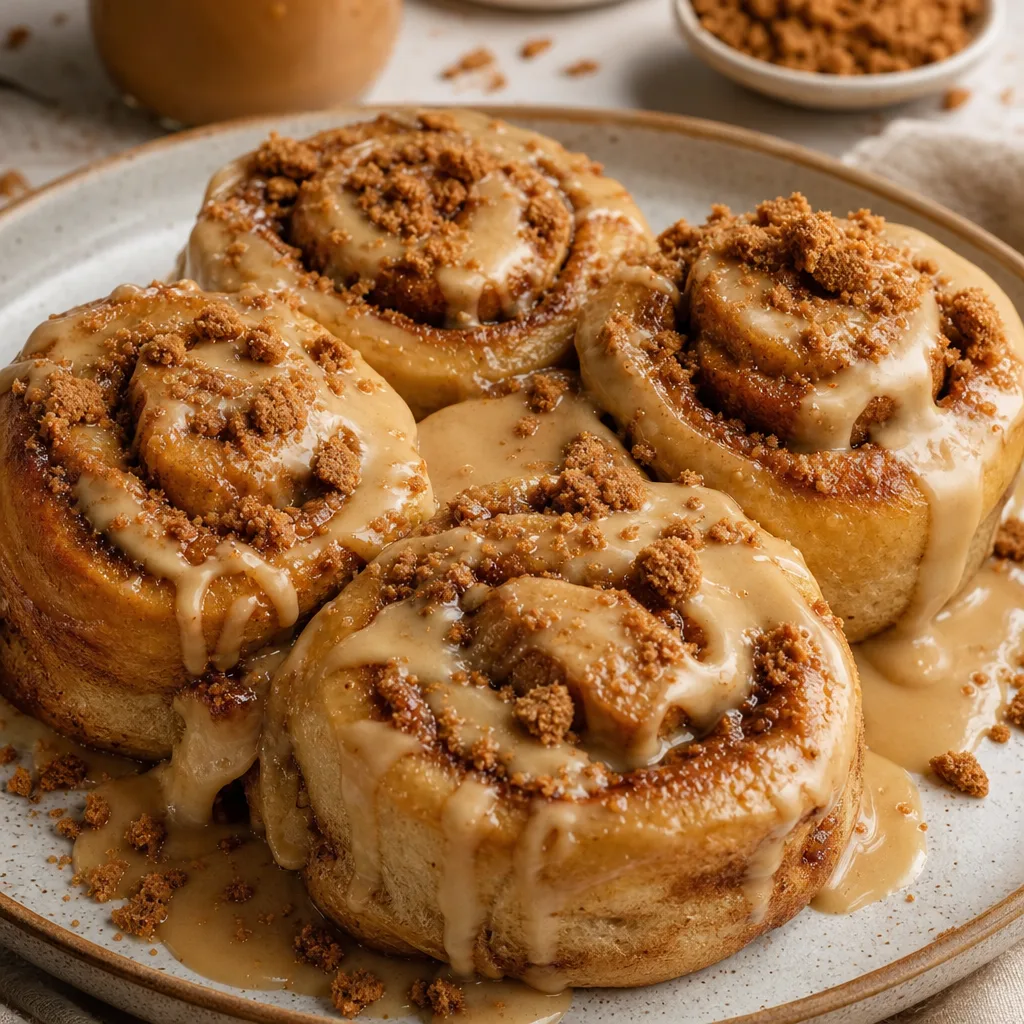
Biscoff-style cookie butter cinnamon rolls
Soft, enriched cinnamon rolls swirled with brown sugar and cookie butter, finished with a glossy cookie-butter glaze and crushed spiced-cookie topping.
Ingredients
Equipment
Method
- Combine 2 cups (240 g) of the flour, instant yeast, warm milk, granulated sugar, salt, softened butter and the egg in the bowl of a stand mixer fitted with the dough hook. Mix on low until combined, then add remaining flour gradually until a soft dough forms. Add up to 2 tablespoons warm water only if the dough is too stiff.
- Knead the dough in the mixer for 6–8 minutes or by hand for 8–10 minutes until smooth and elastic. Lightly oil a bowl, place dough inside, cover and let rise until doubled, about 60–75 minutes.
- Prepare the filling by mixing brown sugar, ground cinnamon and 3 tablespoons melted butter until crumbly and spreadable. Warm about 2/3 cup of cookie butter until it loosens for easy spreading.
- Roll the risen dough into a 12 x 18-inch rectangle. Spread the warmed cookie butter over the surface leaving a 1/2-inch border, then sprinkle the brown-sugar–cinnamon mixture evenly over the top.
- Roll the dough tightly from the long side, seal the seam, and cut into 12 equal pieces. Place them in a parchment-lined 9 x 13-inch pan, cover, and proof for 30–45 minutes until puffy.
- Preheat the oven to 350°F (175°C). Bake the rolls for 22–28 minutes until golden and cooked through. Let rest 5–8 minutes before glazing.
- Whisk the remaining cookie butter with powdered sugar, vanilla extract, a large pinch of salt and 2 tablespoons milk until smooth and pourable. Thin with additional milk if necessary to reach desired consistency.
- Spoon the glaze over warm rolls, sprinkle with crushed spiced cookies, and finish with a light scattering of coarse sea salt if you like. Allow glaze to set for 10–15 minutes before serving.
Notes
This recipe yields 12 generously sized rolls. For smaller rolls, cut into 15–16 pieces.
If you prefer a thicker glaze, reduce the milk. For a thinner pourable glaze, add more milk one teaspoon at a time.
Frequently Asked Questions
Can I make the dough by hand if I don’t have a stand mixer?
Yes. Combine wet and dry ingredients and knead on a lightly floured surface for 8–10 minutes by hand until the dough is smooth and elastic. The dough should spring back when pressed and pull into thin, translucent sheets when stretched gently. Hand-kneading may take slightly longer than a machine, but the final texture will be similarly tender.
What can I substitute for cookie butter if I can’t find it?
You can use speculoos spread, lotus spread, or Biscoff spread if available. If none of those are accessible, a combination of smooth peanut butter and a touch of honey plus 1/4 teaspoon ground ginger and 1/4 teaspoon ground cinnamon will recreate a similar warming flavor profile, though the exact spice note will differ from true cookie butter.
Can I prepare these the night before?
Yes. After shaping and cutting the rolls, place them in the prepared pan, cover tightly with plastic wrap, and refrigerate overnight. The cold proofing slows fermentation while allowing flavor to develop. The next morning, remove the rolls 30–45 minutes before baking to take the chill off, then bake as directed. You may need an extra 5–10 minutes of bake time from cold.
My cookie butter is very thick. How do I get it to spread without tearing the dough?
Warm the cookie butter gently for 15–30 seconds in the microwave and stir to loosen it. If it remains quite stiff, melt a teaspoon of butter into it to make it more spreadable. Always leave a 1/2-inch border on the dough so the seam can seal without oozing.
How do I prevent the bottoms from burning while achieving a nicely browned top?
Use a light-colored pan or line the pan with parchment paper to reduce direct contact browning. If you notice the tops browning too quickly, tent the pan with foil and continue baking until fully cooked. Alternatively, start baking on a lower rack and move to the middle to finish for more even color.