
Follow Me On Social Media!
Peppermint Meltaway Cookies
Make tender Peppermint Meltaway Cookies with a buttery shortbread base, soft pink buttercream, and crushed candy cane topping. Perfect for holiday cookie trays and homemade gifts.


Peppermint Meltaway Cookies are the kind of holiday cookie that vanishes first from a platter — tender, buttery rounds with a cloudlike crumb, topped with a pale pink swirl of frosting and a shower of crushed candy cane. They balance a delicate, shortbread-like base with a festive peppermint finish that feels celebratory without being heavy. Whether you’re filling tins for a cookie swap, arranging a dessert tray for guests, or baking with kids who delight in frosting and sprinkles, these cookies are forgiving, pretty, and reliably delicious.
This recipe leans into a classic “meltaway” texture: a high ratio of butter to flour, a little cornstarch for silkiness, and powdered sugar for a fine, tender crumb. The cookies are baked just until the edges show a whisper of golden color so the centers stay soft and tender. The frosting is a light buttercream, tinted a soft pink to echo holiday candy colors and piped into small rosettes or swirls for an elegant homemade look. Crushed peppermint candy adds crunch, a bright peppermint burst, and a festive red-and-white confetti effect.
I created this recipe to be approachable: the dough is easy to mix by hand or with a stand mixer, it can be portioned with a small cookie scoop or by piping, and the frosting is simple enough for bakers of all skill levels. I’ll walk you through exact measurements, baking times, piping and topping tips, and ways to make these meltaways your own — whether you prefer a stronger mint hit, a subtle hint of extract, or an un-frosted version with candy inside. Expect to spend some time chilling dough if you prefer cleaner shapes, but know that these cookies are indulgent and forgiving, and they slice beautifully into a holiday cookie lineup.
Why this recipe works
The foundation of these Peppermint Meltaway Cookies is in the balance between butter and dry ingredients. Powdered sugar replaces some or all of the granulated sugar found in typical cookies and provides a finer texture because it contains a small amount of cornstarch, which helps create a tender, melt-in-your-mouth crumb. Adding cornstarch to the dough further blunts gluten formation and yields a softer bite that literally ‘melts away’.
Chilling the dough or formed cookies contributes to consistent shape and prevents over-spread. When butter is cold at the moment it goes into the oven, the fat takes longer to liquefy, giving the dough structure and allowing piped or shaped ridges to remain defined. Baking at a moderate temperature and pulling the cookies from the oven when the edges are barely colored ensures the centers remain tender rather than drying to a crumbly shortbread.
Ingredient notes and substitutions
Cornstarch is a key ingredient for achieving the meltaway texture; it softens the density of the flour and yields a fine crumb. If you don’t have cornstarch, tapioca starch or arrowroot can be used sparingly, but cornstarch is preferred for the classic texture.
Powdered sugar in the dough gives sweetness and a smooth mouthfeel; if you only have granulated sugar, the texture will shift toward a more traditional cookie. For a gluten-free version, use a high-quality 1:1 gluten-free flour blend and increase the cornstarch by one tablespoon to mimic the tender crumb.
Presentation and piping ideas
For a classic look, use a star tip to pipe a small rosette on each cookie; this creates ridges that catch the crushed peppermint and look decorative without much effort. If you want a smoother top, use an open round tip and pipe a flat spiral, finishing with a slight lift to create a soft peak.
Experiment with color gradients by tinting small portions of the frosting in deeper pink and piping concentric rings, or add a tiny dot of red gel in the center for a candy-inspired accent. For a minimalist approach, skip piping and press a small amount of frosting in the center with an offset spatula, then sprinkle peppermint shards.
Ingredients
- unsalted butter, 1 cup (226 g), softened
- powdered sugar (confectioners' sugar), 1 cup (120 g) for dough
- cornstarch, 1/3 cup (45 g)
- all-purpose flour, 2 cups (240 g)
- fine salt, 1/4 teaspoon
- vanilla extract, 1 teaspoon
- peppermint extract, 1/4 to 1/2 teaspoon (optional)
- pink gel food coloring, a few drops (optional)
- powdered sugar (for dusting and frosting), 3 to 4 cups (360–480 g) total
- unsalted butter for frosting, 1/2 cup (113 g), softened
- milk or cream for frosting, 1 to 2 tablespoons
- crushed candy canes or crushed peppermint candies, 1/2 cup, coarsely crushed
- granulated sugar, 1 tablespoon (optional, for light sprinkling)
- salt, a pinch for frosting
- water, as needed (for frosting consistency)
- vegetable oil or neutral oil, for greasing pans (or use parchment)
- icing sugar or extra powdered sugar, to taste (optional garnish)

Instructions
- Preheat the oven to 325°F (163°C). Line two baking sheets with parchment paper or silicone mats and set aside. (ingredient_ids: ["ing16"])
- In a large bowl or the bowl of a stand mixer fitted with the paddle, cream 1 cup (226 g) softened unsalted butter with 1 cup (120 g) powdered sugar until light and fluffy, about 2 to 3 minutes. Scrape the bowl as needed. (ingredient_ids: ["ing1", "ing2"])
- Add 1 teaspoon vanilla extract and 1/4 teaspoon peppermint extract (if using), then mix briefly until combined. (ingredient_ids: ["ing6", "ing7"])
- Sift together 1/3 cup (45 g) cornstarch, 2 cups (240 g) all-purpose flour, and 1/4 teaspoon fine salt into a separate bowl. Gradually add the dry mixture to the butter mixture and mix on low until just combined; the dough will be soft and slightly sticky. (ingredient_ids: ["ing3", "ing4", "ing5"])
- To form cookies, you have two options: gently scoop rounded tablespoons of dough and roll into balls, slightly flattening each on the sheet; or transfer dough to a piping bag fitted with a 1A or small star tip and pipe 1 1/4-inch rounds directly onto the prepared sheets. Space cookies about 1 1/2 inches apart. (ingredient_ids: ["ing3", "ing4"])
- Optional but recommended for neater shapes: chill the filled baking sheets in the refrigerator for 15 to 30 minutes before baking. This keeps edges from spreading and helps maintain a shortbread-like profile. (ingredient_ids: [])
- Bake on the middle rack for 12 to 15 minutes, rotating the sheets halfway through, until the edges are only just beginning to show pale golden color. The centers should look set but not browned. Remove and let cool on the pan for 5 minutes, then transfer to a wire rack to cool completely. (ingredient_ids: [])
- While cookies cool, make the peppermint buttercream: in a medium bowl, beat 1/2 cup (113 g) softened unsalted butter until creamy, about 1 minute. Gradually add 2 to 3 cups (240–360 g) powdered sugar, 1 to 2 tablespoons milk or cream, a pinch of salt, 1/4 teaspoon peppermint extract (adjust to taste), and a few drops of pink gel food coloring if you want the pale pink swirls. Beat until smooth and spreadable, adding more powdered sugar for stiffness or a teaspoon more milk if too stiff. (ingredient_ids: ["ing9", "ing10", "ing11", "ing12", "ing7", "ing8"])
- Transfer frosting to a piping bag fitted with a small open round or star tip. Pipe a small rosette or simple spiral on each cooled cookie. (ingredient_ids: ["ing9"])
- Immediately after piping, sprinkle crushed candy cane pieces on each cookie, pressing gently so that a few pieces adhere to the frosting. Use about 1/2 cup crushed candy cane for the whole batch; adjust as desired. (ingredient_ids: ["ing14"])
- For a final touch, dust lightly with powdered sugar or a small pinch of granulated sugar if you like a bit of sparkle. Chill briefly to set the frosting if your kitchen is warm. (ingredient_ids: ["ing2", "ing13"])
- Store finished cookies in an airtight container layered with parchment between layers at room temperature for up to 3 days, or refrigerate for up to 7 days. Bring to room temperature before serving if chilled. (ingredient_ids: [])
Pro Tips
- Use unsalted butter so you control the salt level; if you only have salted butter, omit or reduce added salt in the dough.
- For the most tender meltaway texture, measure flour by spooning it into a cup and leveling it off rather than scooping directly from the bag.
- If you prefer a stronger mint flavor, increase peppermint extract in both the dough and frosting by 1/8 teaspoon at a time — peppermint is potent, so add gradually.
- Chill the dough or the piped cookies for 15–30 minutes before baking to preserve the piped ridges and prevent excessive spread.
- If your frosting is too soft to hold shape, chill it briefly (5–10 minutes) after piping to firm the butter, then return cookies to a cool place to set completely.
- Crush candy canes in a zip-top bag using a rolling pin for varied-sized pieces; reserve finer dust to lightly dust the finished tray for contrast.
- Use a small cookie scoop (about 1 tablespoon) to ensure uniform cookie sizes and even baking.
- If you want an un-frosted version, roll baked cookies in a mixture of powdered sugar and a pinch of salt while still slightly warm for a snow-dusted finish.
- Make the dough a day ahead and refrigerate; allow it to sit at room temperature just until pliable enough to scoop or pipe.
- To avoid overbeating the butter and powdered sugar, scrape the bowl and mix on low once dry ingredients are added to maintain a tender crumb.
Variations
- Chocolate-dipped Meltaways: After frosting and setting, dip half of each cookie into melted semi-sweet chocolate and let set on parchment; finish with a few crushed peppermint pieces.
- Cocoa Meltaway: Substitute 1/4 cup of the all-purpose flour with unsweetened cocoa powder for a chocolate base, and pair with a vanilla or peppermint buttercream.
- Cream Cheese Frosting: Replace the butter in the frosting with 4 ounces (113 g) softened cream cheese plus 1/4 cup (56 g) butter for a tangier topping; pipe and top with crushed peppermint.
- Gluten-free Option: Use a 1:1 gluten-free baking flour blend and add 1 tablespoon extra cornstarch for tenderness; chill dough well and bake until set.
Serving Suggestions
- Arrange on a festive platter with red and green ribbons, alongside plain shortbread and spiced cookies for a varied holiday tray.
- Serve warm with a mug of hot cocoa or peppermint mocha; the mint in the cookie complements chocolate beverages particularly well.
- Package in cellophane bags tied with ribbon for homemade gifts; include a napkin and a note to keep refrigerated if using cream cheese frosting.
- Use as an after-dinner bite paired with espresso or a light dessert wine; the delicate crumb pairs nicely with short, aromatic drinks.
Make-ahead and freezing tips
These cookies are easy to make in stages. Dough can be mixed and refrigerated for up to 48 hours before baking for convenience and often better flavor as the resting period lets the dough hydrate. For the best shape and texture, portion the dough before chilling so you can bake or pipe straight from chilled portions.
If you plan to freeze, do so before frosting. Freeze baked cookies in a single layer until solid, then transfer to a freezer-safe container separated by parchment sheets. Thaw completely at room temperature before piping frosting, so the residual surface moisture doesn’t cause the frosting to slide.
Storage and Reheating
Store cookies in an airtight container layered with parchment at room temperature for up to 3 days, or refrigerate up to 7 days. If refrigerated, bring to room temperature before serving to allow the butter in the cookie and frosting to soften for full flavor. Do not freeze frosted cookies well; freeze unfrosted baked cookies in a single layer for up to 3 months, then thaw and frost before serving.
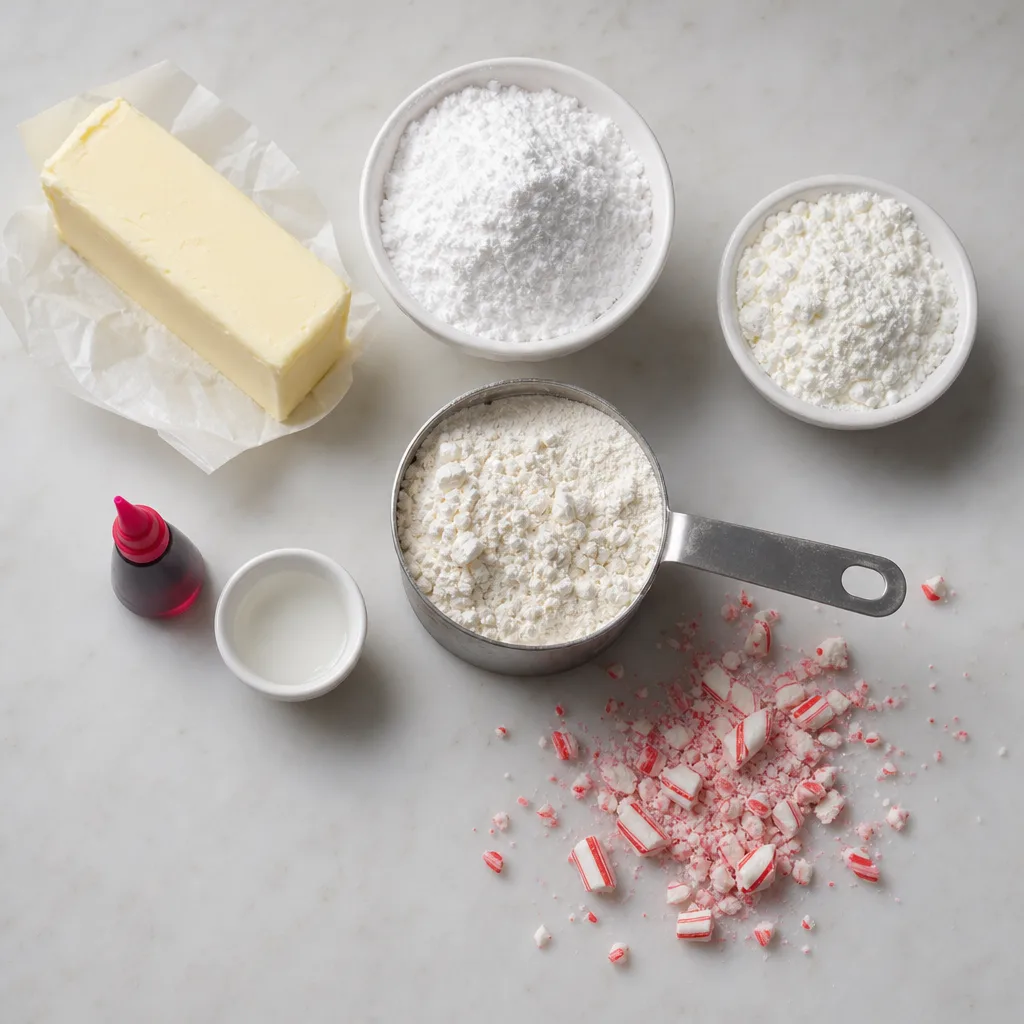
Peppermint Meltaway Cookies
Tender, buttery meltaway cookies topped with a pale pink peppermint buttercream and crushed candy cane — a festive holiday treat that melts in your mouth.
Ingredients
Equipment
Method
- Preheat the oven to 325°F (163°C). Line two baking sheets with parchment paper or silicone mats and set aside.
- In a large bowl or the bowl of a stand mixer fitted with the paddle, cream 1 cup (226 g) softened unsalted butter with 1 cup (120 g) powdered sugar until light and fluffy, about 2 to 3 minutes. Scrape the bowl as needed.
- Add 1 teaspoon vanilla extract and 1/4 teaspoon peppermint extract (if using), then mix briefly until combined.
- Sift together 1/3 cup (45 g) cornstarch, 2 cups (240 g) all-purpose flour, and 1/4 teaspoon fine salt into a separate bowl. Gradually add the dry mixture to the butter mixture and mix on low until just combined; the dough will be soft and slightly sticky.
- To form cookies, you have two options: gently scoop rounded tablespoons of dough and roll into balls, slightly flattening each on the sheet; or transfer dough to a piping bag fitted with a 1A or small star tip and pipe 1 1/4-inch rounds directly onto the prepared sheets. Space cookies about 1 1/2 inches apart.
- Optional but recommended for neater shapes: chill the filled baking sheets in the refrigerator for 15 to 30 minutes before baking. This keeps edges from spreading and helps maintain a shortbread-like profile.
- Bake on the middle rack for 12 to 15 minutes, rotating the sheets halfway through, until the edges are only just beginning to show pale golden color. The centers should look set but not browned. Remove and let cool on the pan for 5 minutes, then transfer to a wire rack to cool completely.
- While cookies cool, make the peppermint buttercream: in a medium bowl, beat 1/2 cup (113 g) softened unsalted butter until creamy, about 1 minute. Gradually add 2 to 3 cups (240–360 g) powdered sugar, 1 to 2 tablespoons milk or cream, a pinch of salt, 1/4 teaspoon peppermint extract (adjust to taste), and a few drops of pink gel food coloring if you want the pale pink swirls. Beat until smooth and spreadable, adding more powdered sugar for stiffness or a teaspoon more milk if too stiff.
- Transfer frosting to a piping bag fitted with a small open round or star tip. Pipe a small rosette or simple spiral on each cooled cookie.
- Immediately after piping, sprinkle crushed candy cane pieces on each cookie, pressing gently so that a few pieces adhere to the frosting. Use about 1/2 cup crushed candy cane for the whole batch; adjust as desired.
- For a final touch, dust lightly with powdered sugar or a small pinch of granulated sugar if you like a bit of sparkle. Chill briefly to set the frosting if your kitchen is warm.
- Store finished cookies in an airtight container layered with parchment between layers at room temperature for up to 3 days, or refrigerate for up to 7 days. Bring to room temperature before serving if chilled.
Notes
Adjust peppermint extract carefully — it is potent and can overpower other flavors.
Powdered sugar measurements may vary by brand; if frosting seems too thin, add more powdered sugar in small additions.
Frequently Asked Questions
What makes a cookie a 'meltaway' cookie?
A meltaway cookie has a delicate, almost sandy or shortbread-like texture that dissolves on the tongue. This is achieved by using a high butter-to-flour ratio, powdered sugar or icing sugar for a finer crumb, and often cornstarch to tenderize the structure. Avoiding overworking the dough and baking just until the edges set helps preserve the tender texture.
Can I substitute peppermint extract with something else?
Yes. If you prefer a subtler mint or want a different flavor profile, substitute peppermint extract with pure vanilla extract or use half peppermint and half vanilla. You can also use a small amount of oil from crushed fresh peppermint leaves in some recipes, but extracts are easiest to control in intensity.
My frosting came out too soft to pipe. How do I fix it?
If frosting is too soft, chill it in the refrigerator for 5 to 10 minutes, then stir and test pipe a small amount. If it firms up too much, let it sit at room temperature for a few minutes to soften slightly. Alternatively, add a little more powdered sugar to stiffen or a small teaspoon of cornstarch if you want to avoid over-sweetening.
Can I make these cookies ahead of time for a holiday party?
Absolutely. You can bake the cookies up to two days ahead and store them unfrosted in an airtight container at room temperature. Frost them the day of the event for the freshest appearance. If you need to prepare further ahead, freeze unfrosted baked cookies in a single layer for up to three months and thaw before frosting.
How do I prevent candy canes from bleeding color into the frosting?
To minimize color bleeding, use slightly coarser pieces rather than fine dust; larger shards adhere to the frosting without releasing as much dye. Refrigerate the cookies briefly after topping, which helps set the frosting and lock pieces in place. If you notice vibrant bleeding with a particular candy brand, try a different brand or rinse the candy briefly and dry it before crushing to remove excess dye on the surface.