Follow Me On Social Media!
Garlic butter creamy chicken with rotini pasta
A rich, garlicky cream sauce coats rotini and is topped with golden seared chicken. Step-by-step instructions, tips, and make-ahead options make this Garlic butter creamy chicken with rotini pasta a perfect weeknight dinner.

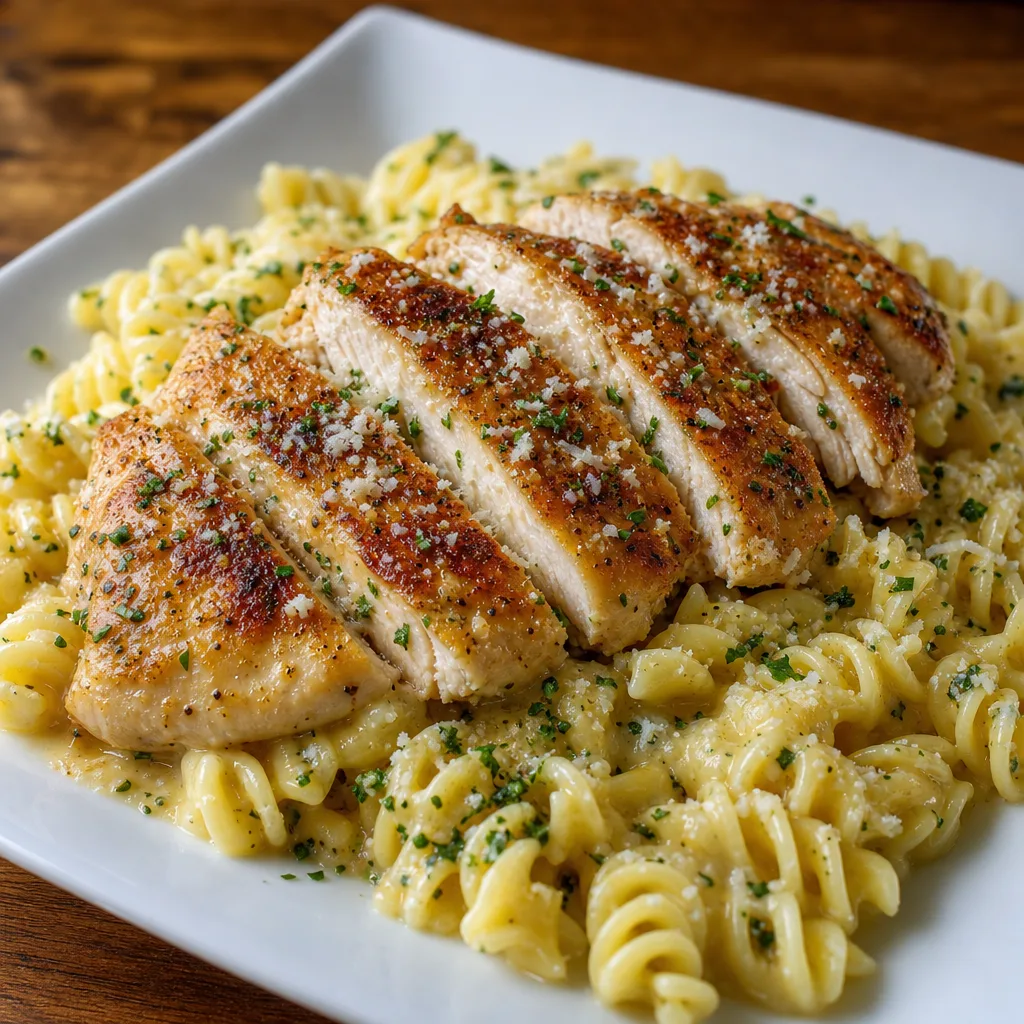
This Garlic butter creamy chicken with rotini pasta is a comforting, weeknight-friendly entree that balances a rich, garlicky cream sauce with tender, golden chicken and toothsome short spiral pasta. The dish is built around three simple ideas: a crisped exterior on the chicken for texture, a silky garlic-butter cream sauce to coat every twist of rotini, and bright, finely chopped herbs plus grated hard cheese to finish. Together these layers create a plate that's both homey and elegant enough for company.
Start-to-finish this recipe is written with practical timing and pantry-minded choices in mind. Rotini holds sauce well because its spirals trap cream and grated cheese; pan-searing the chicken gives a satisfying contrast to the sauce’s silkiness. The garlic-butter base is straightforward — butter and olive oil to carry aromatics, lots of garlic for flavor, a splash of chicken stock to deepen the sauce, and heavy cream plus grated Parmesan to build body. A quick dredge in seasoned flour or a dusting of spices before searing helps develop a golden crust that keeps the interior juicy.
If you’ve ever wondered how to get restaurant-style presentation at home, this recipe includes plating guidance so the sliced chicken sits attractively across the pasta and the sauce is glossy and clingy. It also includes make-ahead tips, straightforward substitutions, and variations so you can adapt the recipe to seasonal produce, dietary preferences, or what’s already in the refrigerator. Expect a balanced, crowd-pleasing dish that stores and reheats well for leftovers.
Why this combination works
The structural success of Garlic butter creamy chicken with rotini pasta comes down to complementary textures and flavor balance. The chicken provides a savory, caramelized crust that contrasts with the unctuous cream sauce, while rotini’s spirals capture sauce in each bite instead of letting it slide off. That interplay makes every forkful satisfying.
Flavor-wise, garlic and butter form a classic base that is brightened by lemon and balanced by Parmesan’s salty, nutty character. Dijon adds a subtle tang and emulsifies the dairy and stock components so the sauce feels cohesive rather than merely heavy. Fresh parsley at the end introduces a green, herbaceous note that lightens the overall palate.
Ingredient notes and substitutions
Chicken breasts are chosen for their neutral flavor and ability to sear well; if you prefer darker meat, bone-in thighs work well but will require longer cooking. Rotini is specified because its spirals hold sauce, but fusilli or short twisted pasta yield similar results. If you have spaghetti, the sauce will still be great, but the eating experience changes because long pasta doesn’t trap sauce the same way.
Parmesan should be freshly grated for best melting and flavor. Pre-grated cheeses often include anti-caking agents that can inhibit smooth melting. If you want a sharper finish, swap half the Parmesan for Pecorino Romano. For a dairy-free replacement, consider nutritional yeast for a cheesy flavor, though the texture will be different.
Presentation and plating
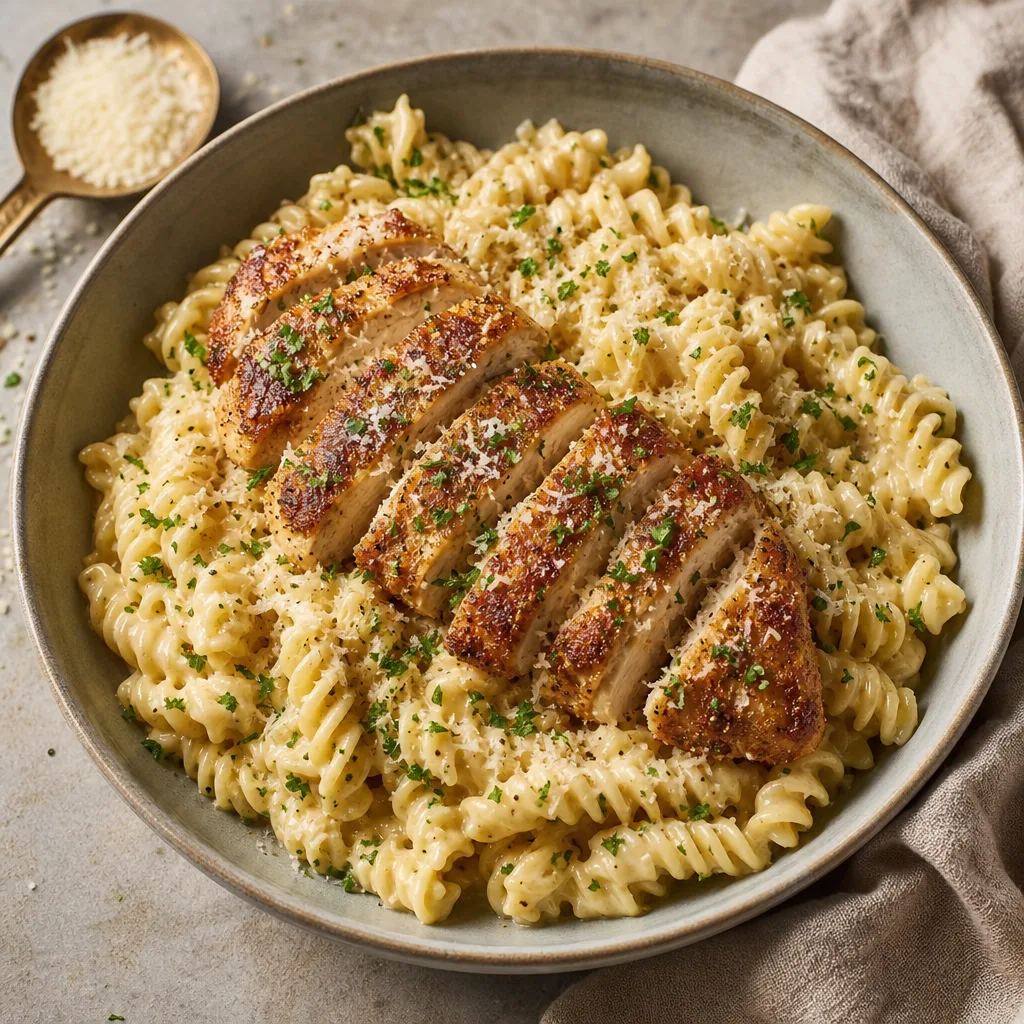
For an attractive plate like the inspiration photo, mound the sauced rotini in the center of a white plate so the spirals form a gentle hill. Fan the sliced chicken across the top at a slight angle. The contrast between the golden crust, pale yellow sauce, and green parsley creates a visually appealing composition.
Finish with a fine dusting of grated Parmesan and a sprinkle of finely chopped parsley. A final drizzle of a little melted butter or a few drops of high-quality extra virgin olive oil adds a glossy sheen that photographs beautifully and elevates the mouthfeel.
Ingredients
- 1 pound (450 g) boneless skinless chicken breasts
- 10 ounces (285 g) rotini pasta
- 3 tablespoons all-purpose flour
- 1 teaspoon paprika
- 1 teaspoon garlic powder
- Salt to taste
- Black pepper to taste
- 2 tablespoons olive oil
- 3 tablespoons unsalted butter
- 5 cloves garlic, minced
- 1 small shallot, finely minced (or 1/2 small yellow onion)
- 1 cup (240 ml) low-sodium chicken stock
- 1 cup (240 ml) heavy cream
- 1/2 cup (50 g) finely grated Parmesan cheese, plus extra for serving
- 1 teaspoon Dijon mustard
- 1 tablespoon lemon juice
- 2 tablespoons chopped fresh parsley
- 1/4 teaspoon crushed red pepper flakes (optional)
- Water for boiling pasta
- Extra chopped parsley for garnish (to taste)
- Freshly ground black pepper for serving (to taste)
- Olive oil or butter for finishing the pasta (optional, to taste)
Instructions
- Prepare the chicken by trimming any fat and cutting each breast horizontally into two thinner cutlets so they cook evenly. Pat the cutlets dry with paper towels and season both sides with salt and black pepper. (ingredient_ids: ["chicken", "salt", "black_pepper"])
- In a shallow dish combine the all-purpose flour, paprika, garlic powder, a pinch of salt, and a few grinds of black pepper. Lightly dredge each chicken cutlet in the seasoned flour and shake off excess. (ingredient_ids: ["flour", "paprika", "garlic_powder", "salt", "black_pepper"])
- Bring a large pot of salted water to a rolling boil. Add the rotini and cook until just al dente according to package directions (usually 8–10 minutes). Reserve 1 cup of the starchy pasta cooking water, then drain the pasta and set aside. (ingredient_ids: ["water", "salt", "rotini"])
- Heat a large skillet over medium-high heat and add the olive oil. When hot and shimmering, add the floured chicken in a single layer without crowding (cook in batches if necessary). Sear the chicken until deeply golden and cooked through, about 3–4 minutes per side depending on thickness. Transfer the cooked chicken to a plate and tent loosely with foil to rest. (ingredient_ids: ["olive_oil", "chicken"])
- Reduce the heat to medium and add 1 tablespoon of the butter to the same skillet. Add the minced garlic and minced shallot and cook until fragrant and translucent, about 1 minute, stirring constantly so the garlic does not burn. (ingredient_ids: ["butter", "garlic", "shallot"])
- Pour in the chicken stock to deglaze the pan, scraping up any browned bits from the bottom with a wooden spoon. Let the stock reduce for 1–2 minutes to concentrate flavor. (ingredient_ids: ["chicken_stock"])
- Stir in the heavy cream and Dijon mustard, bring the mixture to a gentle simmer, and let it thicken slightly for 2–3 minutes. Taste and season the sauce with additional salt and black pepper as needed. (ingredient_ids: ["heavy_cream", "Dijon_mustard", "salt", "black_pepper"])
- Lower the heat to medium-low and whisk in the remaining 2 tablespoons of butter and the grated Parmesan until the sauce is smooth and glossy. If the sauce seems too thick, add a few tablespoons of the reserved pasta water until you reach a sauce that clings to the rotini but is still pourable. (ingredient_ids: ["butter", "Parmesan", "reserved_pasta_water"])
- Add the drained rotini to the skillet and toss gently to coat each spiral in the garlic-butter cream sauce. If you prefer, stir in a splash of olive oil or a small knob of butter to increase shine and richness. (ingredient_ids: ["rotini", "olive_oil", "butter"])
- Slice the rested chicken into even strips and arrange the slices across the bed of sauced pasta. Spoon any accumulated juices from the resting plate over the chicken. (ingredient_ids: ["chicken"])
- Finish with the lemon juice, chopped fresh parsley, and a light sprinkle of crushed red pepper flakes if using. Grind additional black pepper over the top and dust with extra grated Parmesan before serving. (ingredient_ids: ["lemon_juice", "parsley", "crushed_red_pepper_flakes", "black_pepper", "Parmesan"])
- Serve immediately on warmed plates so the sauce maintains its silkiness; garnish with more chopped parsley and a final crack of black pepper at the table. (ingredient_ids: ["parsley", "black_pepper"])
Pro Tips
- Dry the chicken thoroughly before dredging — excess moisture prevents a good crust from forming.
- Reserve pasta water before draining; the starchy liquid is the best tool to adjust sauce consistency without diluting flavor.
- If you prefer a faster weeknight version, use thin-sliced chicken cutlets to reduce sear time.
- Use freshly grated Parmesan rather than pre-grated for a smoother melt and better flavor.
- Keep the heat moderate when adding the cream and cheese; too-high heat can cause the dairy to separate.
Variations
- Garlic butter creamy shrimp with rotini: Swap chicken for 1 pound of large shrimp, sear 1–2 minutes per side until pink, and proceed with the same sauce.
- Vegetarian version: Replace chicken with roasted cauliflower florets or sautéed mushrooms; add a splash of white wine to the sauce for extra depth.
- Lemon-herb twist: Increase the lemon juice to 2 tablespoons and add 1 tablespoon of chopped fresh basil for a brighter, fresher profile.
- Spicy sun-dried tomato: Stir in 1/4 cup chopped sun-dried tomatoes and use 1/2 teaspoon crushed red pepper flakes in the sauce for a savory, slightly spicy variant.
Serving Suggestions
- Pair with a simple green salad dressed in lemon vinaigrette to cut through the creaminess and add a crisp contrast.
- Serve with buttered garlic bread or an herbed focaccia to soak up any leftover sauce on the plate.
- Offer a small bowl of extra grated Parmesan and freshly ground black pepper so guests can season to their taste.
- Finish with a light glass of medium-bodied white wine such as Chardonnay or a citrus-forward Sauvignon Blanc.
Make-ahead and meal prep
You can cook the chicken and pasta separately up to two days ahead. Store each component cooled and covered; when ready to serve, warm the sauce gently, add the pasta to recoat with sauce, and top with freshly warmed or quickly seared chicken. This approach preserves texture and reduces active prep time on the day you serve.
If you intend to pack lunches, toss the pasta with a small amount of olive oil before refrigerating to prevent sticking. Keep the chicken slices in a separate container and combine at lunchtime; reheat in a microwave briefly or use a hot skillet for a fresher texture.
Storage and Reheating
Cool leftovers within two hours and refrigerate in an airtight container for up to 3 days. To reheat, add the pasta and sauce to a skillet over low heat with a splash of chicken stock or cream and warm gently until the sauce loosens and the pasta is heated through. Reheat chicken slices separately when possible to help preserve texture, or slice and add them to the skillet briefly just until warmed. Avoid microwaving for long intervals to prevent the cream from separating.
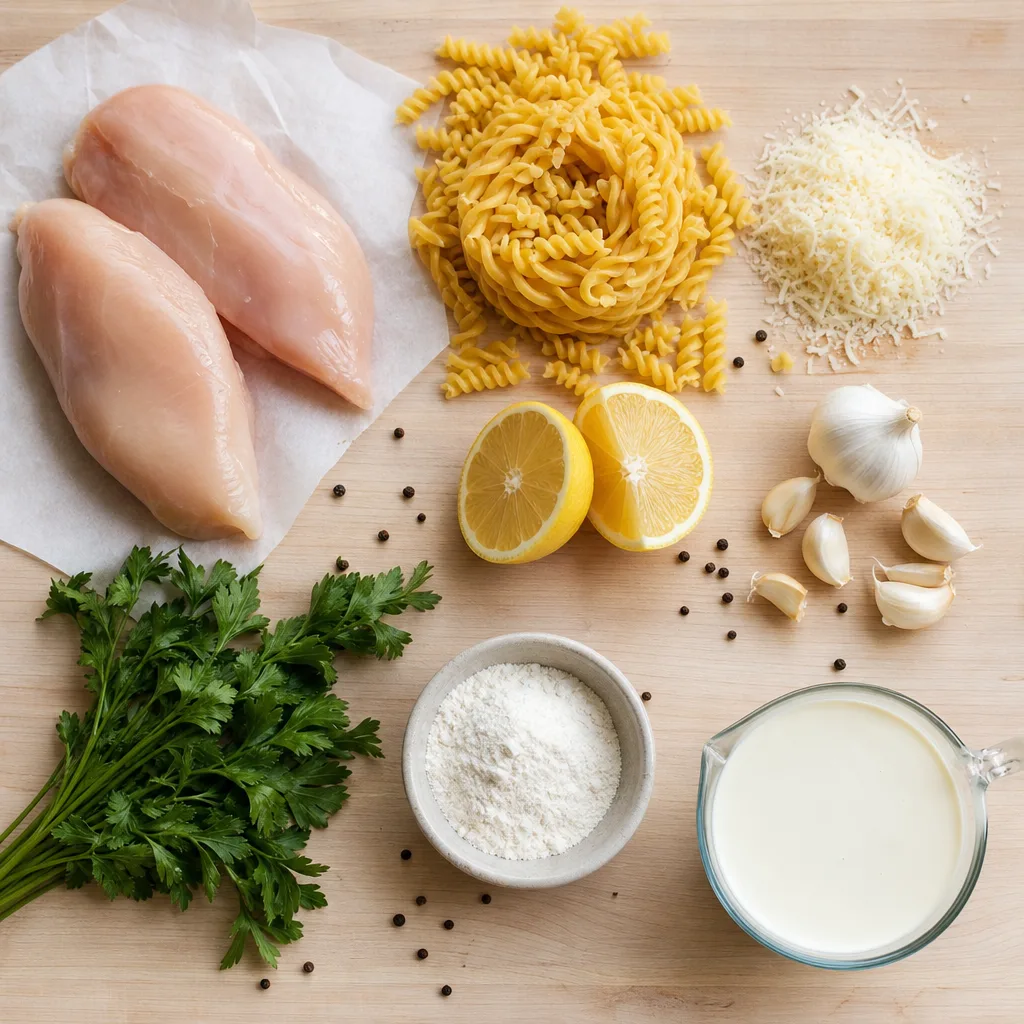
Garlic butter creamy chicken with rotini pasta
Pan-seared chicken cutlets over rotini tossed in a garlic-butter cream sauce finished with Parmesan and fresh parsley. A straightforward weeknight recipe with make-ahead flexibility.
Ingredients
Equipment
Method
- Prepare the chicken by trimming any fat and cutting each breast horizontally into two thinner cutlets so they cook evenly. Pat the cutlets dry with paper towels and season both sides with salt and black pepper.
- In a shallow dish combine the all-purpose flour, paprika, garlic powder, a pinch of salt, and a few grinds of black pepper. Lightly dredge each chicken cutlet in the seasoned flour and shake off excess.
- Bring a large pot of salted water to a rolling boil. Add the rotini and cook until just al dente according to package directions (usually 8–10 minutes). Reserve 1 cup of the starchy pasta cooking water, then drain the pasta and set aside.
- Heat a large skillet over medium-high heat and add the olive oil. When hot and shimmering, add the floured chicken in a single layer without crowding (cook in batches if necessary). Sear the chicken until deeply golden and cooked through, about 3–4 minutes per side depending on thickness. Transfer the cooked chicken to a plate and tent loosely with foil to rest.
- Reduce the heat to medium and add 1 tablespoon of the butter to the same skillet. Add the minced garlic and minced shallot and cook until fragrant and translucent, about 1 minute, stirring constantly so the garlic does not burn.
- Pour in the chicken stock to deglaze the pan, scraping up any browned bits from the bottom with a wooden spoon. Let the stock reduce for 1–2 minutes to concentrate flavor.
- Stir in the heavy cream and Dijon mustard, bring the mixture to a gentle simmer, and let it thicken slightly for 2–3 minutes. Taste and season the sauce with additional salt and black pepper as needed.
- Lower the heat to medium-low and whisk in the remaining 2 tablespoons of butter and the grated Parmesan until the sauce is smooth and glossy. If the sauce seems too thick, add a few tablespoons of the reserved pasta water until you reach a sauce that clings to the rotini but is still pourable.
- Add the drained rotini to the skillet and toss gently to coat each spiral in the garlic-butter cream sauce. If you prefer, stir in a splash of olive oil or a small knob of butter to increase shine and richness.
- Slice the rested chicken into even strips and arrange the slices across the bed of sauced pasta. Spoon any accumulated juices from the resting plate over the chicken.
- Finish with the lemon juice, chopped fresh parsley, and a light sprinkle of crushed red pepper flakes if using. Grind additional black pepper over the top and dust with extra grated Parmesan before serving.
- Serve immediately on warmed plates so the sauce maintains its silkiness; garnish with more chopped parsley and a final crack of black pepper at the table.
Notes
Do not overheat cream or cheese to avoid separation.
Adjust seasoning gradually and taste frequently.
Reserve pasta water — it’s essential for texture adjustments.
Frequently Asked Questions
Can I make this recipe gluten-free?
Yes. Substitute the rotini for a gluten-free short pasta and use a gluten-free flour blend for the dredge, or skip the flour and use a light dusting of cornstarch combined with a pinch of seasoning. Check that your chicken stock and Dijon mustard are labeled gluten-free.
What can I use instead of heavy cream?
For a lighter sauce, use half-and-half and reduce the simmering time slightly, but be aware the sauce will be thinner. For a dairy-free option use a full-fat canned coconut milk (it changes the flavor) or a commercial plant-based heavy cream substitute.
How do I keep the chicken from getting rubbery?
Avoid overcooking: thin cutlets cook quickly and should reach 160–165°F (71–74°C). Let the chicken rest a few minutes after cooking so juices redistribute. If the pan is too crowded while searing, the chicken will steam rather than crisp, so work in batches if necessary.
Can I make elements of this in advance?
Yes. The chicken can be cooked and refrigerated for up to 2 days; reheat briefly in a skillet or oven to restore some texture. The sauce can be made and stored separately for up to 2 days; when reheating, add a splash of stock or cream to bring it back to a smooth consistency and combine with freshly cooked pasta.
Why did my sauce separate and how do I fix it?
Sauce separation usually happens if the heat is too high when adding cream or cheese. To rescue a split sauce, reduce the heat and whisk in a small amount of cold liquid (stock or cream) gradually; alternatively, whisk in a tablespoon of cold butter to help emulsify and bring the sauce back together.