Follow Me On Social Media!
Creamy sausage potato chowder
Warm up with Creamy sausage potato chowder: browned sausage, tender potatoes, and wild rice in a rich, velvety broth. Easy weeknight comfort that reheats beautifully.

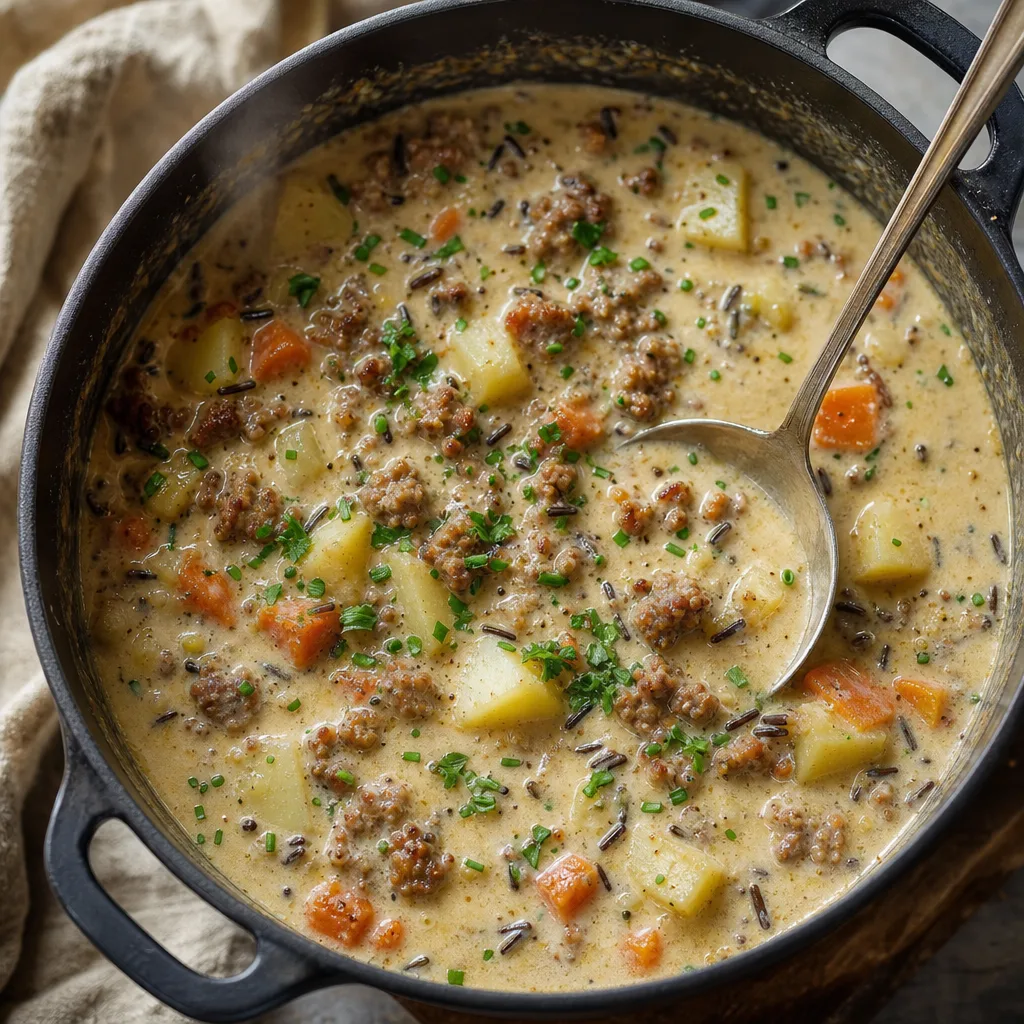
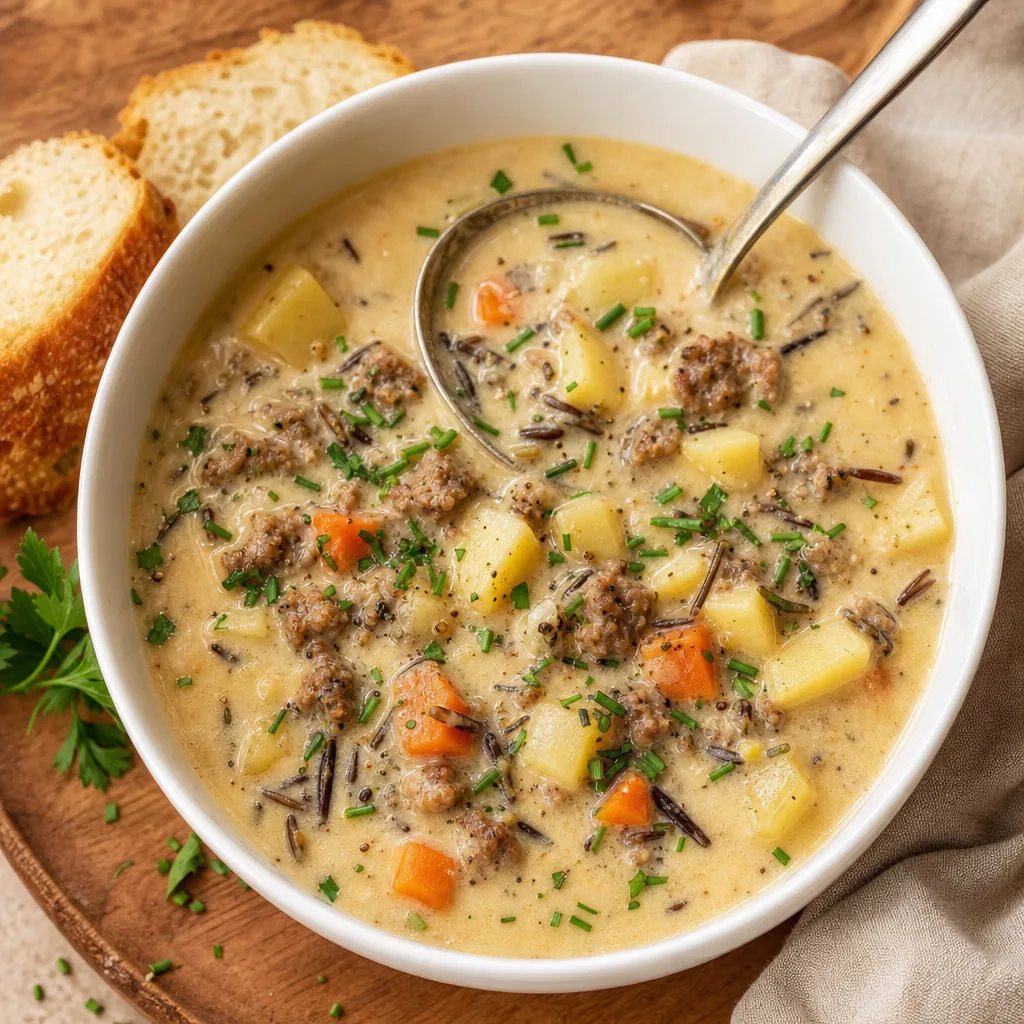
There are some meals that feel like a warm hug, and Creamy sausage potato chowder belongs on that short list. Built on tender potato chunks, golden-browned sausage, and a luxuriously creamy broth, this chowder is designed to be both comforting and substantial. It’s the kind of bowl you want on cold evenings, after long walks, or when you need a simple dinner that stretches to feed a crowd. The addition of wild rice gives the soup a chewy, rustic contrast to the soft potatoes and silky broth, while carrots and aromatics add depth and balance.
This version leans on a classic technique: gently browning sausage for flavor, building a shallow roux to thicken the broth, then finishing with cream for richness. The recipe is written to be forgiving—use turkey or chicken sausage for a lighter profile or a pork or brat-style sausage for more savory punch. The wild rice can be pre-cooked or cooked directly in the pot depending on time and texture preference. Fresh chopped herbs at the end brighten the bowl so the chowder never feels heavy despite its creaminess.
Beyond dinner, this chowder is an excellent make-ahead option. It develops more flavor after a day in the fridge, and the texture holds up well with careful reheating. If you want to lighten the soup, reduce the cream and increase broth, or swap in half-and-half. If you need to boost the protein without changing character, stir in shredded cooked chicken or cannellini beans. Small tweaks let you tailor this recipe to what’s in your pantry without losing the heart of the dish.
Why this recipe works
This chowder balances layered flavors and textures. Browning the sausage creates Maillard-rich bits that dissolve into the broth, supplying savory depth. The vegetables—onion, celery, and carrot—form a classic aromatic base that rounds out the meatiness and provides subtle sweetness. Potatoes act as both the bulk and a natural thickener when a portion is mashed into the broth, creating the velvety mouthfeel we expect from chowder.
A modest roux (butter + flour) gives a stable, silky thickness that stands up to reheating better than relying on cream alone. Finishing with heavy cream or half-and-half enriches the broth without making it greasy, while wild rice adds chew and a nutty edge to contrast the soft potatoes. Fresh herbs at the end lift the finished bowl so the flavors feel bright rather than cloying.
Ingredient notes and smart substitutions
Sausage: choose according to your flavor preference—mild pork sausage gives a traditional savory kick, turkey or chicken sausage keeps the chowder lighter, and spicy sausage like chorizo will add heat and smokiness. If using sausages encased in casings, remove the casing and crumble the meat as it browns for maximum surface contact with the pan.
Wild rice: if you can’t find wild rice, use an ‘uncooked’ wild rice blend or substitute pearl barley for a similarly chewy texture. If you use dry wild rice, plan for extra cooking time or cook it ahead. For a gluten-free chowder, ensure your flour is a certified gluten-free blend or use cornstarch slurry to thicken instead of a wheat-based roux.
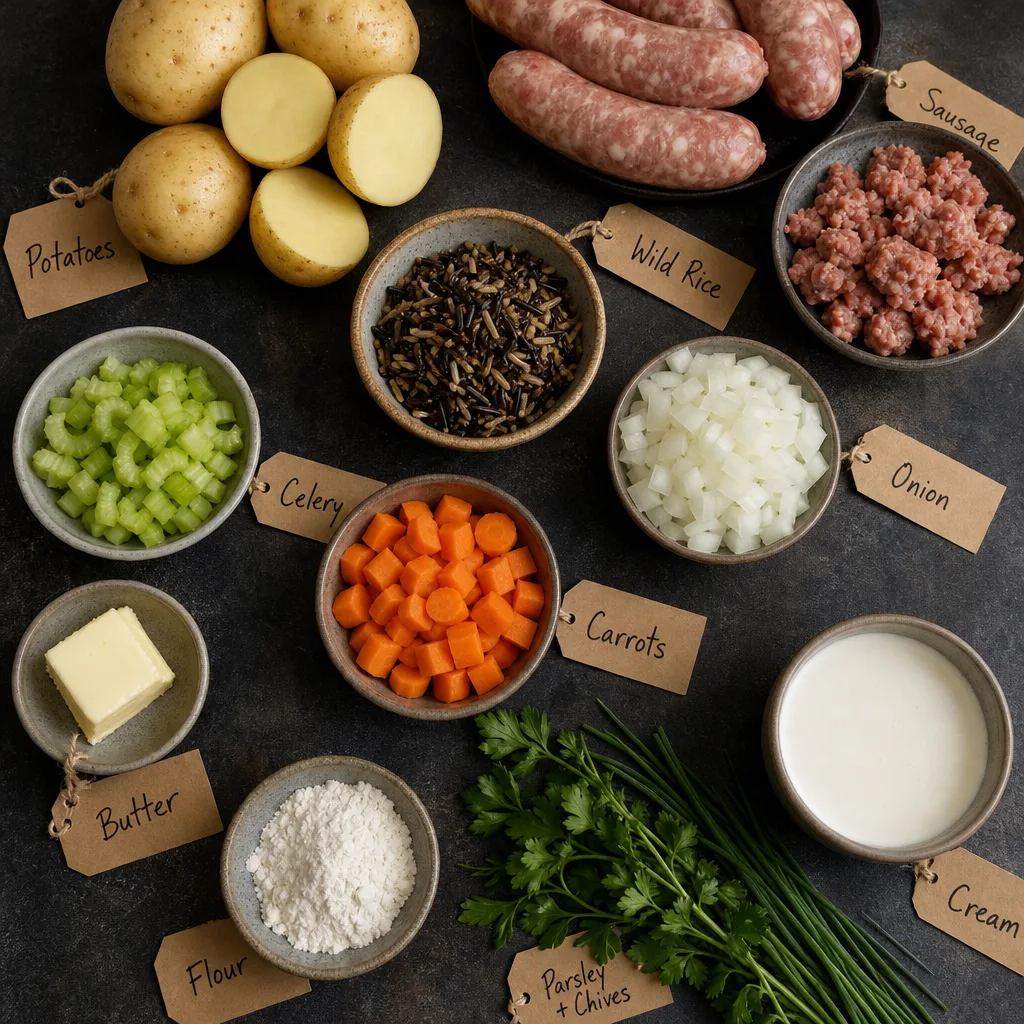
Ingredients
- 1 lb (450 g) sausage (turkey, chicken, pork, or plant-based), casing removed if applicable
- 1 tbsp olive oil
- 1 medium yellow onion, diced (about 1 1/2 cups)
- 2 stalks celery, diced (about 1 cup)
- 2 medium carrots, peeled and diced (about 1 cup)
- 3 cloves garlic, minced
- 4 tbsp unsalted butter
- 1/4 cup all-purpose flour
- 6 cups chicken or vegetable broth
- 1 1/2 cups cooked wild rice (or 1/2 cup dry wild rice, rinsed)
- 1 1/2 lb (700 g) Yukon Gold or Russet potatoes, peeled and cut into 3/4-inch cubes
- 1 cup heavy cream (or half-and-half for lighter chowder)
- 2 bay leaves
- 1 tsp dried thyme (or 1 tbsp fresh thyme leaves)
- Salt to taste
- Black pepper to taste
- Chopped fresh parsley for garnish (about 2 tbsp)
- Chopped fresh chives for garnish (optional, about 1 tbsp)
- Hot water as needed
Instructions
- Prepare ingredients: dice the onion, celery, carrots, mince the garlic, and peel and cut the potatoes into 3/4-inch cubes. If using dry wild rice, rinse it now and cook according to package instructions until tender; set aside to cool.
- Brown the sausage: heat a large heavy-bottomed pot over medium-high heat and add the olive oil. Crumble in the sausage and cook, stirring and breaking up large pieces, until well browned and starting to crisp around the edges, about 6–8 minutes. Transfer the browned sausage to a bowl with a slotted spoon, leaving rendered fat behind in the pot.
- Sauté the aromatics: lower the heat to medium, add the diced onion, celery, and carrots to the pot. Cook, stirring occasionally, until the vegetables are soft and the onion is translucent, about 6 minutes. Add the minced garlic and cook for 30–60 seconds until fragrant.
- Make the roux: push the vegetables to the side of the pot or remove them briefly if the pot looks dry. Add the butter and let it melt. Sprinkle in the flour and whisk constantly for about 1–2 minutes to cook the raw flour taste, forming a light blonde roux. The roux will help thicken the chowder.
- Build the broth: slowly pour in the chicken or vegetable broth while whisking to dissolve any lumps, then add the bay leaves and dried thyme. Scrape up any browned bits from the bottom of the pot for extra flavor. Add the cubed potatoes and return the browned sausage to the pot. Bring to a gentle simmer. If the pot looks too thick, add hot water a little at a time to reach a soup-like consistency.
- Simmer until potatoes are tender: reduce the heat to keep a gentle simmer and cook until the potatoes are fork-tender, about 12–15 minutes. Taste the broth and add salt and black pepper. Remove and discard the bay leaves.
- Add the rice and cream: stir in the cooked wild rice and heavy cream. Warm through over low heat for 3–5 minutes without boiling to prevent curdling. Adjust seasoning with additional salt and pepper if needed.
- Finish and garnish: remove from heat, stir in half of the chopped parsley, and let the chowder rest for 5 minutes to thicken slightly. Serve in bowls and sprinkle with the remaining parsley and chopped chives if using.
- Optional step for thicker chowder: if you prefer a thicker texture, mash a cup of the cooked potato chunks against the side of the pot with a fork or use an immersion blender to pulse the soup 2–3 times until the desired consistency is reached—do this before adding cream for best results.
- To reheat leftovers: warm gently on the stove over low heat with a splash of broth or cream, stirring frequently until hot. Avoid boiling to keep the cream from breaking.
Pro Tips
- Brown the sausage until it has good caramelized bits—those browned edges add deep savory flavor to the entire chowder.
- If you’re short on time, use pre-cooked instant wild rice blend and add it at the same time as the cream to avoid overcooking.
- For a lighter chowder, substitute half-and-half or whole milk for the heavy cream and thicken slightly more with the roux.
- Cook the potatoes to tender but not falling apart; slightly firmer cubes hold up better the next day.
- Adjust texture by mashing a small portion of the potatoes into the broth for natural thickness before adding cream.
Variations
- Chicken and wild rice: swap the sausage for 2 cups shredded cooked rotisserie chicken and reduce browning time—sauté the aromatics in butter and follow the same method.
- Smoky bacon version: use 6–8 slices of chopped bacon, render until crisp, remove, and use the fat for sautéing vegetables. Reintroduce the crisp bacon at the end for texture.
- Vegetarian chowder: use firm plant-based crumbles or smoked tempeh in place of sausage and vegetable broth; add an extra tablespoon of butter for richness or a splash of soy sauce for umami.
- Cheesy chowder: stir in 1 cup shredded sharp cheddar off heat and whisk until melted for a creamier, tangy finish—add cheddar slowly and remove the pot from direct heat to prevent graininess.
Serving Suggestions
- Serve with warm crusty bread or a rustic baguette to sop up the creamy broth.
- A crisp green salad dressed with lemon vinaigrette cuts through richness and adds a refreshing contrast.
- Top bowls with extra chopped parsley and a grind of black pepper for a simple, bright finish.
- Offer pickled jalapeños or a pinch of smoked paprika on the side for guests who want a spicy or smoky kick.
Make-ahead and freezing tips
Chowders often taste better the next day as the flavors marry. Cool the chowder quickly by transferring into shallow containers, then refrigerate. When serving later, reheat on low and consider adding a little extra broth if the mixture has thickened too much. Garnish with fresh herbs just before serving to keep their color and flavor vibrant.
For freezing, leave out the cream and add it when reheating, or freeze fully assembled and plan to re-emulsify gently when warming. Use freezer-safe containers allowing an inch of headspace for expansion. Thaw overnight in the refrigerator and reheat gently to avoid breaking the dairy.
Storage and Reheating
Store cooled chowder in airtight containers in the refrigerator for up to 4 days, or freeze in freezer-safe containers for up to 3 months. When reheating from chilled, warm gently on the stove over low heat with a splash of broth or cream, stirring frequently. If frozen, thaw overnight in the refrigerator before warming. Avoid boiling the chowder during reheating to prevent the dairy from separating; a gentle simmer is best.
Creamy sausage potato chowder
A hearty, creamy chowder with browned sausage, tender potato cubes, chewy wild rice, and aromatic vegetables finished with cream and fresh herbs. Designed for easy weeknight dinners and excellent for make-ahead meals.
Ingredients
Equipment
Method
- Prepare ingredients: dice the onion, celery, carrots, mince the garlic, and peel and cut the potatoes into 3/4-inch cubes. If using dry wild rice, rinse it now and cook according to package instructions until tender; set aside to cool.
- Brown the sausage: heat a large heavy-bottomed pot over medium-high heat and add the olive oil. Crumble in the sausage and cook, stirring and breaking up large pieces, until well browned and starting to crisp around the edges, about 6–8 minutes. Transfer the browned sausage to a bowl with a slotted spoon, leaving rendered fat behind in the pot.
- Sauté the aromatics: lower the heat to medium, add the diced onion, celery, and carrots to the pot. Cook, stirring occasionally, until the vegetables are soft and the onion is translucent, about 6 minutes. Add the minced garlic and cook for 30–60 seconds until fragrant.
- Make the roux: push the vegetables to the side of the pot or remove them briefly if the pot looks dry. Add the butter and let it melt. Sprinkle in the flour and whisk constantly for about 1–2 minutes to cook the raw flour taste, forming a light blonde roux.
- Build the broth: slowly pour in the chicken or vegetable broth while whisking to dissolve any lumps, then add the bay leaves and dried thyme. Scrape up any browned bits from the bottom of the pot for extra flavor. Add the cubed potatoes and return the browned sausage to the pot. Bring to a gentle simmer. If the pot looks too thick, add hot water a little at a time to reach a soup-like consistency.
- Simmer until potatoes are tender: reduce the heat to keep a gentle simmer and cook until the potatoes are fork-tender, about 12–15 minutes. Taste the broth and add salt and black pepper. Remove and discard the bay leaves.
- Add the rice and cream: stir in the cooked wild rice and heavy cream. Warm through over low heat for 3–5 minutes without boiling to prevent curdling. Adjust seasoning with additional salt and pepper if needed.
- Finish and garnish: remove from heat, stir in half of the chopped parsley, and let the chowder rest for 5 minutes to thicken slightly. Serve in bowls and sprinkle with the remaining parsley and chopped chives if using.
- Optional step for thicker chowder: if you prefer a thicker texture, mash a cup of the cooked potato chunks against the side of the pot with a fork or use an immersion blender to pulse the soup 2–3 times until the desired consistency is reached—do this before adding cream for best results.
- To reheat leftovers: warm gently on the stove over low heat with a splash of broth or cream, stirring frequently until hot. Avoid boiling to keep the cream from breaking.
Notes
If using dry wild rice, plan extra time for cooking. A wild rice blend cooks faster than 100% wild rice.
Adjust cream quantity to taste; reduce for a lighter soup or increase for extra richness.
This chowder freezes well if cooled and stored properly; add a small amount of fresh cream when reheating for a fresher finish.
Frequently Asked Questions
Can I use pre-cooked sausage or meat substitutes?
Yes. If using pre-cooked sausage or plant-based crumbles, add them later in the cooking process—after the potatoes are tender—to prevent drying out. Pre-cooked proteins mainly need to be warmed through.
Is wild rice necessary in this chowder?
No. Wild rice contributes a chewy texture and nutty flavor, but you can omit it or substitute with cooked long-grain rice, barley, or extra potatoes. If you omit rice, the chowder will be smoother and more potato-forward.
How can I make this chowder ahead for a dinner party?
Make the soup up to two days in advance and cool it quickly before refrigerating. Reheat gently and stir in fresh herbs right before serving. If the chowder seems too thick after sitting, loosen with a little hot broth or water.
Can I reduce the dairy for a lighter version?
Yes. Replace heavy cream with half-and-half or whole milk and increase the roux slightly to maintain body. Alternatively, finish with a dollop of Greek yogurt off heat for tang and creaminess, but avoid boiling after adding yogurt.
Why did my cream separate when I reheated the chowder?
Rapid boiling or overheating can cause dairy to break and separate. Reheat slowly over low heat and stir often. If separation happens, remove from heat and whisk in a small amount of cold cream or an ice cube to help emulsify, or blend briefly with an immersion blender to smooth textures.