Follow Me On Social Media!
Chocolate brownie cookies
Make fudgy chocolate brownie cookies with a glossy crackled top. Easy step-by-step recipe for dense, chewy cookies with gooey centers and optional mix-ins.

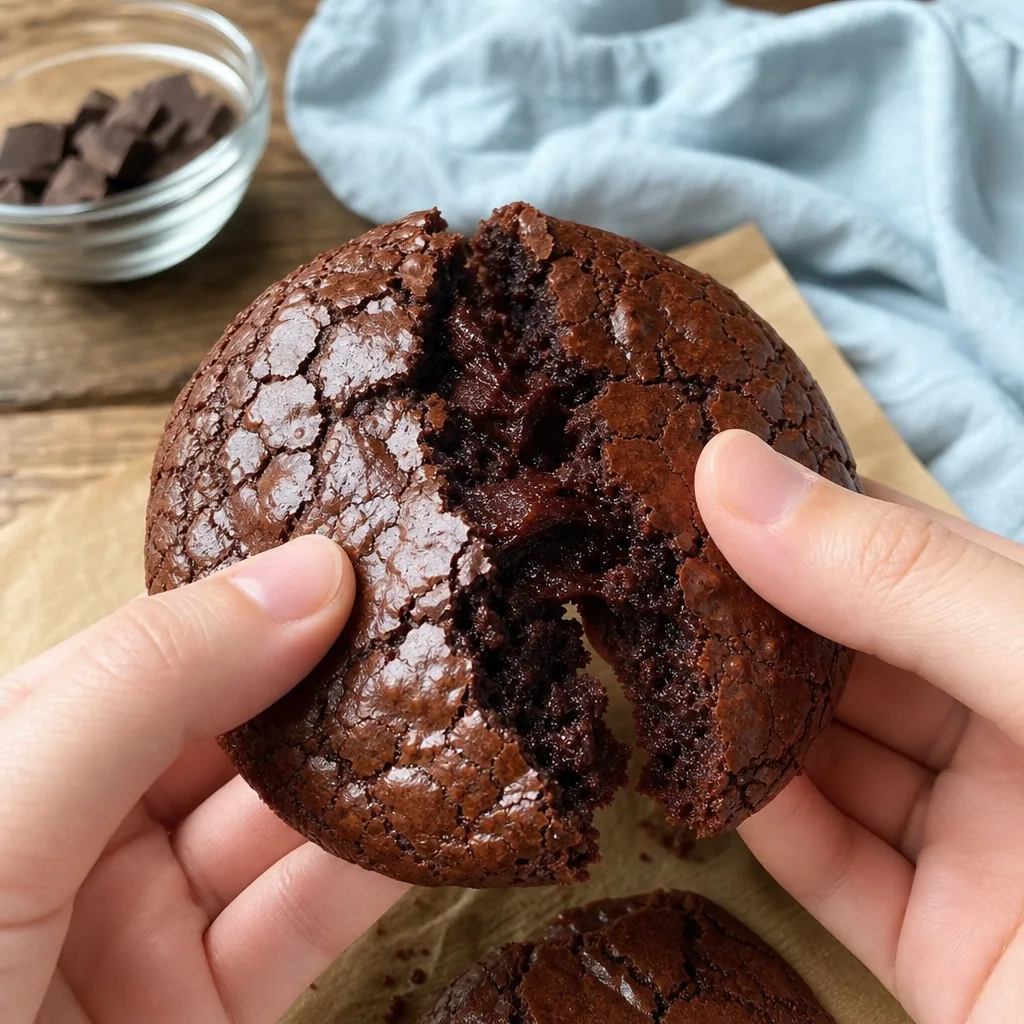
If you love the fudgy interior of a brownie and the hand-held convenience of a cookie, these Chocolate brownie cookies deliver both in one irresistible bite. They have a shiny, crackled top like a classic brownie, with a dense, gooey center that pulls apart with a little stretch. The edges set slightly firmer for a satisfying chew while the center remains glossy and almost molten. This recipe aims to recreate that distinctive thin glossy crust and deep chocolate flavor you see in bakery photos, but in cookie form. The approach borrows techniques from brownie baking — higher fat content, melted chocolate, and careful mixing — while relying on portioning and slightly shorter baking times to maintain the cookie shape.
You don’t need a professional kitchen to pull these off. With straightforward ingredients and a little attention to temperature and timing, you can make bakery-style brownie cookies at home. They are terrific warm from the oven with a scoop of vanilla ice cream, excellent for gifting, and very forgiving to small tweaks. The recipe below includes optional additions like chocolate chunks or espresso to deepen the flavor, plus clear guidance for mixing, portioning, and baking so you consistently get that glossy, crackled surface with a fudgy center.
This post includes the full recipe, equipment suggestions, troubleshooting tips, creative variations, make-ahead and storage instructions, serving ideas, and answers to common questions. Whether you’re a confident baker or trying these for the first time, you’ll find directions that keep the method simple but produce bakery-quality results.
Why this recipe works
The method blends brownie and cookie techniques to achieve a distinct texture contrast: fudgy interior with slightly chewy edges. Melted chocolate and a relatively high fat-to-flour ratio keep the center dense, while eggs and sugar are whipped into the warm chocolate to create the thin, glossy crust that gives these cookies their characteristic look.
A small amount of leavening (baking powder) is included to prevent the cookie from spreading flat like a brownie slab while still keeping the interior dense. Folding rather than vigorously stirring after adding the flour preserves the tender structure and avoids aerating the dough excessively, which would create a lighter, cake-like crumb.
Ingredient notes and substitutions
Chocolate: Use the best-quality semisweet or dark chocolate you can afford for the base melt; cheaper chocolate with less cocoa butter may alter texture and gloss. If you prefer a deeper, less sweet flavor, substitute half the semisweet with 70% dark chocolate.
Flour: All-purpose flour is recommended for predictable structure. If using a gluten-free 1:1 blend, choose one that contains xanthan gum to mimic the binding of gluten. For a denser, more brownie-like cookie, swap up to 2 tablespoons of flour for an equal amount of Dutch-process cocoa and adjust sweetness to taste.
Ingredients
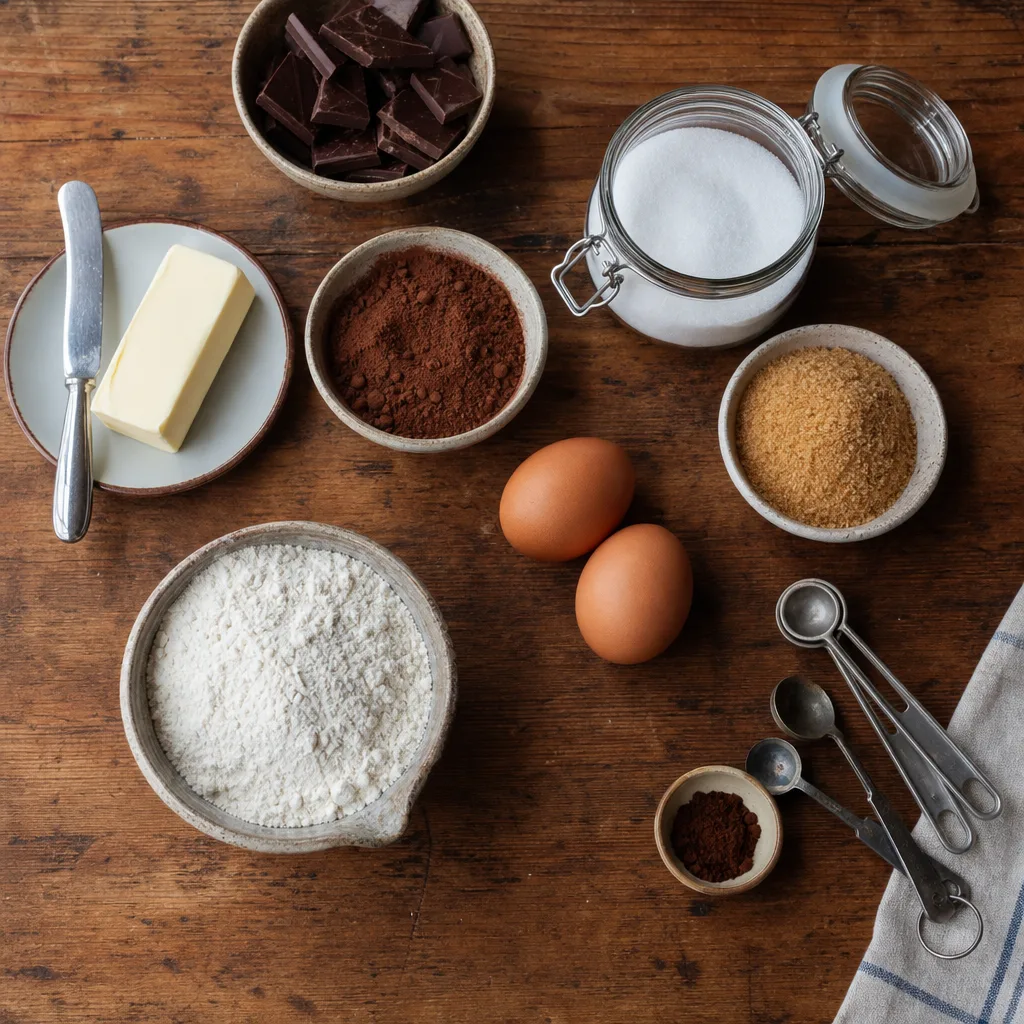
- unsalted butter — 8 tablespoons (115 g), cut into pieces
- semisweet chocolate — 6 ounces (170 g), coarsely chopped
- granulated sugar — 1 cup (200 g)
- light brown sugar — 1/4 cup (50 g), packed
- large eggs — 2 (room temperature)
- vanilla extract — 1 1/2 teaspoons
- unsweetened cocoa powder — 1/3 cup (35 g), sifted
- all-purpose flour — 1 cup (125 g), spooned and leveled
- salt — 1/2 teaspoon
- baking powder — 1/2 teaspoon
- semisweet chocolate chips or chunks — 3/4 cup (130 g)
- espresso powder (optional) — 1/2 teaspoon
- vegetable oil or neutral oil — 1 tablespoon (optional, for sheen)
- powdered sugar (optional for dusting) — to taste
- vanilla ice cream or whipped cream (for serving) — to taste
- coarse sea salt (optional, for finishing) — to taste
- parchment paper or silicone baking mat — null
- nonstick cooking spray or additional butter for prepping pans — null
- cold water — null
Instructions
- Preheat the oven to 350°F (175°C). Line two baking sheets with parchment paper or silicone baking mats and set aside. (No ingredients.)
- Melt the butter and chopped semisweet chocolate together over a double boiler or in 20–30 second bursts in the microwave, stirring between intervals, until smooth and glossy. If using a double boiler, remove from heat once melted. Stir in the optional tablespoon of vegetable oil while the chocolate is warm for extra sheen. (Ingredients: unsalted butter — 8 tablespoons (115 g), semisweet chocolate — 6 ounces (170 g), vegetable oil or neutral oil — 1 tablespoon (optional, for sheen))
- Whisk the granulated sugar and light brown sugar into the warm chocolate mixture until mostly dissolved and slightly glossy. Allow the mixture to cool for 5 minutes so it’s warm but not hot. (Ingredients: granulated sugar — 1 cup (200 g), light brown sugar — 1/4 cup (50 g), packed)
- Add the eggs, one at a time, stirring briskly after each addition so the eggs emulsify into the chocolate and create a shiny top later. Stir in the vanilla extract and the optional espresso powder until combined. (Ingredients: large eggs — 2 (room temperature), vanilla extract — 1 1/2 teaspoons, espresso powder (optional) — 1/2 teaspoon)
- Sift the unsweetened cocoa powder, then add the sifted cocoa, all-purpose flour, baking powder, and salt to the chocolate-egg mixture. Fold gently with a spatula until there are no visible streaks of flour; do not overmix. A few small lumps are fine — overworking can make the cookies cakier instead of fudgy. (Ingredients: unsweetened cocoa powder — 1/3 cup (35 g), all-purpose flour — 1 cup (125 g), baking powder — 1/2 teaspoon, salt — 1/2 teaspoon)
- Fold in the semisweet chocolate chips or chunks so they’re evenly distributed. If you like extra pockets of melted chocolate, reserve a small handful to press on top of each dough mound before baking. (Ingredients: semisweet chocolate chips or chunks — 3/4 cup (130 g))
- Use a 3-tablespoon cookie scoop or two spoons to portion the dough into generous mounds about 2 inches apart on the prepared baking sheets. For larger bakery-style cookies, use a 1/4-cup scoop. Gently smooth the tops with a wet fingertip or the back of a spoon to encourage that glossy crust. (Ingredients: cold water — null)
- If desired, sprinkle a few reserved chocolate chunks on top of each cookie and lightly press them in. Optionally sprinkle a small pinch of coarse sea salt on each cookie for contrast. (Ingredients: semisweet chocolate chips or chunks — 3/4 cup (130 g), coarse sea salt (optional, for finishing) — to taste)
- Bake one sheet at a time in the center of the preheated oven for 10–12 minutes for 3-tablespoon-sized cookies, or 12–14 minutes for larger 1/4-cup mounds. The cookies should have a shiny, cracked crust and still look a bit soft in the center. Rotate the sheet halfway through baking if your oven runs unevenly. (No ingredients.)
- Remove the cookies from the oven and let them cool on the baking sheet for 8–10 minutes so the centers set slightly. Transfer carefully to a wire rack to cool a bit more; they will remain fudgy inside but firm enough to remove after the resting time. (No ingredients.)
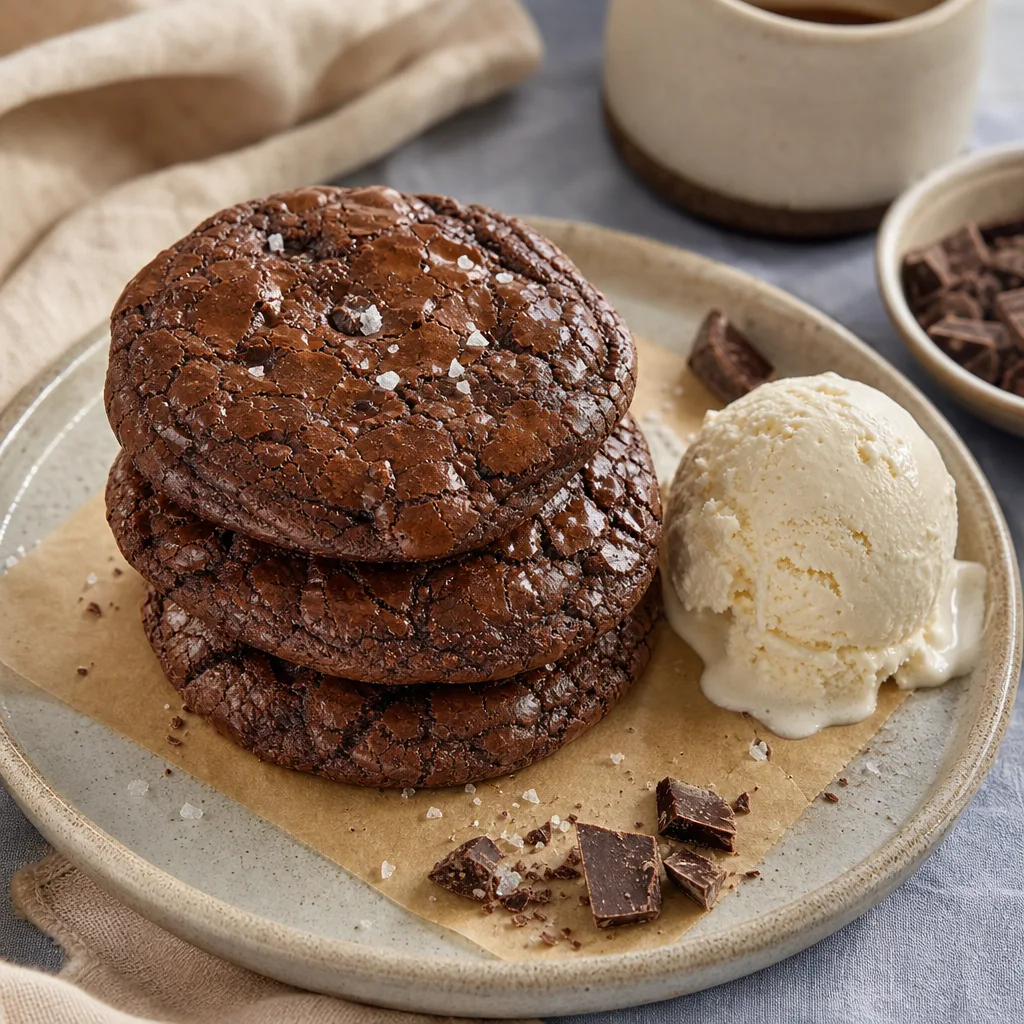
- If you prefer a dusted look, sprinkle a touch of powdered sugar over the cookies once they have cooled slightly. Serve warm or at room temperature with a scoop of vanilla ice cream or a mug of coffee. (Ingredients: powdered sugar (optional for dusting) — to taste, vanilla ice cream or whipped cream (for serving) — to taste)
- Store cooled cookies in an airtight container at room temperature for up to 3 days, or freeze in a single layer on a tray then transfer to a freezer bag for up to 2 months. Reheat gently in a 300°F (150°C) oven for 5–7 minutes or microwave for 10–15 seconds to restore fudgy warmth. (Ingredients: cold water — null)
Pro Tips
- Room-temperature eggs incorporate into the warm chocolate more smoothly; if your eggs are cold, set them in a bowl of warm water for 5 minutes before using.
- Do not overmix after adding flour; fold until just combined to preserve a fudgy texture.
- For a glossier top, ensure sugar is well dissolved into the warm chocolate before adding eggs; vigorous whisking during egg addition also helps create the sheen.
- Chill the cookie dough for 15–20 minutes if it spreads too much in your oven; colder dough holds shape better.
- Use a wet fingertip to smooth tops instead of pressing with a dry utensil; moisture helps the surface form that signature cracked crust.
Variations
- Double Chocolate Chunk: Increase chocolate chips to 1 cup (165 g) and use a mix of semisweet and dark chocolate chunks for intense pockets of melted chocolate.
- Nutty Brownie Cookies: Fold in 1/2 cup (60 g) toasted chopped pecans or walnuts for a crunchy contrast to the fudgy interior.
- Salted Caramel Center: Press a small dollop (about 1/2 teaspoon) of soft caramel sauce into the center of each dough mound before baking and cover lightly with dough to encase the caramel.
- Gluten-Free Option: Replace the all-purpose flour with a 1:1 gluten-free baking flour blend that contains xanthan gum; reduce mixing slightly and monitor bake time as texture may differ.
Serving Suggestions
- Warm with a scoop of vanilla bean ice cream and a drizzle of chocolate sauce for a classic hot-and-cold dessert.
- Serve with strong black coffee or espresso to balance the cookie’s sweetness and amplify the chocolate notes.
- Place two cookies with a scoop of ice cream between them for an indulgent cookie sandwich.
- For a party platter, arrange cookies on parchment with small bowls of sea salt, caramel sauce, and extra chocolate chips for guests to customize.
Make-ahead, freezing and scaling
Dough can be prepared up to 48 hours ahead and refrigerated; cold dough often tastes better after resting because flavors meld. If freezing, scoop the dough onto a tray, freeze until solid, and then transfer to labeled freezer bags. Baked cookies freeze well too—seal them in airtight containers with layers of parchment between to prevent sticking.
To scale the recipe, multiply ingredients proportionally. For a doubled batch, bake on multiple sheets and watch oven capacity; overcrowding reduces air circulation and can change baking times. Bake sheets should be rotated and swapped front-to-back halfway through to ensure even browning.
Storage and Reheating
Store cooled cookies in an airtight container at room temperature for up to 3 days. For longer storage, freeze cooled cookies in a single layer on a tray until firm, then transfer to a freezer bag for up to 2 months. Reheat frozen or chilled cookies by placing them on a baking sheet in a 300°F (150°C) oven for 5–8 minutes, or microwave a single cookie for 10–15 seconds to restore a warm, fudgy center. If reheating from frozen, allow an extra 1–2 minutes in the oven.
Chocolate brownie cookies
Bakery-style chocolate brownie cookies with a shiny, cracked top and a fudgy, gooey center. Made with melted chocolate, cocoa powder, and a bit of baking powder to balance shape and texture.
Ingredients
Equipment
Method
- Preheat the oven to 350°F (175°C). Line two baking sheets with parchment paper or silicone baking mats and set aside.
- Melt the butter (i1) and chopped semisweet chocolate (i2) together over a double boiler or in the microwave until smooth and glossy; if using microwave, heat in 20–30 second bursts and stir between intervals. If using, stir in the vegetable oil (i13) while the mixture is warm.
- Whisk the granulated sugar (i3) and light brown sugar (i4) into the warm chocolate mixture until mostly dissolved and allow to cool for 5 minutes.
- Add the eggs (i5), one at a time, stirring briskly after each addition so the eggs emulsify into the chocolate. Stir in the vanilla extract (i6) and optional espresso powder (i12).
- Sift the cocoa powder (i7) and add it along with the all-purpose flour (i8), baking powder (i10) and salt (i9) to the chocolate-egg mixture. Fold gently with a spatula until there are no visible streaks of flour; do not overmix.
- Fold in the semisweet chocolate chips or chunks (i11), reserving a small handful if you want to press pieces on top before baking.
- Scoop the dough into 3-tablespoon mounds (or 1/4-cup for larger cookies) onto the prepared sheets about 2 inches apart. Use a wet fingertip (dipped into cold water (i19)) to gently smooth the tops for a glossy crust.
- Press reserved chocolate chunks (i11) into the tops if desired and sprinkle a pinch of coarse sea salt (i16) on each cookie.
- Bake one sheet at a time for 10–12 minutes for 3-tablespoon cookies or 12–14 minutes for larger mounds, until the tops are shiny and cracked but centers remain slightly soft.
- Allow the cookies to cool on the baking sheet for 8–10 minutes so the centers set slightly, then transfer to a wire rack.
- Dust lightly with powdered sugar (i14) if desired and serve warm with vanilla ice cream or whipped cream (i15).
- Store cooled cookies in an airtight container at room temperature for up to 3 days or freeze. Reheat in a 300°F (150°C) oven for 5–8 minutes or microwave briefly to restore warmth.
Notes
This recipe intentionally balances melted chocolate with cocoa powder to achieve gloss and deep flavor.
Adjustments to flour or baking time will change fudginess; make small changes and test a few cookies to dial in your preference.
Frequently Asked Questions
Why do my cookies not have a shiny, cracked top?
The shiny, cracked top is created by properly dissolving sugar into the warm chocolate and then vigorously incorporating eggs so the sugar-egg emulsion forms a delicate meringue-like crust. If your chocolate mixture is too cool when you add the eggs, or if sugar remains grainy, the crust won’t form. Slightly warming the chocolate, dissolving the sugar well, and whisking the eggs in quickly usually fixes this. Also avoid overbaking — pulling the cookies from the oven while centers still look slightly soft helps preserve the glossy look.
How can I make these cookies more fudgy or more cakey?
For a fudgier result, reduce the flour by 1–2 tablespoons and avoid overmixing. Use higher-fat chocolate (higher cocoa butter) and slightly underbake by a minute or two. For a cakier texture, increase the flour by 2–4 tablespoons or add an extra 1/4 teaspoon baking powder and bake until the centers are fully set.
Can I make the dough ahead of time?
Yes. Chill the dough tightly wrapped for up to 48 hours; chilling deepens flavor and reduces spread. If you chill for longer, freeze scooped dough mounds on a tray then transfer to a freezer bag for up to 2 months. Bake from frozen, adding 1–2 minutes to the baking time.
Is it necessary to use both melted chocolate and cocoa powder?
Using both builds complexity and texture: melted chocolate provides richness, silkiness, and structure, while cocoa powder intensifies chocolate flavor without extra fat. The combination also helps form the gleaming crust while keeping a dense, fudgy interior.
Can I substitute butter with oil or a vegan butter?
You can use a neutral oil in place of some butter to increase chewiness, but the butter’s milk solids contribute flavor and a tender crumb. For a vegan version, use a high-quality vegan butter and choose dairy-free chocolate and egg replacer (such as a commercial egg replacer or flax "eggs"). Note that texture and the shiny top may change when omitting real eggs.