Follow Me On Social Media!
Pan-seared / blackened salmon with mashed potatoes and green beans
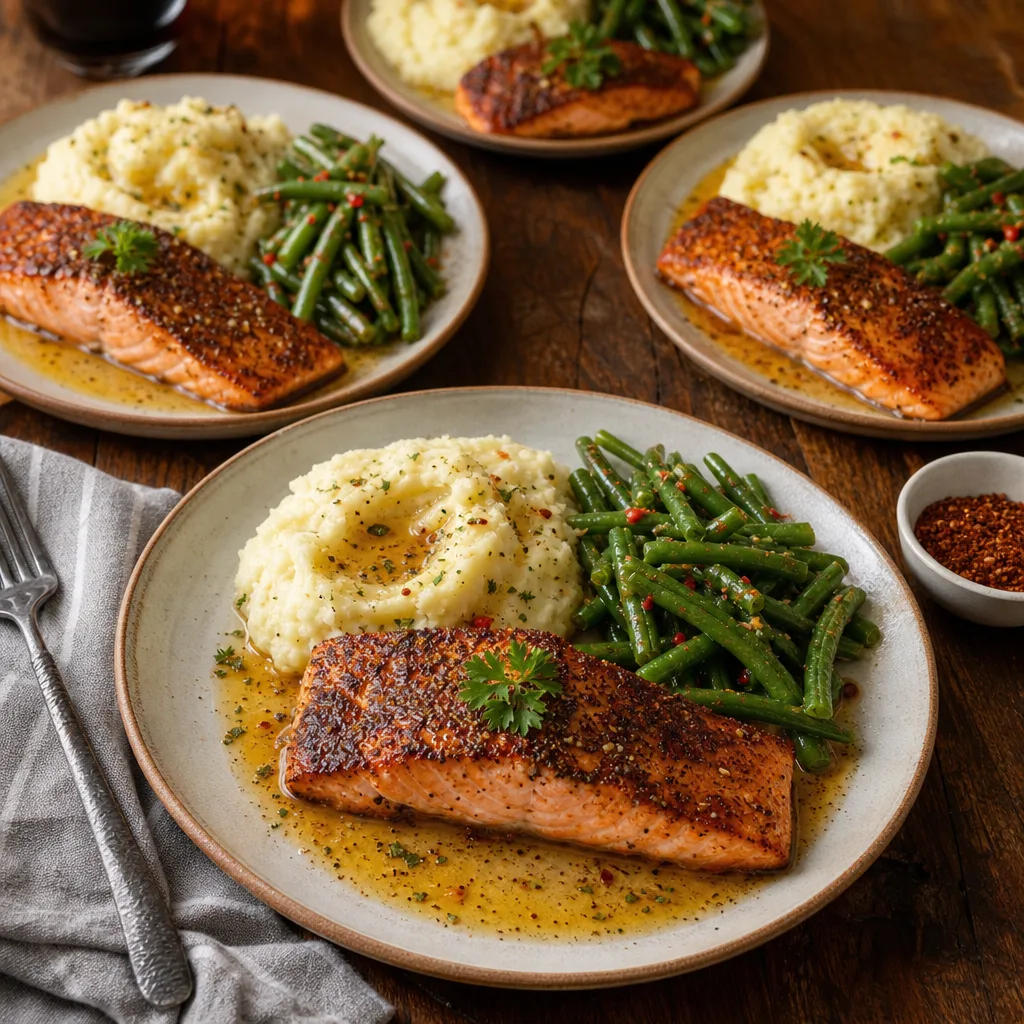
Pan-seared, blackened-style salmon with creamy mashed potatoes and garlic-scallion green beans finished with a brown-butter-lemon sauce. Weeknight friendly and elegant.

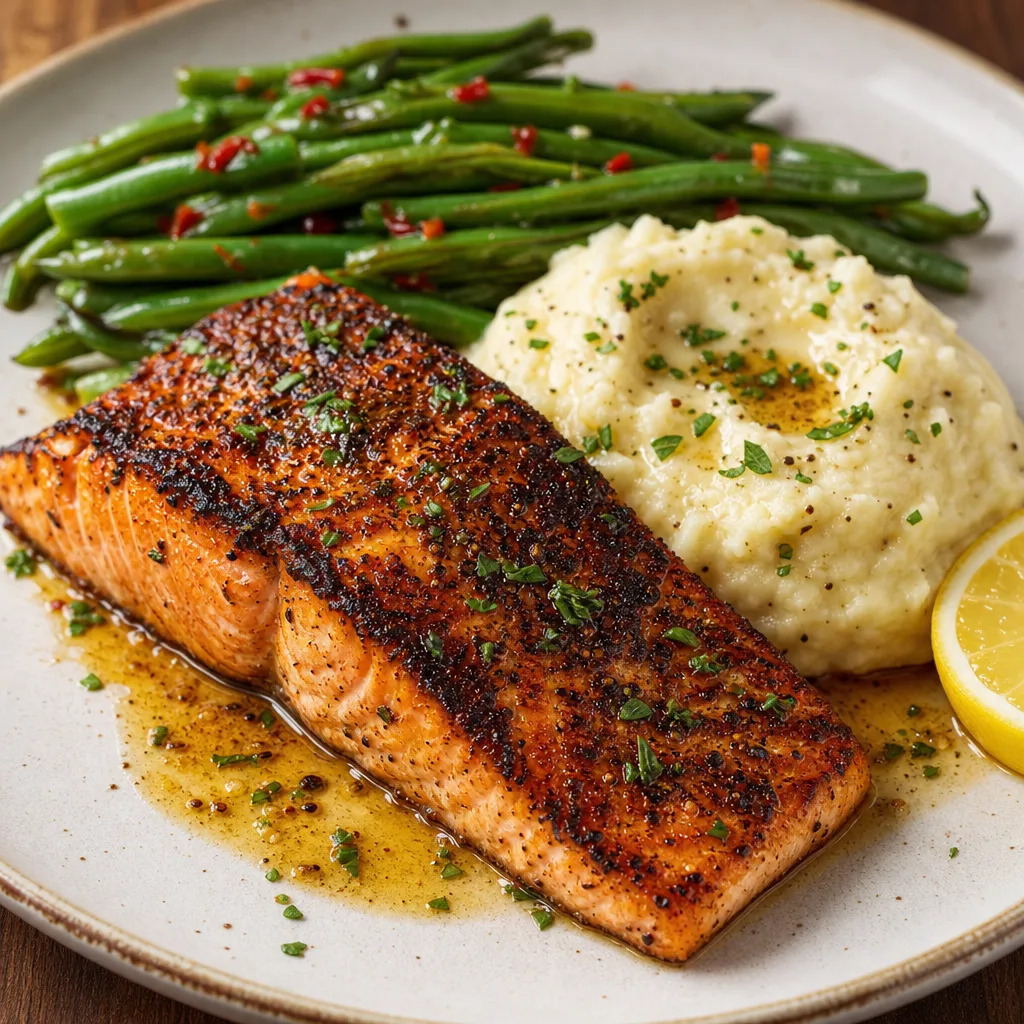
This pan-seared, blackened-style salmon served with creamy mashed potatoes and crisp-tender green beans is a satisfying weeknight dinner that looks and tastes like something special. The salmon is seasoned with a smoky, slightly spicy rub and seared until a crust forms, then finished with a nutty brown-butter-lemon sauce that ties the plate together. Smooth, whipped mashed potatoes provide a neutral, comforting base to soak up the sauce, while green beans tossed with garlic and a touch of heat add brightness and a textural contrast.
The dish balances robust flavor and uncomplicated technique. The blackened-style spice blend gives the salmon visual drama and boldness without complicated steps; the mashed potatoes are classic comfort food, whipped with warm dairy for silkiness; and the green beans are cooked just until tender-crisp so they retain color and snap. Altogether the plate reads as homey yet refined—perfect for a cozy dinner at home, a casual dinner party, or any time you want something that feels both nourishing and a little indulgent.
This recipe is written for four servings and emphasizes clear timing and approach so the three components come together while the salmon is hot. I include make-ahead options, ingredient swaps, and plating notes so you can adapt it to what’s available in your pantry or change the heat level to suit your family. Keep a skillet hot and a timer ready, and you’ll have an elegant, well-balanced meal on the table in under an hour.
Why this combination works
This plate follows a classic protein + starch + vegetable template, and each component plays a specific role. The salmon brings umami and richness, the mashed potatoes provide creamy, neutral base notes that soak up sauce, and the green beans offer a crisp textural contrast and bright flavor. Together they create a balanced mouthfeel and flavor arc.
The blackened-style crust adds both visual interest and concentrated flavor; spices on the exterior give the impression of complexity without adding extra steps. The brown-butter-lemon sauce provides a buttery, slightly acidic finish that lifts the fish’s natural oils and ties together the potatoes and vegetables.
Ingredient notes and substitutions
Salmon: Choose center-cut fillets of similar size so they cook evenly. If salmon is not available, trout fillets can be used with very similar technique, though cook time may be slightly shorter. If you must use a leaner fish (like cod), reduce the searing time and omit very high heat to avoid drying.
Potatoes: Yukon Golds have naturally buttery texture and make very smooth mash without too much added dairy; russets also work and yield a fluffier mash. For lower dairy, use olive oil and warmed milk alternative as noted in the FAQs.
Plating and presentation tips
For restaurant-style plating, mound the mashed potatoes using a large spoon and tap it gently to form a neat dome. Lean the salmon against the potato so the crust faces forward. Arrange the green beans in a tidy bundle beside or behind the protein and finish with a delicate drizzle of the brown-butter sauce around the plate rather than drowned over it.
Add a final sprinkle of chopped herbs and a few cracks of black pepper for color and aroma. A lemon wedge placed at the side lets diners add fresh acidity to taste and brightens the overall plate.
Ingredients
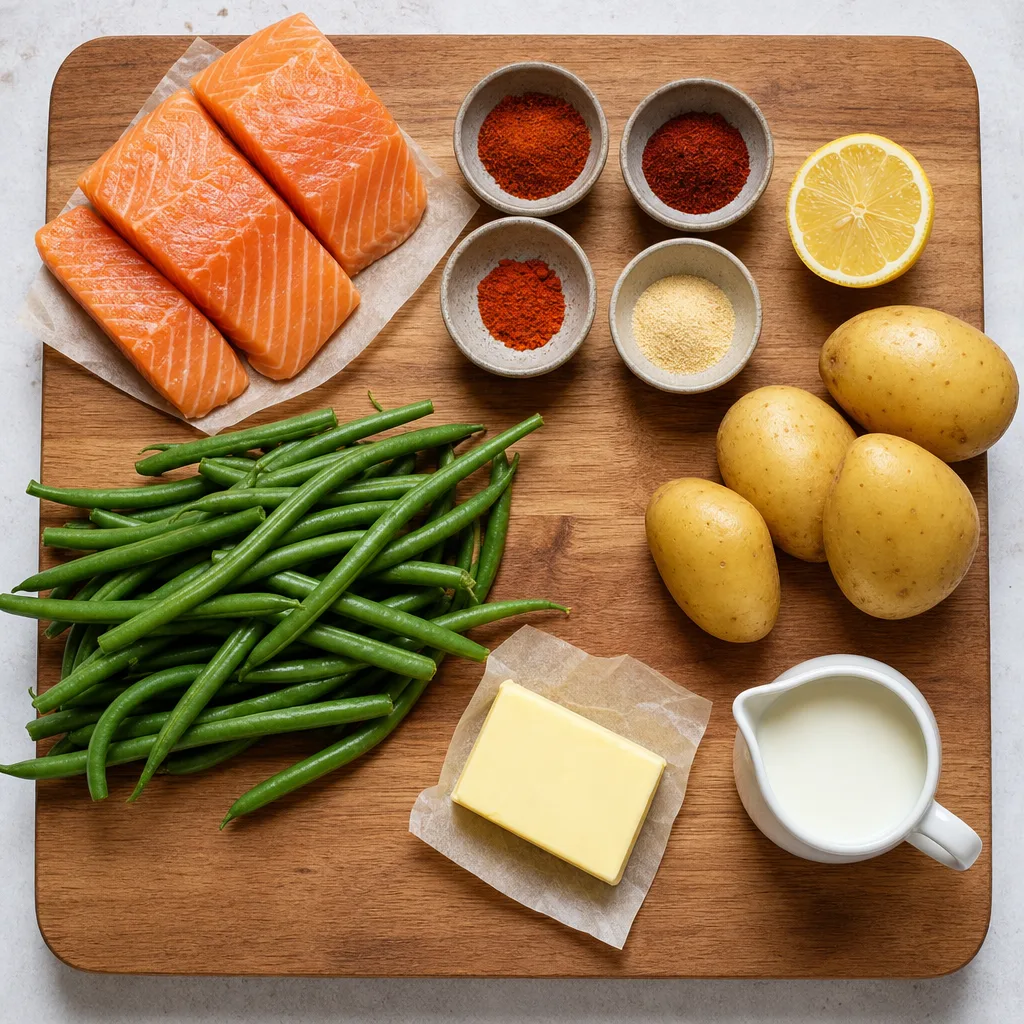
- 4 salmon fillets, skin on or off (6–7 oz / 175–200 g each), room temperature
- 1 tablespoon paprika
- 1 teaspoon smoked paprika
- 1 teaspoon garlic powder
- 1 teaspoon onion powder
- 1/2 teaspoon dried thyme
- 1/2 teaspoon dried oregano
- 1/2 teaspoon cayenne pepper (adjust to taste)
- 1 1/2 teaspoons kosher salt, divided
- 1 teaspoon freshly ground black pepper, divided
- 3 tablespoons neutral oil (vegetable, grapeseed, or canola)
- 4 tablespoons unsalted butter (for brown butter sauce)
- 1 tablespoon lemon juice (fresh)
- 1 tablespoon finely chopped fresh parsley (optional, for sauce and garnish)
- 2 pounds (900 g) Yukon Gold or russet potatoes, peeled and cut into even chunks
- 1/2 cup whole milk (warmed) plus more if needed
- 1/4 cup heavy cream (warmed) or additional milk
- 4 tablespoons unsalted butter (for mashed potatoes)
- Salt and freshly ground black pepper (to taste) for potatoes
- 1 1/2 pounds (700 g) green beans, trimmed
- 1 tablespoon olive oil
- 2 cloves garlic, thinly sliced or minced
- 1/2 teaspoon red pepper flakes (or to taste)
- 1/4 teaspoon kosher salt for beans
- Freshly cracked black pepper for beans (to taste)
- 2 tablespoons extra butter (optional, to finish beans)
- Lemon wedges (for serving, optional)
- Chopped fresh parsley or chives (for garnish, optional)
Instructions
- Make the spice rub: In a small bowl combine paprika, smoked paprika, garlic powder, onion powder, dried thyme, dried oregano, cayenne pepper, 1 teaspoon kosher salt, and 1/2 teaspoon black pepper. Stir until evenly mixed.
- Prepare the potatoes: Place peeled, cut potatoes in a large pot and cover with cold water by about 1 inch. Add 1 teaspoon kosher salt. Bring to a boil over high heat, then reduce to a simmer and cook until potatoes are tender when pierced with a fork, about 12–15 minutes depending on size.
- Warm the dairy for the mash: While potatoes cook, warm the milk and heavy cream together in a small saucepan or microwave until hot but not boiling. Keep warm.
- Season the salmon: Pat salmon fillets dry with paper towels. Evenly rub the spice mixture over the flesh side of each fillet, pressing gently to adhere. Season the skin side (or opposite side if skinless) with the remaining 1/2 teaspoon black pepper and a light pinch of salt.
- Blanch the green beans: Bring a medium pot of salted water to a rolling boil. Add green beans and cook for 2–3 minutes until bright green and just tender. Immediately transfer beans to an ice-water bath to stop cooking and preserve color. Drain and set aside.
- Finish the mashed potatoes: Drain potatoes thoroughly and return to the hot pot off the heat for a minute to allow excess moisture to evaporate. Add 4 tablespoons butter, then mash with a potato masher or ricer. Gradually stir in warmed milk and cream until the mash reaches your preferred consistency. Season with salt and pepper to taste and keep warm while you cook the salmon.
- Sear the salmon: Heat a large heavy skillet (cast iron preferred) over medium-high heat until very hot. Add neutral oil and swirl to coat. Place salmon fillets in the pan, flesh-side down if skinless or skin-side down if skin-on depending on preference; press gently so the fillets make even contact with the skillet. Cook undisturbed until a dark crust forms, about 3–4 minutes. Flip carefully and cook the second side for 2–3 minutes for medium doneness (internal temp 125–130°F / 52–54°C) or longer for more well-done fish. Remove salmon to a warm plate and tent loosely with foil.
- Make the brown-butter-lemon sauce: In the same skillet over medium heat, reduce heat to medium-low and add 4 tablespoons butter. Swirl the pan as the butter foams and then turns light brown and nutty, about 2–3 minutes. Watch carefully to avoid burning. Remove from heat, stir in lemon juice and 1 tablespoon chopped parsley if using, and season with a pinch of salt and a grind of black pepper. Spoon sauce over the salmon fillets.
- Sauté the green beans: In a separate large skillet over medium heat, add 1 tablespoon olive oil. Add sliced or minced garlic and red pepper flakes and cook for 30–45 seconds until fragrant. Add the blanched, drained green beans, sprinkle with 1/4 teaspoon kosher salt and cracked black pepper, and toss to coat. Cook, stirring occasionally, for 2–3 minutes until beans are heated through and glossy. Add 2 tablespoons butter at the end if you want extra richness and toss until melted.
- Plate and garnish: Spoon a generous mound of mashed potatoes on each plate, arrange a salmon fillet on top or just beside the potatoes, and add a portion of green beans. Drizzle brown-butter-lemon sauce around the salmon and potatoes, sprinkle with additional chopped parsley or chives, and serve with lemon wedges.
- Check doneness and serve immediately: Salmon is best served right away while the crust is crisp and the center tender. If you prefer a firmer texture, cook a minute or two longer on the second side and recheck the internal temperature.
- Make-ahead notes: Mashed potatoes can be made up to one day ahead and gently reheated with a splash of milk and a pat of butter. Green beans can be blanched and chilled ahead of time, then quickly finished in the skillet just before serving.
Pro Tips
- Bring salmon to room temperature for 15–20 minutes before cooking so it sears evenly and doesn’t shock when it hits the hot pan.
- Pat the fish very dry before applying the spice rub—moisture prevents a good crust from forming.
- Use a heavy-bottomed skillet, ideally cast iron, for the best sear and reliable heat retention.
- Don’t overcrowd the pan when searing salmon; give each fillet space so steam won’t form and soften the crust.
- If you prefer milder heat, halve the cayenne in the rub and reduce or omit the red pepper flakes in the green beans.
Variations
- Herbed compound butter: Replace the brown butter sauce with a chilled compound butter flavored with lemon zest, chopped parsley, and garlic for an elegant finish that melts over the hot fish.
- Smoky maple glaze: Swap the brown-butter-lemon sauce for a quick glaze of 2 tablespoons maple syrup reduced with 1 teaspoon soy sauce and a pinch of smoked paprika; brush over salmon just before serving.
- Crispy skin method: If using skin-on fillets, cook skin-side down longer over medium heat until deeply crisp, then flip briefly to finish; remove skin if you prefer not to serve it.
- Bacon-studded beans: For a richer side, sauté 2–3 slices chopped bacon until crisp, remove and drain, then toss the cooked green beans in the bacon fat before adding garlic and returning the bacon pieces at the end.
Serving Suggestions
- Serve with a simple green salad dressed in lemon vinaigrette to add brightness and acidity to the meal.
- Offer crusty bread or warm dinner rolls to help mop up the brown-butter sauce and mashed potato juices.
- Pair with a chilled Sauvignon Blanc or unoaked Chardonnay to complement the richness of the butter and the salmon’s flavor.
- Add roasted cherry tomatoes drizzled with olive oil and rosemary to the plate for extra color, sweetness, and roast flavor.
Make-ahead and timing strategy
To streamline dinner service, make mashed potatoes up to a day ahead and reheat gently with a splash of warm milk and a pat of butter. Blanch the green beans and chill them in an ice bath the day before; finish them quickly in a skillet right before serving. The salmon should be cooked last so it arrives at the table with the best texture and hottest temperature.
If entertaining, keep the brown-butter sauce warm in a small heatproof bowl set over very low heat or in a thermos, and spoon just before serving. Cook salmon in batches, resting finished fillets on a warm platter loosely tented with foil while you finish the rest.
Storage and Reheating
Store leftover salmon, mashed potatoes, and green beans in separate airtight containers in the refrigerator for up to 2 days. Reheat mashed potatoes gently on the stove over low heat with a splash of milk and a pat of butter, stirring constantly until warmed through. Reheat green beans in a skillet over medium heat with a little olive oil or butter until warmed. Reheat salmon very gently in a 300°F (150°C) oven for 10–12 minutes covered with foil, or briefly in a skillet over low heat; avoid high heat so the fish doesn’t dry out. The crust will soften after refrigeration but the flavor remains good.
Pan-seared / blackened salmon with mashed potatoes and green beans
A weeknight-friendly plated dinner: spiced, pan-seared salmon finished with a brown-butter-lemon sauce, creamy mashed potatoes, and garlic-and-red-pepper-flecked green beans.
Ingredients
Equipment
Method
- Make the spice rub: In a small bowl combine paprika (i2), smoked paprika (i3), garlic powder (i4), onion powder (i5), dried thyme (i6), dried oregano (i7), cayenne pepper (i8), 1 teaspoon kosher salt (i9), and 1/2 teaspoon black pepper (i10). Stir until evenly mixed.
- Prepare the potatoes: Place peeled, cut potatoes (i15) in a large pot and cover with cold water by about 1 inch. Add 1 teaspoon kosher salt (i9). Bring to a boil over high heat, then reduce to a simmer and cook until potatoes are tender when pierced with a fork, about 12–15 minutes depending on size.
- Warm the dairy for the mash: While potatoes cook, warm the milk (i16) and heavy cream (i17) together in a small saucepan or microwave until hot but not boiling. Keep warm.
- Season the salmon: Pat salmon fillets (i1) dry with paper towels. Evenly rub the spice mixture over the flesh side of each fillet, pressing gently to adhere. Season the skin side (or opposite side if skinless) with the remaining 1/2 teaspoon black pepper (i10) and a light pinch of salt (i9).
- Blanch the green beans: Bring a medium pot of salted water to a rolling boil. Add green beans (i20) and cook for 2–3 minutes until bright green and just tender. Immediately transfer beans to an ice-water bath to stop cooking and preserve color. Drain and set aside.
- Finish the mashed potatoes: Drain potatoes (i15) thoroughly and return to the hot pot off the heat for a minute to allow excess moisture to evaporate. Add 4 tablespoons butter (i18), then mash with a potato masher or ricer. Gradually stir in warmed milk (i16) and cream (i17) until the mash reaches your preferred consistency. Season with salt and pepper to taste (i19) and keep warm while you cook the salmon.
- Sear the salmon: Heat a large heavy skillet (equipment) over medium-high heat until very hot. Add neutral oil (i11) and swirl to coat. Place salmon fillets (i1) in the pan, flesh-side down if skinless or skin-side down if skin-on depending on preference; press gently so the fillets make even contact with the skillet. Cook undisturbed until a dark crust forms, about 3–4 minutes. Flip carefully and cook the second side for 2–3 minutes for medium doneness. Remove salmon to a warm plate and tent loosely with foil.
- Make the brown-butter-lemon sauce: In the same skillet over medium heat, reduce heat to medium-low and add 4 tablespoons butter (i12). Swirl the pan as the butter foams and then turns light brown and nutty, about 2–3 minutes. Remove from heat, stir in lemon juice (i13) and 1 tablespoon chopped parsley (i14) if using, and season with a pinch of salt (i9) and a grind of black pepper (i10). Spoon sauce over the salmon fillets.
- Sauté the green beans: In a separate large skillet over medium heat, add 1 tablespoon olive oil (i21). Add sliced or minced garlic (i22) and red pepper flakes (i23) and cook for 30–45 seconds until fragrant. Add the blanched, drained green beans (i20), sprinkle with 1/4 teaspoon kosher salt (i24) and cracked black pepper (i25), and toss to coat. Cook, stirring occasionally, for 2–3 minutes until beans are heated through and glossy. Add 2 tablespoons butter (i26) at the end if you want extra richness and toss until melted.
- Plate and garnish: Spoon a generous mound of mashed potatoes on each plate, arrange a salmon fillet on top or just beside the potatoes, and add a portion of green beans. Drizzle brown-butter-lemon sauce around the salmon and potatoes, sprinkle with additional chopped parsley or chives (i28), and serve with lemon wedges (i27).
- Check doneness and serve immediately: Salmon is best served right away while the crust is crisp and the center tender. If you prefer a firmer texture, cook a minute or two longer on the second side and recheck the internal temperature.
- Make-ahead notes: Mashed potatoes can be made up to one day ahead and gently reheated with a splash of milk and a pat of butter. Green beans can be blanched and chilled ahead of time, then quickly finished in the skillet just before serving.
Notes
Nutrition not calculated. This recipe uses butter and cream; substitute to reduce fat if desired.
Adjust spice levels to taste—reduce cayenne and red pepper flakes for a milder dish.
Frequently Asked Questions
Can I use frozen salmon fillets for this recipe?
You can use frozen salmon, but thaw it completely in the refrigerator overnight first and pat it dry well before seasoning. Cooking from frozen will prevent the surface from searing properly and can result in uneven doneness. Proper thawing and drying are key to getting the crusty exterior described in this recipe.
How do I know when the salmon is done?
For tender, slightly rosy center salmon, aim for an internal temperature of about 125–130°F (52–54°C) measured at the thickest part. The fillet will continue to cook a bit after you remove it from the pan. If you prefer fully opaque salmon, cook to 140°F (60°C). Another visual cue is that the flesh will flake easily when prodded with a fork but should still look moist.
My brown butter looked like it burned—how can I prevent that?
Brown butter can go from nutty to burnt quickly. Use medium-low heat once the butter melts and foam subsides. Swirl the pan and watch for tiny brown flecks at the bottom; remove from heat as soon as you smell a toasty, nutty aroma and the color is golden-brown. If it smells acrid or very dark, discard and start over.
What can I use instead of heavy cream in the mashed potatoes?
If you don’t have heavy cream, use additional warmed whole milk or a mixture of milk and a tablespoon or two of sour cream for tang and richness. For a dairy-free version, warm canned full-fat coconut milk or a fortified plant-based milk and increase butter substitute or olive oil slightly for silkiness.
Can I make this recipe spicy or milder for kids?
Yes. To increase heat, add more cayenne to the rub or include a pinch of cayenne or a drizzle of hot sauce on the finished plate. To make it kid-friendly, halve or omit the cayenne in both the fish rub and the red pepper flakes in the green beans. The brown-butter-lemon sauce provides flavor without heat if you need a mellower profile.