Follow Me On Social Media!
Salted caramel cookies
Soft, chewy salted caramel cookies with molten caramel centers and flaky sea salt. A step-by-step recipe for bakery-style cookies with options for caramel candies, sauce, and make-ahead tips.

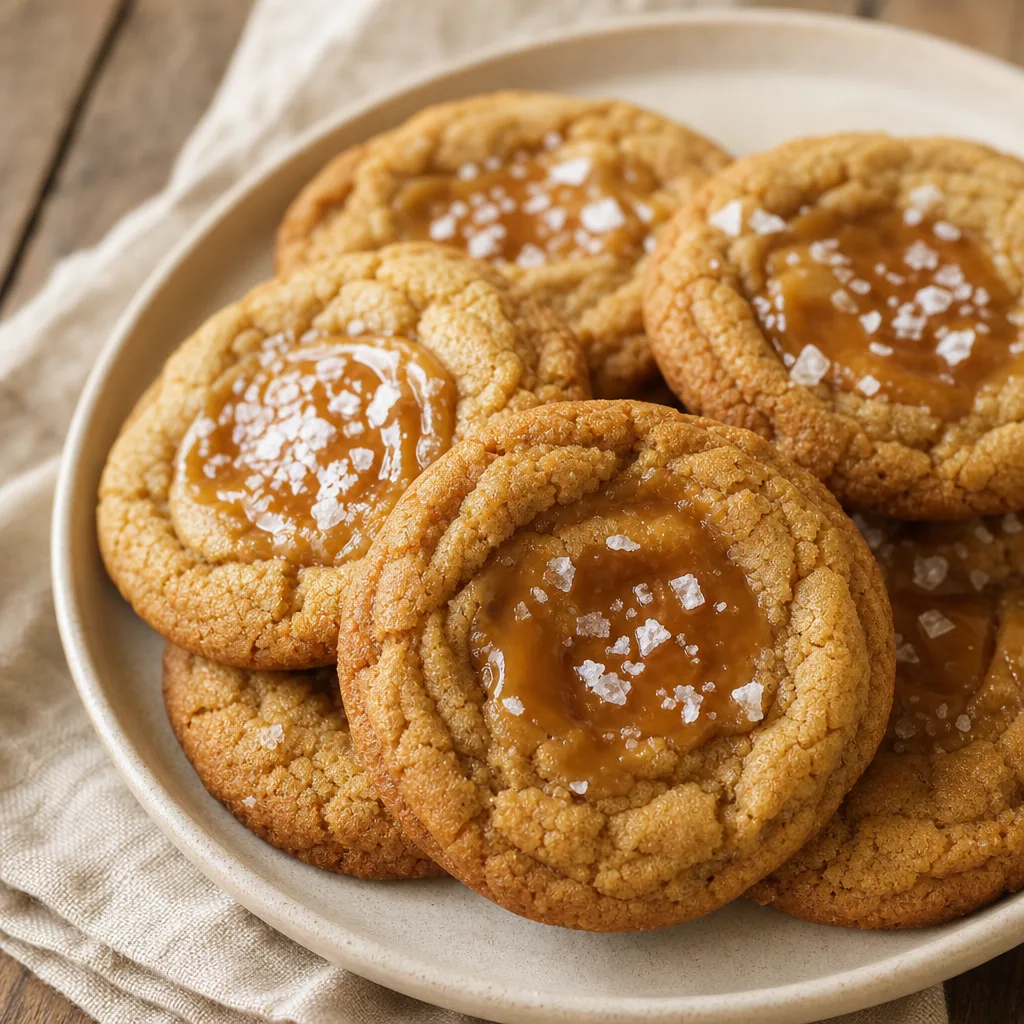
These Salted caramel cookies strike a balance between buttery, soft cookie dough and pockets of molten caramel topped with flaked sea salt. They look rustic and golden with slightly crackled tops and darker, crisped edges, while the centers remain tender and glossy thanks to melted caramel. The sweet-salty contrast is immediate: brown-sugar warmth in the cookie itself cut by bright, crunchy salt, and a gooey caramel that threads each bite.
This recipe is designed to be approachable while delivering bakery-worthy results. I’ve chosen familiar pantry ingredients and a simple method that yields chewy edges, pillowy middles and just enough caramel to feel indulgent without making the cookies overly sticky. The instructions include options for using store-bought soft caramels, prepared salted caramel sauce, or quick homemade caramel pieces so you can pick what fits your time and comfort level.
Beyond the basic bake notes, you’ll find suggested substitutions, make-ahead strategies, and creative variations to tailor these cookies for parties, gift boxes, and bake sales. Whether you want to turn them into thumbprint-style cookies with a pool of caramel, or bake mini bites studded with chocolate and caramel, the structure of the dough is forgiving and adaptable. Read on for equipment tips, step-by-step instructions, plating ideas, and frequently asked questions that cover troubleshooting common sticky-sweet issues.
Why this recipe works
The balance of brown sugar and granulated sugar produces a cookie with chew and subtle caramel notes. Brown sugar contains molasses which contributes moisture, a tender crumb, and deeper color. The inclusion of cornstarch in the dry mix helps thicken and stabilize the dough for softer, more tender centers.
Enclosing soft caramels in the dough creates a molten pocket without oversaturating the cookie. Because the caramel is concentrated in a small core, the exterior bakes to a pleasant chewiness while the interior remains glossy and gooey. Finishing with flaky salt brightens the sweetness and provides a textural pop that highlights the caramel’s flavor.
Ingredient notes and substitutions
Butter: You can use unsalted butter and control the salt yourself; browned butter adds a toasty, nutty complexity but increases the risk of spread, so use cooler dough if you prefer thicker cookies. If you need dairy-free options, substitute with a high-quality vegan butter, but expect a slight change in texture.
Caramel options: Choose between soft caramel candies, commercial caramel bits, or homemade caramel. Store-bought caramel sauce is convenient for drizzling or filling after baking. If using sauce, warm it slightly to make it easier to distribute, but avoid making the cookies soggy by using only a small amount per cookie.
Ingredients
- Unsalted butter — 1 cup (227 g), softened or browned
- Granulated sugar — 1/2 cup (100 g)
- Light brown sugar — 1 cup (200 g), packed
- Large egg — 1
- Vanilla extract — 1 1/2 teaspoons
- All-purpose flour — 2 1/4 cups (280 g)
- Cornstarch — 2 teaspoons
- Baking soda — 1 teaspoon
- Kosher salt — 1/2 teaspoon (for dough)
- Coarse flaky sea salt — 1 to 1 1/2 teaspoons, for sprinkling (to taste)
- Soft caramels — 9 to 12 pieces, unwrapped and halved, or 3/4 cup caramel bits
- Prepared salted caramel sauce — 1/3 to 1/2 cup (optional, for filling or drizzling)
- Milk or cream — 1 to 2 teaspoons (optional, to loosen caramel sauce)
- Oil or nonstick spray — for greasing baking sheet (or use parchment/baking mat)
- Water — as needed (small amount for melting caramel if using caramel sauce)
Instructions
- If you choose brown butter, brown 1 cup (227 g) unsalted butter in a light-colored skillet over medium heat until it foams, smells nutty and small brown bits appear; transfer to a bowl to cool to warm (about 10–15 minutes). If using softened butter, skip browning. (ingredient_ids: ["butter"])
- Line two baking sheets with parchment paper or silicone baking mats and preheat the oven to 350°F (175°C). Allow space for spreading. (ingredient_ids: [])
- In the bowl of a stand mixer fitted with the paddle attachment or in a large bowl with an electric mixer, combine 1/2 cup granulated sugar and 1 cup light brown sugar; beat with the cooled brown butter or softened butter until the mixture is creamy and well combined, about 2–3 minutes. Scrape down the sides as needed. (ingredient_ids: ["granulated_sugar", "light_brown_sugar", "butter"])
- Add 1 large egg and 1 1/2 teaspoons vanilla extract and beat until incorporated. Do not overmix. (ingredient_ids: ["egg", "vanilla_extract"])
- Whisk together 2 1/4 cups all-purpose flour, 2 teaspoons cornstarch, 1 teaspoon baking soda, and 1/2 teaspoon kosher salt in a separate bowl. (ingredient_ids: ["flour", "cornstarch", "baking_soda", "kosher_salt"])
- With the mixer on low, add the dry ingredients to the wet mixture in two additions, mixing just until no streaks of flour remain. The dough should be soft and slightly tacky. (ingredient_ids: ["flour","cornstarch","baking_soda","kosher_salt"])
- Scoop the dough into 1 1/4- to 1 1/2-tablespoon portions (about golf-ball sized). Flatten each slightly in your palm and place a half piece of soft caramel or a tablespoon of caramel bits in the center; fold dough around the caramel to fully enclose it and roll into a smooth ball. Repeat, spacing cookie dough balls about 2 inches apart on the prepared baking sheets. (ingredient_ids: ["soft_caramels","caramel_bits"])
- Optional variation: For caramel pools on top rather than enclosed centers, bake plain cookie dough balls for 7–9 minutes, then remove from oven and press a caramel half into the warm center; return to the oven and bake 1–3 minutes more until caramel is glossy and cookie edges are set. (ingredient_ids: ["soft_caramels"])
- Bake at 350°F (175°C) for 10–12 minutes, until cookies are golden at the edges, the tops show small cracks, and centers still look slightly underbaked. If you used caramel halves on top, watch the additional caramel stage closely to avoid scorching. (ingredient_ids: [])
- Remove the cookies to a cooling rack after 3–4 minutes on the baking sheet. While still warm, sprinkle each cookie with a small pinch of coarse flaky sea salt (about a generous 1/8 to 1/4 teaspoon per cookie, adjust to taste). Allow cookies to cool completely; the caramel will settle into a glossy pool as they rest. (ingredient_ids: ["coarse_flaky_sea_salt"])
- If you want an extra drizzle, warm 1/3 cup prepared salted caramel sauce with 1–2 teaspoons milk or cream to loosen it slightly and spoon or pipe a thin ribbon over cooled cookies. (ingredient_ids: ["prepared_salted_caramel_sauce","milk_or_cream"])
- Store cooled cookies in an airtight container layered with parchment at room temperature for up to 3 days, or freeze in a single layer then transfer to a sealed container for up to 2 months. Reheat frozen cookies for 6–10 seconds in the microwave to soften caramel before serving. (ingredient_ids: [])
Pro Tips
- Chill the dough for 20–30 minutes if your kitchen is warm; slightly firmer dough yields thicker cookies and helps prevent caramel leakage during baking.
- Use soft caramel candies or commercial caramel bits intended for baking; hard caramels can remain solid in the center and will not create the same molten effect.
- If browning butter, watch it carefully; it can go from nutty to burnt in seconds. Transfer it off the heat as soon as the milk solids turn golden-brown.
- For consistent cookies, use a small cookie scoop so all pieces are the same size and bake evenly.
- If you prefer a more pronounced caramel flavor in the dough, substitute 1/4 cup of the granulated sugar with 1/4 cup dark brown sugar or add 2 teaspoons of light molasses to the wet ingredients.
Variations
- Double chocolate salted caramel: Add 1/3 cup unsweetened cocoa powder to the dry ingredients and fold in 3/4 cup chocolate chips along with the caramel filling for a chocolate-caramel combination.
- Thumbprint-style caramel cookies: Press an indentation into each dough ball before baking and fill the indentation with 1/2 teaspoon prepared caramel sauce after baking for a deliberate pool in the center.
- Nut-studded: Fold 1/2 cup chopped toasted pecans or walnuts into the dough for crunch and toasty flavor that plays well with caramel.
- Mini bites: Make smaller, teaspoon-sized cookies and use mini caramel bits for party platters and bite-sized sampling.
Serving Suggestions
- Plate warm with a scoop of vanilla ice cream for a classic hot-and-cold dessert experience.
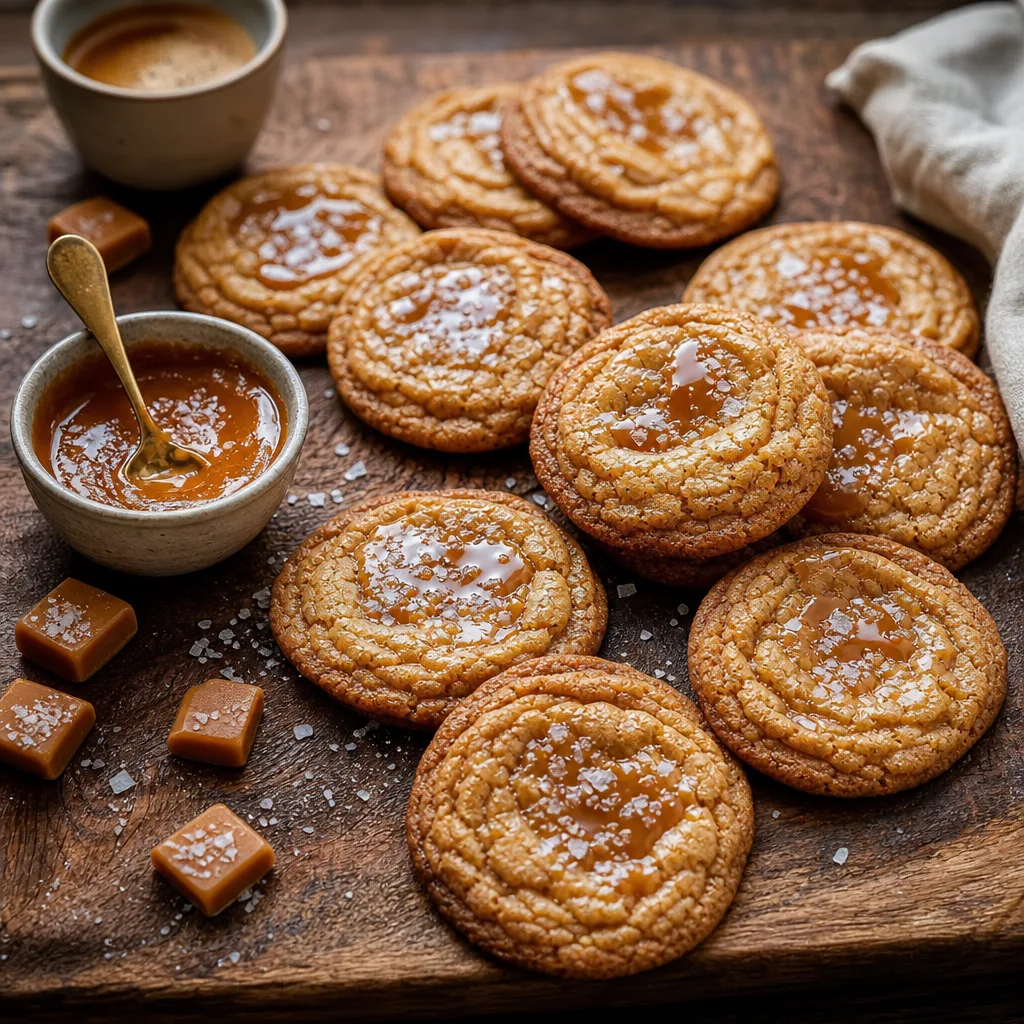
- Serve on a rustic wooden board with a bowl of extra salted caramel sauce and small spoons so guests can add more if they like.
- Pack them into cellophane bags with a ribbon for homemade gifts; include reheating instructions so recipients know how to soften the caramel.
- Arrange them alongside strong coffee or espresso; the bitters in coffee cut sweetness and highlight the cookie's brown-sugar notes.
Make-ahead and freezing
Scoop-and-freeze: Scoop and shape the dough around caramels, lay the cookie balls on a tray to freeze until solid, then transfer to a sealed freezer bag. Bake from frozen adding 1–2 minutes to the bake time. This method gives fresh-baked results with minimal effort when you want cookies on demand.
Baked cookies can be frozen in a single layer on a baking sheet then stacked with parchment in an airtight container. Thaw at room temperature and warm briefly in the microwave or oven for the best texture and to recrystallize the caramel slightly for a freshly-baked feel.
Storage and Reheating
Store cooled cookies at room temperature in an airtight container layered with parchment for up to 3 days. To keep them longer, freeze flat on a baking sheet until firm, then stack with parchment and transfer to a freezer-safe bag for up to 2 months. Reheat frozen cookies on a microwave-safe plate for 6–10 seconds to soften the caramel, or warm in a 300°F (150°C) oven for 4–6 minutes to refresh the crisp edges and soften the center.
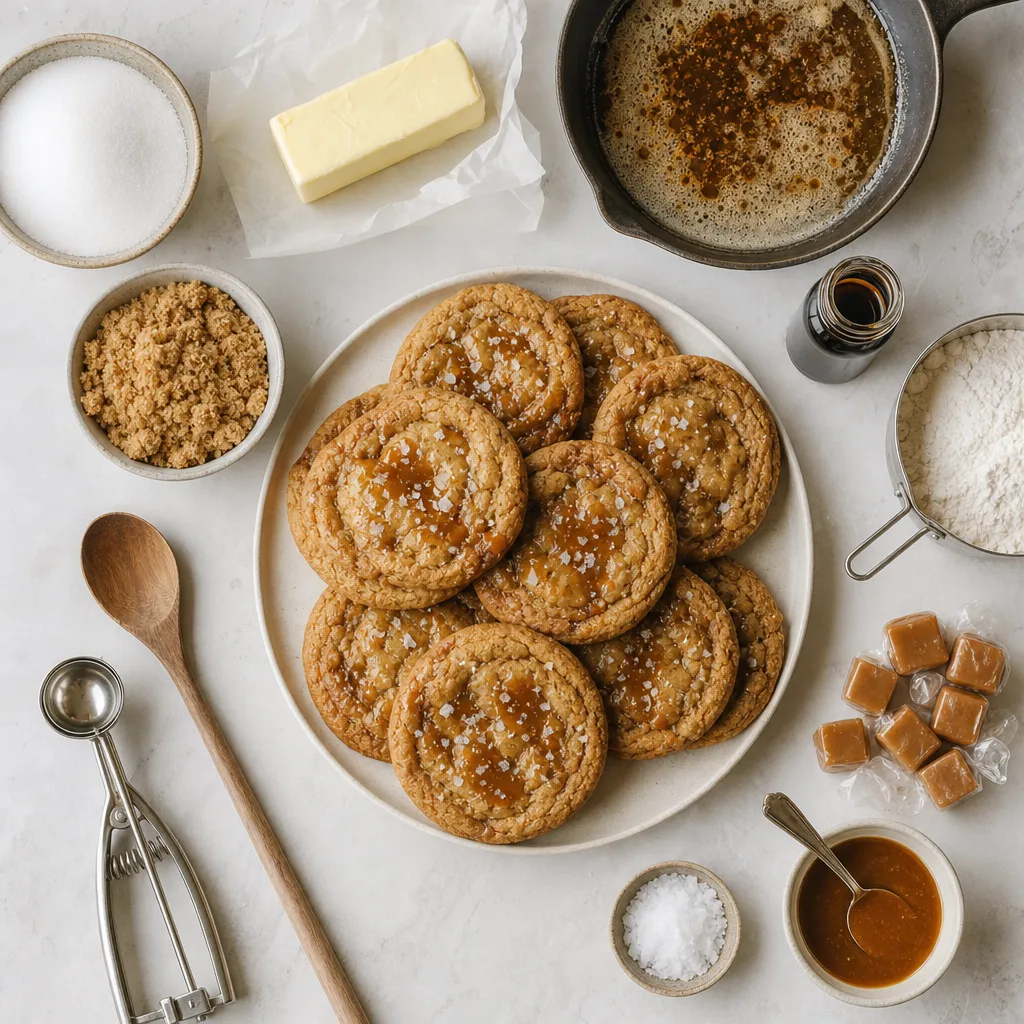
Salted caramel cookies
Buttery, chewy cookies with enclosed or topped soft caramel and finishing flaky sea salt. Designed for a tender middle, crackled top and molten caramel pockets.
Ingredients
Equipment
Method
- Brown or soften the butter: brown 1 cup (227 g) unsalted butter in a skillet until nutty and transfer to a bowl to cool to warm. If not browning, use softened butter at room temperature.
- Preheat oven to 350°F (175°C) and line baking sheets with parchment or silicone mats.
- Cream sugars and butter: in a mixer bowl, beat 1/2 cup granulated sugar and 1 cup light brown sugar with the cooled brown or softened butter until creamy, 2–3 minutes, scraping down the bowl.
- Add egg and vanilla: beat in 1 large egg and 1 1/2 teaspoons vanilla extract until just combined.
- Combine dry ingredients: whisk together 2 1/4 cups all-purpose flour, 2 teaspoons cornstarch, 1 teaspoon baking soda and 1/2 teaspoon kosher salt in a separate bowl.
- Mix dry into wet: add the dry ingredients to the wet in two additions on low speed, mixing until just combined and the dough is soft and slightly tacky.
- Shape cookies with caramel centers: scoop 1 1/4 to 1 1/2 tablespoon portions, flatten each slightly, place half a soft caramel or a tablespoon of caramel bits in the center and wrap dough around it to form a smooth ball; place on prepared sheets spaced about 2 inches apart.
- Alternate method for topped caramel: for a caramel pool on top, bake plain dough balls for 7–9 minutes, press a softened caramel into the warm center, then return to the oven 1–3 minutes until glossy.
- Bake: place sheets in the preheated oven and bake 10–12 minutes until edges are golden, tops have small cracks and centers look slightly underbaked.
- Finish and salt: cool the cookies on the sheet for 3–4 minutes, then transfer to a rack. While warm, sprinkle each cookie with a small pinch of coarse flaky sea salt so it adheres and contrasts the caramel.
- Optional drizzle: warm 1/3 cup prepared salted caramel sauce with 1–2 teaspoons milk or cream to loosen it and drizzle over cooled cookies for extra caramel flavor.
- Storage: store cooled cookies in an airtight container at room temperature up to 3 days, or freeze on a tray then transfer to a sealed bag for up to 2 months. Reheat frozen cookies briefly in the microwave to soften caramel before serving.
Notes
If you want a deeper caramel flavor in the dough, you can swap 1/4 cup granulated sugar for dark brown sugar or add 2 teaspoons molasses.
For larger or smaller cookies, adjust bake time and size accordingly; smaller cookies will bake faster and need monitoring to avoid drying out.
Frequently Asked Questions
Can I use hard caramel candies for the filling?
Hard caramels often do not melt fully during the short cookie bake and can remain chewy or even crunchy. Use soft caramels designed for melting or caramel bits made for baking. If you only have hard caramels, chop them very small and press into the cookie late in baking so they get a moment of heat to soften.
What’s the best salt for finishing these cookies?
A flaky finishing salt such as Maldon or a coarse sea salt gives a bright, clean contrast and pleasant crunch. Kosher salt can be used too but is less textural. Add finishing salt while cookies are warm so it adheres, and sprinkle sparingly; you can always add more.
Why did my caramel leak out of the cookies?
Common causes are overly soft dough, wrapping the caramel too close to the surface, or insufficiently sealing the dough around the caramel. Chill the dough briefly before baking, enclose the caramel fully, and leave a good thickness of dough around the caramel center. Baking at proper temperature and avoiding overcrowding on the sheet also helps.
Can I make the dough ahead of time?
Yes. Dough can be chilled, covered, for up to 48 hours or frozen for up to 2 months. If chilling more than 30 minutes, allow the dough to sit at room temperature for 10 minutes before scooping so it’s easier to shape around the caramel.
How can I keep the cookies from flattening too much?
Ensure your leavening is fresh and measure flour accurately—spoon and level the flour instead of scooping directly with the measuring cup. Chilling the dough for a short time firms it and reduces spread. Using browned butter can encourage more spread because of lower moisture, so consider slightly cooler butter if you want a thicker cookie.