Follow Me On Social Media!
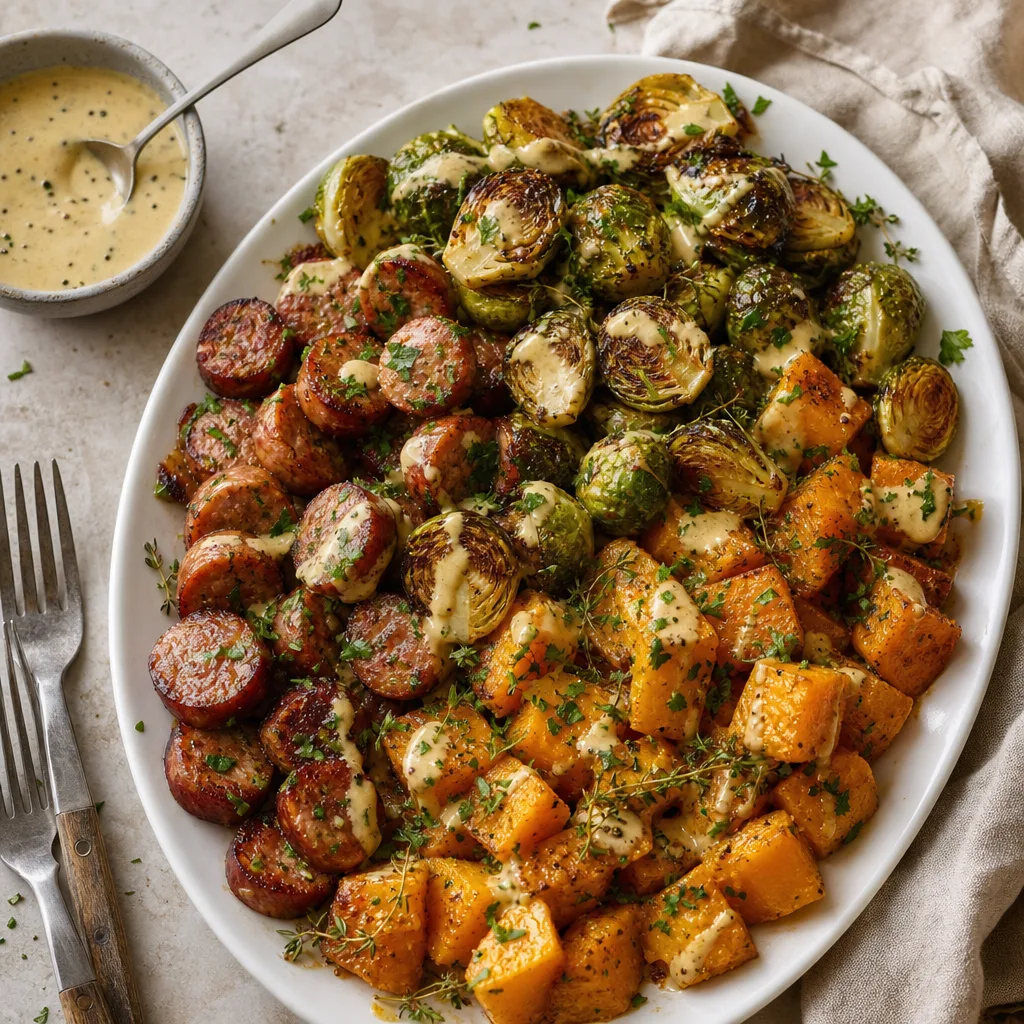
Sheet-pan fall dinner (roasted sausage with Brussels sprouts & squash) with creamy Dijon-style drizzle
Easy sheet-pan fall dinner: roasted sausage, caramelized Brussels sprouts and butternut squash finished with a creamy Dijon-style drizzle. One pan, minimal cleanup, full flavor.

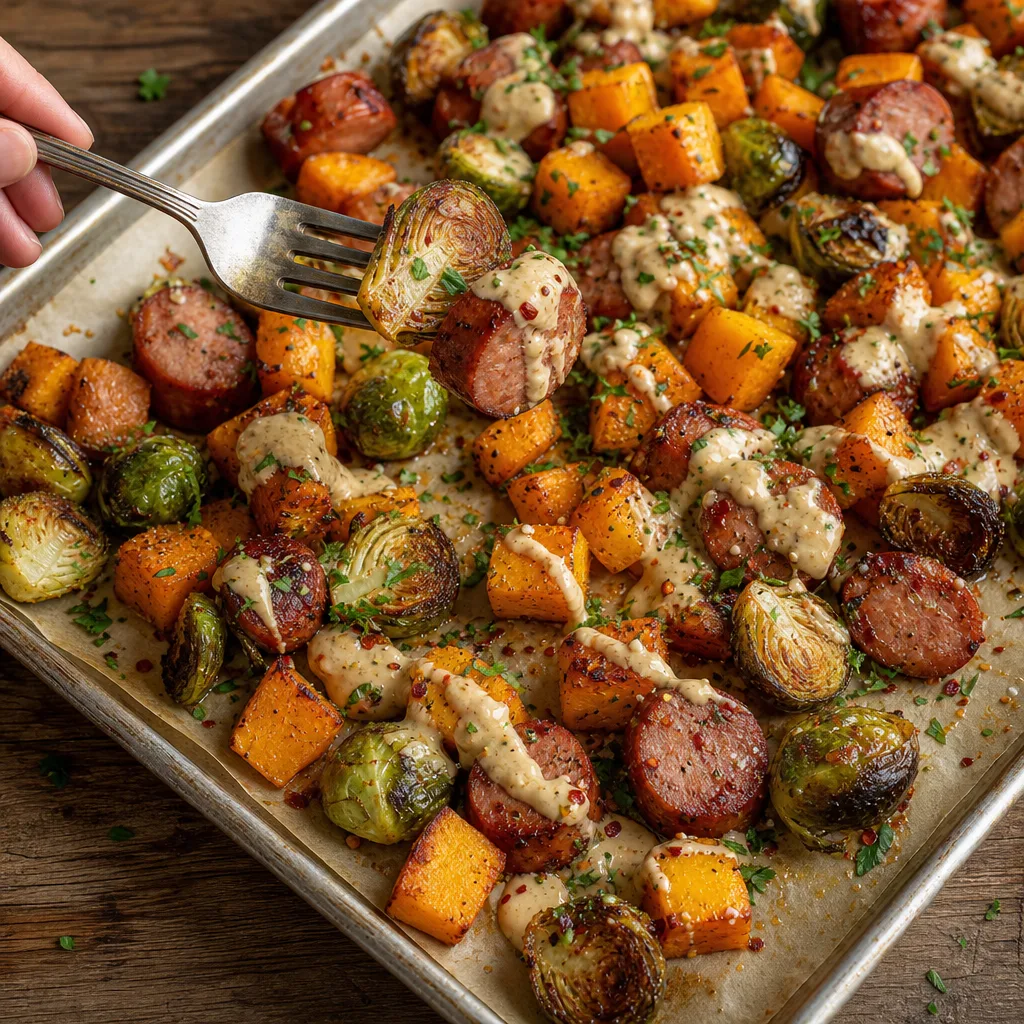
There’s a special kind of comfort that comes from a single sheet pan filled with golden roasted vegetables and slices of caramelized sausage. This Sheet-pan fall dinner (roasted sausage with Brussels sprouts & squash) with creamy Dijon-style drizzle leans into that cozy, effortless vibe: seasonal squash and halved Brussels sprouts roast until tender and browned, smoked sausage slices crisp along the edges, and a bright, creamy mustard-forward sauce ties everything together. It’s the kind of weeknight meal that feels both homey and just a little bit festive—perfect for chilly nights, busy evenings, or when you want to bring something colorful to the table without a fuss.
What makes this dinner work so well is contrast. The squash gives soft, sweet orange pockets of comfort; the Brussels sprouts deliver earthy, slightly bitter notes and crisp char; and the sausage provides savory richness and fat that helps everything brown beautifully. The drizzle—a creamy Dijon-style sauce with a touch of tang and a whisper of sweetness—cuts through the richness and brings the components into a unified bite. Because it’s sheet-pan-based, you spend most of your time prepping and very little cleaning up, which keeps the whole experience calm and practical.
This recipe is written to be flexible. Use butternut squash if you have it, or swap in sweet potatoes or kabocha for a different texture and sweetness. Choose a smoked kielbasa, a heartier smoked Polish sausage, or a gently spiced chorizo depending on how bold you want the final flavor to be. The creamy Dijon-style drizzle is intentionally adaptable too: it can be brightened with more lemon, thinned for a pourable dressing, or thickened into a dip. Read on for detailed ingredient notes, step-by-step instructions, helpful tips, and lots of variations and serving ideas to make this fall sheet-pan dinner your own.
Why this sheet-pan method works
Sheet-pan cooking is efficient because it concentrates flavor-building techniques—high heat, direct contact with the pan, and a short cooking time—into one tray. Vegetables develop caramelized edges from Maillard reactions and sugars in the squash and onions, while the sausage releases fat and savory juices that baste nearby pieces. This combination of dry-heat browning and intermingled flavors is what makes a sheet-pan roast taste far more complex than the sum of its parts.
Because everything cooks on one surface, timing and sizing are important. Denser vegetables like butternut squash need a similar roast time to the Brussels sprouts and sausage for even doneness. That’s why cubing the squash into roughly 1-inch pieces is recommended: it balances the cooking speed and ensures tenderness without collapsing into mush. The high oven temperature encourages quick browning and shortens the overall cook time, keeping the vegetables tender but not overly soft.
Ingredient notes and handy substitutions
Sausage: Choose a smoked sausage with enough fat to render and help brown the vegetables; kielbasa, smoked Polish sausage, or Spanish-style chorizo are all good options. If you prefer milder flavors, chicken or turkey sausage will work. For vegetarian diners, thick plant-based sausages mimic the texture and can stand up to high heat.
Squash options: Butternut squash is recommended for its sweetness and texture, but sweet potatoes, kabocha, or even delicata squash can be substituted. Note that sweeter options (like sweet potato) will brown faster and may benefit from a slightly lower oven temperature if you want to avoid too much charring.
Dijon-style drizzle: I combine Dijon mustard, mayonnaise, and Greek yogurt to build creaminess, tang, and body. If you prefer no mayo, use extra Greek yogurt and a touch more oil or tahini for richness. Maple syrup adds a fall-friendly sweetness—swap honey or reduce it if serving with spicier sausage.
Ingredients
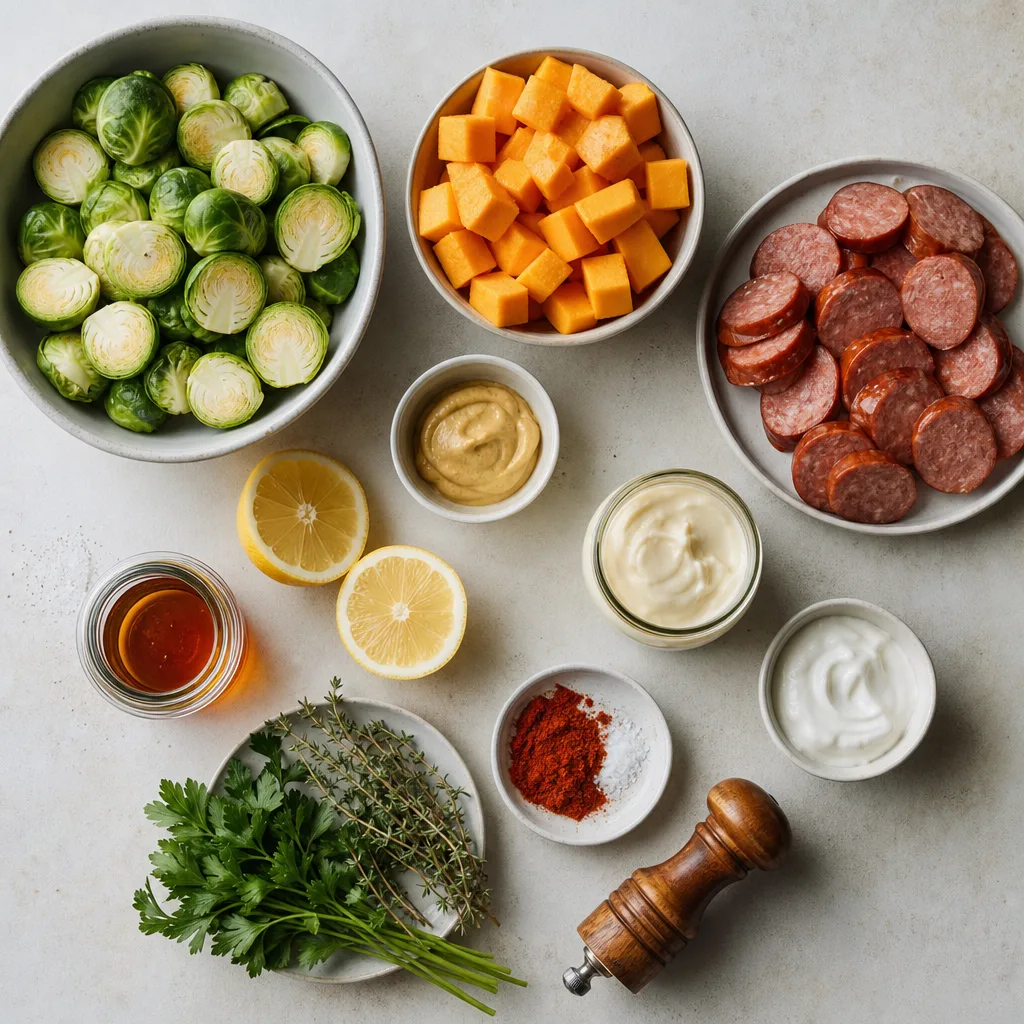
- 1 1/2 pounds smoked sausage (kielbasa, smoked Polish sausage, or similar), sliced 1/2-inch thick
- 1 1/2 pounds Brussels sprouts, trimmed and halved
- 1 1/2 pounds butternut squash, peeled and cut into 1-inch cubes (or sweet potato / kabocha)
- 2 tablespoons olive oil
- 1 tablespoon neutral oil with a high smoke point (avocado or vegetable), optional
- 1 teaspoon kosher salt, plus more to taste
- 1/2 teaspoon freshly ground black pepper, plus more to taste
- 1 teaspoon garlic powder
- 1 teaspoon smoked paprika (or regular paprika)
- 2 tablespoons maple syrup (or honey), divided
- 1 small red onion, cut into wedges (about 1 cup)
- 4 cloves garlic, smashed and roughly chopped
- 3 tablespoons Dijon mustard
- 3 tablespoons mayonnaise
- 2 tablespoons plain Greek yogurt (or sour cream)
- 1 tablespoon lemon juice (fresh)
- 1 teaspoon apple cider vinegar (optional)
- 1/4 teaspoon crushed red pepper flakes (optional)
- 2 tablespoons chopped fresh parsley (for garnish)
- 1 tablespoon chopped fresh thyme leaves (or 1 teaspoon dried thyme)
- Salt and pepper to taste (for finishing)
- Water (as needed to thin the drizzle)
- Neutral cooking spray or parchment paper for the pan
Instructions
- Preheat the oven to 425°F (220°C). Line a large rimmed sheet pan with parchment paper or lightly coat it with neutral cooking spray to prevent sticking. (Ingredients used: neutral cooking spray or parchment paper) ["ing20"]
- Prepare the vegetables: trim the Brussels sprouts and halve them through the stem so they stay intact while roasting. Peel and cube the butternut squash into roughly 1-inch pieces for even roasting. Cut the red onion into wedges. Place Brussels sprouts, squash, and onion on the prepared sheet pan in a single layer, leaving space for the sausage. (Ingredients used: Brussels sprouts; butternut squash; red onion) ["ing2","ing3","ing11"]
- Toss the vegetables with 1 1/2 tablespoons of olive oil, 1 teaspoon kosher salt, 1/2 teaspoon black pepper, garlic powder, smoked paprika, 1 tablespoon maple syrup, and the chopped garlic. Spread them out so they have breathing room; overcrowding causes steaming rather than browning. (Ingredients used: olive oil; kosher salt; black pepper; garlic powder; smoked paprika; maple syrup; garlic) ["ing4","ing6","ing7","ing8","ing9","ing10"]
- Arrange the sliced sausage on the sheet pan in a single layer among the vegetables, leaving a little space between slices so each one can brown. If using an oil with a higher smoke point, toss the slices with the optional 1 tablespoon neutral oil for extra browning. Scatter the fresh thyme leaves over the pan. (Ingredients used: smoked sausage; neutral oil; thyme) ["ing1","ing5","ing12"]
- Roast uncovered for 20 minutes. After 20 minutes, use a spatula to flip the vegetable pieces and sausage slices so they brown evenly; return to the oven and roast another 10–12 minutes, or until the squash is tender and the Brussels sprouts have deeply browned, and the sausage edges are caramelized. Total roasting time should be about 30–32 minutes depending on your oven and how crowded the pan is. (Ingredients used: none additional) []
- While the sheet pan is roasting, make the creamy Dijon-style drizzle: in a small bowl whisk together the Dijon mustard, mayonnaise, Greek yogurt, lemon juice, apple cider vinegar (if using), the remaining 1 tablespoon maple syrup, and crushed red pepper flakes (if using). Taste and adjust: add a pinch of salt and pepper, more lemon for brightness, or a teaspoon or two of water to reach a pourable consistency. (Ingredients used: Dijon mustard; mayonnaise; Greek yogurt; lemon juice; apple cider vinegar; maple syrup; crushed red pepper flakes; kosher salt; black pepper; water) ["ing13","ing14","ing15","ing16","ing17","ing10","ing18","ing6","ing7","ing19"]
- When the pan contents are cooked to your liking, remove from the oven and let rest for 2–3 minutes. Drizzle the creamy Dijon-style sauce over the sausage and vegetables, or serve it on the side for diners to add as they like. Sprinkle chopped parsley over the top and finish with freshly cracked black pepper. (Ingredients used: creamy drizzle; fresh parsley; black pepper) ["ing13","ing21","ing7"]
- Serve warm straight from the sheet pan or transfer to a large platter. Leftovers keep well and reheat nicely. (Ingredients used: none additional) []
Pro Tips
- Cut ingredients uniformly: slicing sausage and cubing squash to similar thickness ensures even roasting and a consistent texture across the pan.
- Don’t crowd the pan: use two sheet pans if necessary. Overcrowding causes steaming instead of browning, which robs the vegetables of caramelized edges.
- Pat dry the Brussels sprouts after washing. Moisture on the sprouts prevents crisping; a dry surface helps them get golden and slightly charred.
- Reserve the sauce for serving if you plan to reheat leftovers. The creamy Dijon-style drizzle is best added fresh—reheating it can separate the emulsion and change texture.
- For extra crispness on the sausage, place slices cut-side down on the pan for the first 8–10 minutes of roasting, then flip and finish cooking.
- If your squash pieces are larger, start them on the pan a few minutes earlier than the Brussels sprouts and sausage so everything finishes together.
- Taste as you go with the drizzle: a little lemon or vinegar brightens the sauce, while a touch more maple adds a warming fall sweetness.
- Use parchment or a silicone baking mat for easier cleanup, especially if using a sticky glaze or maple syrup that can burn on bare metal.
Variations
- Spicy Chorizo Version: Swap smoked sausage for sliced Spanish chorizo or Mexican chorizo (remove casing if using loose). Reduce the smoked paprika if the chorizo is already spicy and skip the crushed red pepper flakes in the drizzle unless you want extra heat.
- Vegetarian Swap: Replace the sausage with thick slices of smoked or seasoned plant-based sausage. Roast exactly the same way; check package instructions for recommended cooking times and adjust the final roast if needed.
- Sweet Potato & Apple Twist: Use 1 pound sweet potatoes instead of squash and add 1 diced tart apple (like Honeycrisp) in the last 10–12 minutes of roasting for a warm sweet-tart contrast.
- Maple-Balsamic Finish: Replace half the maple syrup in the vegetable toss with 1 tablespoon balsamic vinegar and finish the dish with a drizzle of aged balsamic for a deeper, tangy-sweet profile.
Serving Suggestions
- Family-style on the sheet pan: place the hot pan on the table and let everyone serve themselves; garnish with extra parsley and a bowl of the creamy Dijon-style drizzle.
- Over warm grains: spoon roasted sausage and vegetables over cooked farro, quinoa, or brown rice so the sauce soaks into the grains and makes the meal heartier.
- With a crisp green salad: serve alongside a simple mixed-green salad dressed in lemon vinaigrette to introduce a bright, fresh contrast.
- In a sandwich or wrap: pile leftovers into a soft roll or wrap with extra drizzle and crisp greens for a filling next-day lunch.
Make-ahead and batch-cooking strategies
To feed a crowd, double the recipe and use two sheet pans so each pan has enough surface area for proper browning. Stagger the pans in the oven and swap their positions halfway through roasting so they bake evenly. If you’re bringing this to a potluck, roast the components ahead and reheat briefly in a hot oven at your destination.
Leftovers are great for lunches. Store the components separately from the sauce to prevent sogginess. Reheat in a hot skillet for five minutes to re-crisp the edges, or bake on a sheet pan at 375°F until warmed through. Transform leftovers into bowls, sandwiches, or breakfast hash by combining reheated pieces with eggs or grain.
Storage and Reheating
Store leftover roasted sausage and vegetables in an airtight container in the refrigerator for up to 3–4 days. Keep the creamy Dijon-style drizzle in a separate container to preserve texture. Reheat leftovers gently in a 350°F (175°C) oven on a sheet pan for 8–12 minutes until warmed through, or heat individual portions in the microwave for 1–2 minutes. If reheating in a skillet, warm a little oil over medium heat and toss until heated evenly. Add the drizzle just before serving. The sauce can be refreshed with a teaspoon of lemon juice or a splash of water if it thickens after refrigeration.
Sheet-pan fall dinner (roasted sausage with Brussels sprouts & squash) with creamy Dijon-style drizzle
A single-pan autumn dinner of smoked sausage roasted with halved Brussels sprouts and cubed butternut squash, finished with a creamy Dijon-style drizzle. Quick to prep, easy to scale, and full of caramelized flavor.
Ingredients
Equipment
Method
- Preheat the oven to 425°F (220°C). Line a large rimmed sheet pan with parchment paper or lightly coat it with neutral cooking spray to prevent sticking.
- Trim the Brussels sprouts and halve them through the stem so they stay intact while roasting. Peel and cube the butternut squash into roughly 1-inch pieces for even roasting. Cut the red onion into wedges. Place Brussels sprouts, squash, and onion on the prepared sheet pan in a single layer, leaving space for the sausage.
- Toss the vegetables with 1 1/2 tablespoons olive oil, 1 teaspoon kosher salt, 1/2 teaspoon black pepper, 1 teaspoon garlic powder, 1 teaspoon smoked paprika, 1 tablespoon maple syrup, and the chopped garlic. Spread them out so they have breathing room; overcrowding causes steaming rather than browning.
- Arrange the sliced sausage on the sheet pan in a single layer among the vegetables, leaving a little space between slices so each one can brown. If using the optional neutral oil, toss the slices with it for extra browning. Scatter the fresh thyme leaves over the pan.
- Roast uncovered for 20 minutes. After 20 minutes, use a spatula to flip the vegetable pieces and sausage slices so they brown evenly; return to the oven and roast another 10–12 minutes, or until the squash is tender and the Brussels sprouts have deeply browned and the sausage edges are caramelized.
- While the sheet pan is roasting, whisk together the Dijon mustard, mayonnaise, Greek yogurt, lemon juice, apple cider vinegar (if using), the remaining 1 tablespoon maple syrup, and crushed red pepper flakes (if using). Taste and adjust seasoning; add a pinch of salt and pepper, and a teaspoon or two of water to reach a pourable consistency.
- When the pan contents are cooked to your liking, remove from the oven and let rest for 2–3 minutes. Drizzle the creamy Dijon-style sauce over the sausage and vegetables, or serve it on the side. Sprinkle chopped parsley over the top and finish with freshly cracked black pepper.
- Serve warm straight from the sheet pan or transfer to a large platter. Store leftovers in an airtight container for up to 3–4 days; keep the sauce separate for best texture.
Notes
If you prefer a crisper outcome, roast on a preheated sheet pan to jump-start browning.
Adjust maple syrup and lemon to taste in the drizzle; small changes here alter the balance between sweet and tangy.
This recipe scales easily—use two pans rather than crowding a single sheet pan for a doubled batch.
Frequently Asked Questions
Can I make this ahead of time?
Yes. You can roast the vegetables and sausage up to a day ahead and keep them refrigerated in an airtight container. Store the creamy Dijon-style drizzle separately. Reheat in a 350°F oven for 8–12 minutes or in a skillet, then drizzle just before serving. Making it a day ahead lets flavors meld, though the Brussels sprouts will lose some crispness and will benefit from a short re-crisp in the oven.
What are the best sausage types to use?
Smoked kielbasa or Polish sausage are classic choices because their smoky, savory profile complements roasted squash and Brussels sprouts. Chorizo adds a spicy, deeply seasoned character. For a milder result, use a chicken or turkey sausage. Plant-based smoked sausages also work—monitor their cooking time to avoid overcooking.
How do I prevent the vegetables from becoming mushy?
Avoid overcrowding the pan, which traps steam and leads to soggy vegetables. Cut vegetables into uniform pieces so they cook evenly, and pat Brussels sprouts dry after washing. Roast at a high temperature (425°F) to promote caramelization. If you notice the pan steaming during the first 10–15 minutes, gently stir the pieces and spread them out more to encourage browning.
Can I use frozen vegetables instead of fresh?
Frozen vegetables can be used in a pinch, but they’ll release more moisture and are less likely to develop the same deep caramelized edges as fresh produce. If using frozen Brussels sprouts or squash, thaw and pat them very dry, then roast at a slightly higher temperature and consider using a little more oil to help browning. Expect a softer texture overall.
How can I adjust the creamy Dijon-style drizzle to be lighter or dairy-free?
To lighten the drizzle, swap half the mayonnaise for extra Greek yogurt or use all Greek yogurt for a tangier, lighter sauce. For a dairy-free version, use a vegan mayonnaise and a non-dairy yogurt (or omit the yogurt and thin with water and lemon). Adjust seasoning and acidity to taste, and thin with water or lemon juice to reach your preferred consistency.