Follow Me On Social Media!
Beef stew (braised beef with root vegetables)
A comforting beef stew (braised beef with root vegetables) with tender chuck, whole baby potatoes, carrot chunks and a glossy brown broth. Dutch oven braise with tips, variations, and make-ahead advice.

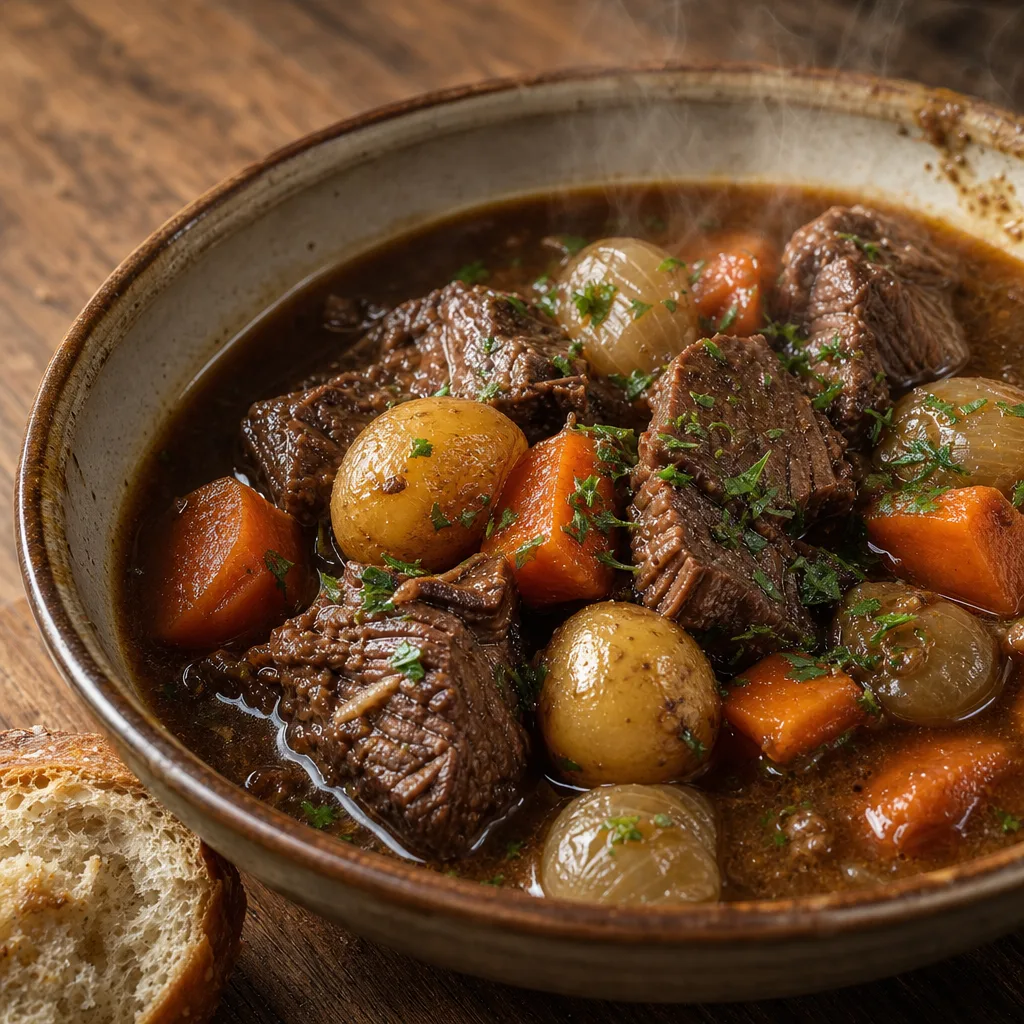
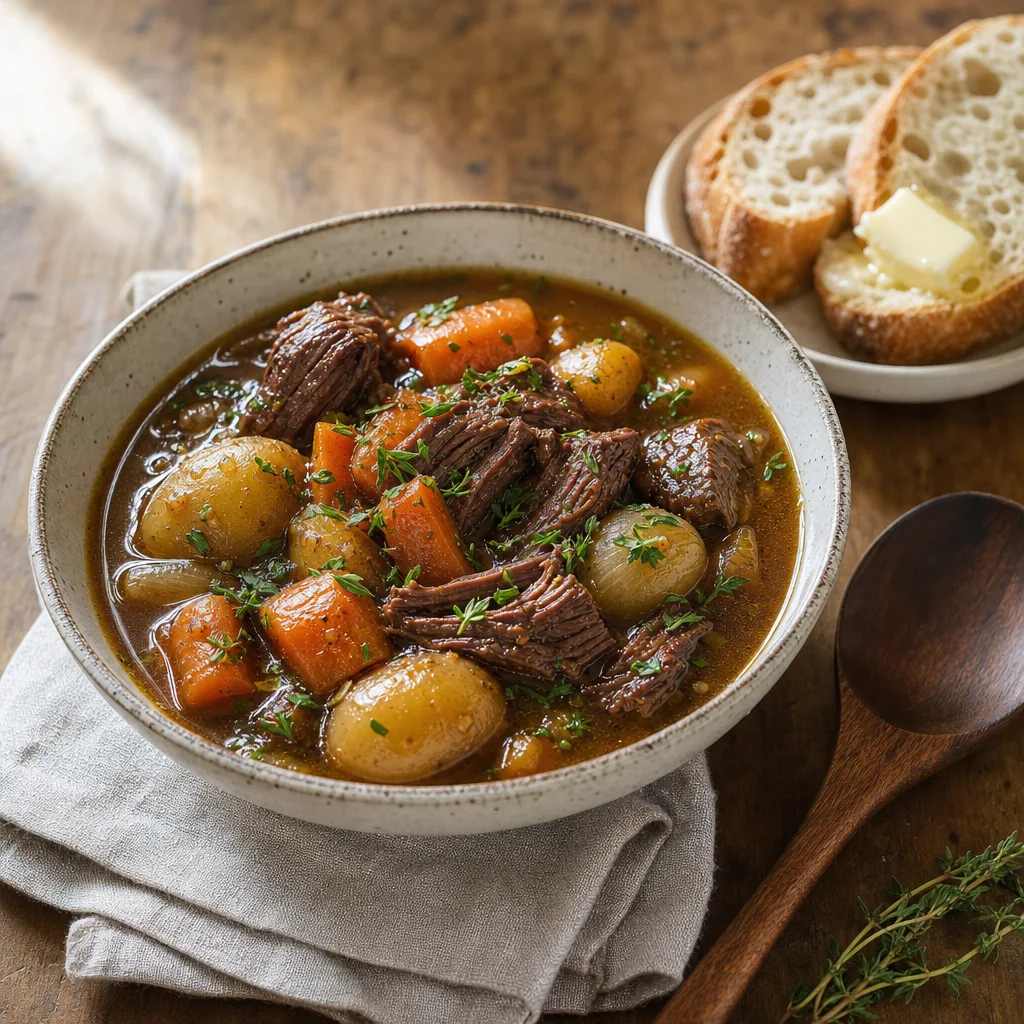
There is nothing quite like a bowl of slow-braised beef and root vegetables to settle an evening. This beef stew (braised beef with root vegetables) is designed to deliver tender pull-apart beef, glossy savory broth, and hearty whole baby potatoes alongside large-but-not-mushy carrot chunks and softened pearl-style onions. It embraces classic braising techniques—searing for flavor, deglazing to capture fond, and low-and-slow simmering so collagen converts to silk—while remaining approachable for a weeknight or a leisurely weekend dinner.
The recipe balances deep, beefy richness with a restrained brightness so the broth feels warm and welcoming rather than heavy. A small amount of tomato paste and Worcestershire provides savory depth and an umami backbone without turning the stew into a wine-forward dish; beef stock is the main liquid so the final broth reads cleanly brown and glossy. Fresh thyme and bay leaf perfume the pot during the long simmer and a handful of chopped parsley sprinkled over the bowl finishes the stew with a green note that lifts every spoonful.
Beyond technique, think about texture: sear the beef well for caramelized edges, choose potatoes that hold shape when cooked, and add carrots early enough to become tender but not disintegrated. The instructions include a simple flour dredge so the braising liquid will have body and cling to the meat, but the stew is intentionally not a heavy gravy. Serve with a chunk of crusty bread to soak up the broth or with buttered noodles if you prefer a more substantial plate.
This recipe yields generous servings and scales easily. Read the full method, ingredient notes, and troubleshooting advice below so you can braise with confidence. The steps are written for a Dutch oven on the stovetop that transitions to the oven, but I'll include stovetop-only and slow-cooker adaptations in the variations section. Whether you make this for family dinner or to share with friends, the result should be a bowl of comforting, deeply flavored stew that tastes even better the next day.
Why this technique works
Braising combines dry-heat and moist-heat methods: initial high heat caramelizes the surface of the meat, creating flavors that later dissolve into the cooking liquid during the low-and-slow phase. Those browned bits fond left in the pot are a major source of depth and are captured when you deglaze with wine or stock.
Slow, even heat converts tough connective tissue to soft gelatin without overcooking muscle fibers. That gelatin dissolves into the broth and gives it a glossy mouthfeel and body that feels luxurious even with a relatively lean final cut.
Coating the beef lightly with flour before braising serves two purposes: it helps sear to a richer crust and acts as a gentle thickener so the braising liquid clings to the meat and vegetables. The result is a stew that coats the spoon rather than a thin soup.
Ingredient notes and smart substitutions
If you don’t have pearl onions, use regular yellow onions cut into large wedges; they will soften into pleasant pockets of sweetness. Shallots can be substituted for a more delicate onion note. For potatoes, baby or waxy potatoes hold their shape best; if using russets, expect a fluffier texture.
If you prefer not to use wine, substitute extra beef stock with a tablespoon of vinegar or lemon juice to provide a touch of acidity. Worcestershire is optional but contributes umami; soy sauce can replace it in a pinch, keeping an eye on salt levels when making that swap.
Ingredients
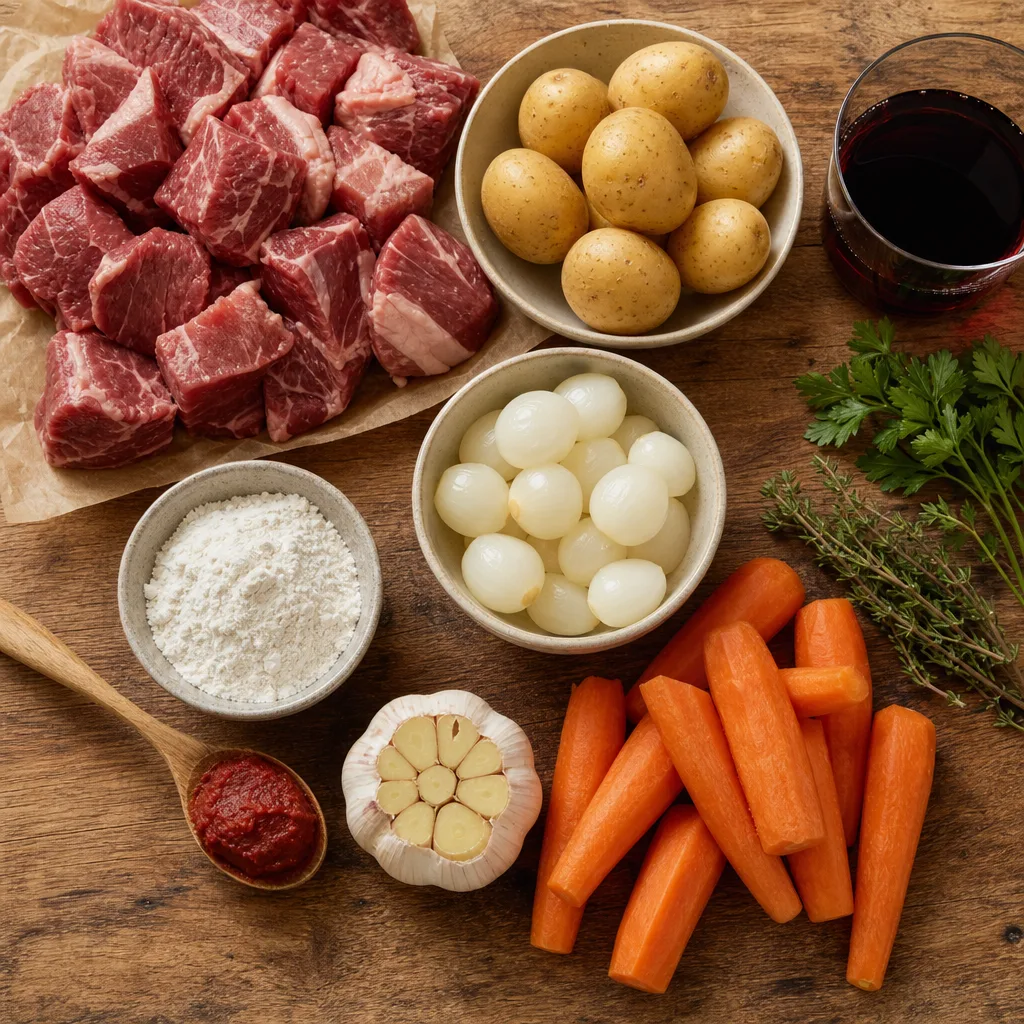
- 2 1/2 pounds beef chuck roast, cut into 1 1/2–2 inch cubes
- 2 teaspoons kosher salt, plus more to taste
- 1 teaspoon freshly ground black pepper, plus more to taste
- 3 tablespoons vegetable oil (or neutral oil), divided
- 1/3 cup all-purpose flour
- 1 large yellow onion, cut into 1-inch pieces
- 1 pound baby potatoes, left whole or halved if large
- 4 medium carrots, peeled and cut into 2-inch chunks
- 8 ounces pearl onions or small sweet onions, peeled (can use halved shallots)
- 4 cloves garlic, smashed and minced
- 2 tablespoons tomato paste
- 1 tablespoon Worcestershire sauce
- 2 tablespoons unsalted butter
- 3 cups low-sodium beef stock (plus up to 1 cup water if needed)
- 1 cup dry red wine (optional — can replace with additional beef stock)
- 2 bay leaves
- 4 sprigs fresh thyme (or 1 teaspoon dried thyme)
- Salt and black pepper to taste
- 2 tablespoons chopped fresh parsley for garnish
- Crusty bread or buttered noodles, for serving (optional)
- Water (as needed during cooking)
Instructions
- Preheat the oven to 325°F (160°C). Pat the beef cubes dry with paper towels and season evenly with 2 teaspoons kosher salt and 1 teaspoon black pepper.
- Place 2 tablespoons of vegetable oil in a large Dutch oven and heat over medium-high until shimmering. Working in batches to avoid crowding, add beef cubes and brown on all sides until deeply caramelized, about 3–4 minutes per side. Transfer seared beef to a plate and continue browning remaining batches, adding the remaining tablespoon of oil as needed.
- Once all the beef is browned, reduce the heat to medium. Sprinkle the flour over the hot pan and stir, scraping up browned bits from the bottom; cook the flour for 1–2 minutes to remove raw flour flavor. This creates a light roux that helps thicken the stew.
- Return the seared beef and any accumulated juices to the pot. Add the chopped onion, pearl onions, and carrots. Stir briefly to coat the vegetables and meat in the roux.
- Push the mixture to the side and add the butter and tomato paste to the cleared area. Cook the tomato paste for 1 minute, stirring, until it darkens slightly; then mix it through the meat and vegetables. Add the minced garlic and cook for 30 seconds until fragrant.
- Deglaze the pot with the red wine if using, scraping the browned bits from the bottom with a wooden spoon. Allow the wine to reduce by about half, 2–3 minutes. If not using wine, add an equal amount of beef stock and scrape the pan.
- Pour in the remaining beef stock so the liquid comes about three-quarters of the way up the solids. Add Worcestershire sauce, bay leaves, and thyme. If the liquid does not cover the contents as described, add water a little at a time until the level reaches about three-quarters up the meat. Bring the mixture to a gentle simmer on the stovetop.
- Cover the Dutch oven with a lid and transfer it to the preheated oven. Braise until the beef is fork-tender and the vegetables are cooked through but not falling apart, about 2 to 2 1/2 hours. Check once at the hour mark to skim any excess fat and to ensure the liquid level is adequate; add a splash of water if necessary.
- Remove the pot from the oven. Taste the broth and adjust seasoning with additional salt and black pepper to taste. If the stew needs thicker body, place the pot back on the stovetop over medium heat and simmer uncovered for 5–10 minutes until slightly reduced.
- Stir in chopped fresh parsley and let the stew rest for 10 minutes before serving. Serve in bowls garnished with more parsley and with crusty bread or buttered noodles on the side.
Pro Tips
- Dry the beef thoroughly before searing; moisture on the surface prevents proper browning and reduces depth of flavor.
- Brown the beef in batches to avoid steaming. A crowded pan will release juices and stop caramelization.
- If you prefer a thicker gravy, mix 1 tablespoon of flour with 2 tablespoons of cold water to make a slurry and stir it in at the end; simmer until thickened.
- Use a combination of wine and stock for the deepest flavor: wine adds acidity and aroma, while stock keeps the broth savory and beef-forward.
- Let the stew rest for 10–20 minutes before serving to allow flavors to meld and the broth to settle.
Variations
- Slow-cooker adaptation: brown beef and sauté aromatics on the stovetop, then transfer everything to a slow cooker. Cook on low for 7–8 hours or high for 4–5 hours. Add potatoes in the last 2 hours to avoid overcooking.
- Beef bourguignon-style: use a full cup of red wine and omit the Worcestershire. Add a splash of cognac during deglazing for a classic French profile and finish with pearl onions sautéed in butter separately.
- Hearty Guinness stew: replace the wine with 12 ounces of Guinness (or other stout) and use beef stock for the remainder of the liquid. The stout adds roasty chocolate notes that pair well with carrots.
- Root-vegetable-forward: add parsnips and turnips alongside carrots and potatoes. Increase herbs to include rosemary and a small strip of lemon zest for brightness.
Serving Suggestions
- Ladle the stew over buttered egg noodles and sprinkle with chopped parsley for a filling plate.
- Serve with thick slices of crusty bread or a torn baguette to sop up the glossy broth.
- Pair with a simple green salad dressed with vinaigrette to cut richness and add freshness.
- Top each bowl with a pat of butter and extra cracked black pepper for a restaurant-style finish.
Make-ahead and meal planning
This stew is an excellent make-ahead meal: flavors deepen and meld after resting, so refrigerate overnight and gently reheat the next day. This is a good dish to prepare on a relaxed day and finish with a quick reheat when you want a no-fuss dinner.
Portion the cooled stew into meal-sized containers for convenient lunches. Freeze extra portions flat in freezer bags for compact storage; thaw in the refrigerator overnight before reheating. Because textures change slightly when frozen, avoid freezing potatoes for very long if you prefer them firmer.
Storage and Reheating
Cool leftover stew to room temperature within two hours and store in an airtight container in the refrigerator for up to 4 days. Reheat gently on the stovetop over low heat, adding a splash of water or stock if the stew has thickened. For longer storage, freeze in airtight, labeled containers for up to 3 months; thaw overnight in the refrigerator before reheating. Avoid high heat when reheating to preserve meat tenderness and prevent vegetables from breaking down further.
Beef stew (braised beef with root vegetables)
A classic braised beef stew made with seared chuck, baby potatoes, carrots and pearl onions in a glossy beefy broth. Cooked low and slow in a Dutch oven until fork-tender and finished with fresh parsley.
Ingredients
Equipment
Method
- Preheat the oven to 325°F (160°C). Pat the beef cubes dry with paper towels and season evenly with 2 teaspoons kosher salt and 1 teaspoon black pepper.
- Place 2 tablespoons of vegetable oil in a large Dutch oven and heat over medium-high until shimmering. Working in batches to avoid crowding, add beef cubes and brown on all sides until deeply caramelized, about 3–4 minutes per side. Transfer seared beef to a plate and continue browning remaining batches, adding the remaining tablespoon of oil as needed.
- Once all the beef is browned, reduce the heat to medium. Sprinkle the flour over the hot pan and stir, scraping up browned bits from the bottom; cook the flour for 1–2 minutes to remove raw flour flavor.
- Return the seared beef and any accumulated juices to the pot. Add the chopped onion, pearl onions, and carrots. Stir briefly to coat the vegetables and meat in the roux.
- Push the mixture to the side and add the butter and tomato paste to the cleared area. Cook the tomato paste for 1 minute, stirring, until it darkens slightly; then mix it through the meat and vegetables. Add the minced garlic and cook for 30 seconds until fragrant.
- Deglaze the pot with the red wine if using, scraping the browned bits from the bottom with a wooden spoon. Allow the wine to reduce by about half, 2–3 minutes. If not using wine, add an equal amount of beef stock and scrape the pan.
- Pour in the remaining beef stock so the liquid comes about three-quarters of the way up the solids. Add Worcestershire sauce, bay leaves, and thyme. If the liquid does not cover the contents as described, add water a little at a time until the level reaches about three-quarters up the meat. Bring the mixture to a gentle simmer on the stovetop.
- Cover the Dutch oven with a lid and transfer it to the preheated oven. Braise until the beef is fork-tender and the vegetables are cooked through but not falling apart, about 2 to 2 1/2 hours. Check once at the hour mark to skim any excess fat and to ensure the liquid level is adequate; add a splash of water if necessary.
- Remove the pot from the oven. Taste the broth and adjust seasoning with additional salt and black pepper to taste. If the stew needs thicker body, place the pot back on the stovetop over medium heat and simmer uncovered for 5–10 minutes until slightly reduced.
- Stir in chopped fresh parsley and let the stew rest for 10 minutes before serving. Serve in bowls garnished with more parsley and with crusty bread or buttered noodles on the side.
Notes
Check the liquid level once during braise and add water if necessary; evaporation in the oven varies by pot and oven.
If you want a clearer broth, skim fat from the surface before serving or refrigerate and remove solidified fat before reheating.
Frequently Asked Questions
What cut of beef is best for this stew?
Beef chuck is ideal because it has a balance of connective tissue and marbling; slow braising breaks down collagen into gelatin which yields tender, flavorful pieces. Brisket or short ribs also work, but might require slight adjustments to cooking time.
Can I skip searing the beef?
Technically yes, but searing builds Maillard flavors that deepen the final broth. If you skip browning, expect a less complex flavor. You can make up some depth with extra tomato paste and a splash of soy sauce or Worcestershire, but browning is the most effective method.
How do I keep potatoes from falling apart?
Choose waxy potatoes (baby potatoes, Yukon Golds, or new potatoes) which hold shape better than russets. Add potatoes earlier for full infusion of flavor but watch cook time—if you prefer firmer potatoes, add them during the last 45–60 minutes of braising.
Can I make this in a slow cooker?
Yes. Brown the beef and sauté aromatics on the stovetop first, then transfer to the slow cooker with the liquid and vegetables. Cook low for 7–8 hours or high for 4–5 hours. Add potatoes later if you want them less soft.
How can I adjust the stew for a thicker sauce?
There are several options: reduce the liquid by simmering uncovered on the stovetop; whisk in a beurre manié (equal parts butter and flour mixed into a paste) a little at a time; or stir in a slurry of cornstarch and water near the end of cooking. Each method affects texture and gloss differently—beurre manié gives silkiness while cornstarch yields a glossy, clingy sauce.