Follow Me On Social Media!
The Ultimate Guide to Making Pappadeaux Mardi Gras Pasta at Home

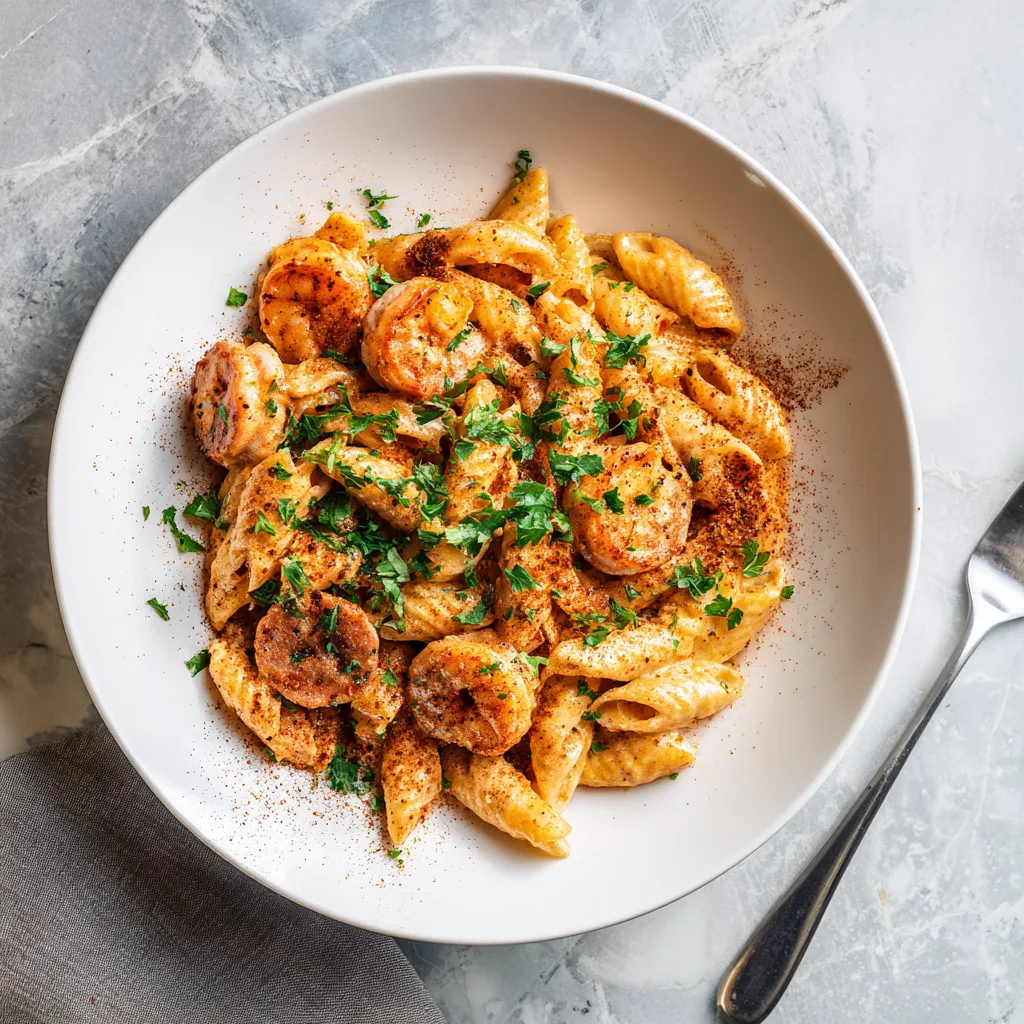
If there is one dish that perfectly encapsulates the vibrant, soulful spirit of New Orleans cuisine, it is the Mardi Gras Pasta. Famous for its rich, velvety sauce and generous protein pairings, this dish is a staple at cajun-style eateries like Pappadeaux. It is a celebration on a plate—bold, spicy, and incredibly indulgent. While the restaurant version is a treat, making it at home allows you to control the spice level and load up on your favorite proteins. This guide will walk you through recreating this masterpiece in your own kitchen, ensuring every bite transports you straight to the French Quarter.
The magic of this pasta lies in the “trinity” of Cajun cooking combined with a luxurious cream reduction. Unlike standard Alfredo, which relies heavily on cheese for thickness, this Mardi Gras sauce uses a reduction technique with heavy cream and aromatic vegetables to build a complex flavor profile. The addition of Andouille sausage provides a smoky depth that permeates the cream, while the seafood offers a sweet, tender contrast. Whether you are hosting a dinner party or simply craving comfort food with a kick, this recipe delivers restaurant-quality results in under an hour.
The Flavor Profile: What Makes It “Mardi Gras”?
The term “Mardi Gras” in culinary contexts usually implies a festive mix of ingredients, often signaling a “surf and turf” combination typical of Creole cuisine. In this pasta, the smokiness of the sausage is the bass note, the sweetness of the peppers and onions provides the melody, and the cayenne-heavy Cajun seasoning brings the high hats and snares. It is a symphony of flavors that relies on balance.
One of the secrets to achieving that authentic restaurant taste is the use of fresh herbs and high-quality seafood. While frozen shrimp works in a pinch, fresh Gulf shrimp (if available) makes a noticeable difference. Similarly, authentic Andouille sausage is key—it is smoked and heavily spiced. If you substitute it with regular kielbasa, you will lose that signature smoky punch that defines the dish.
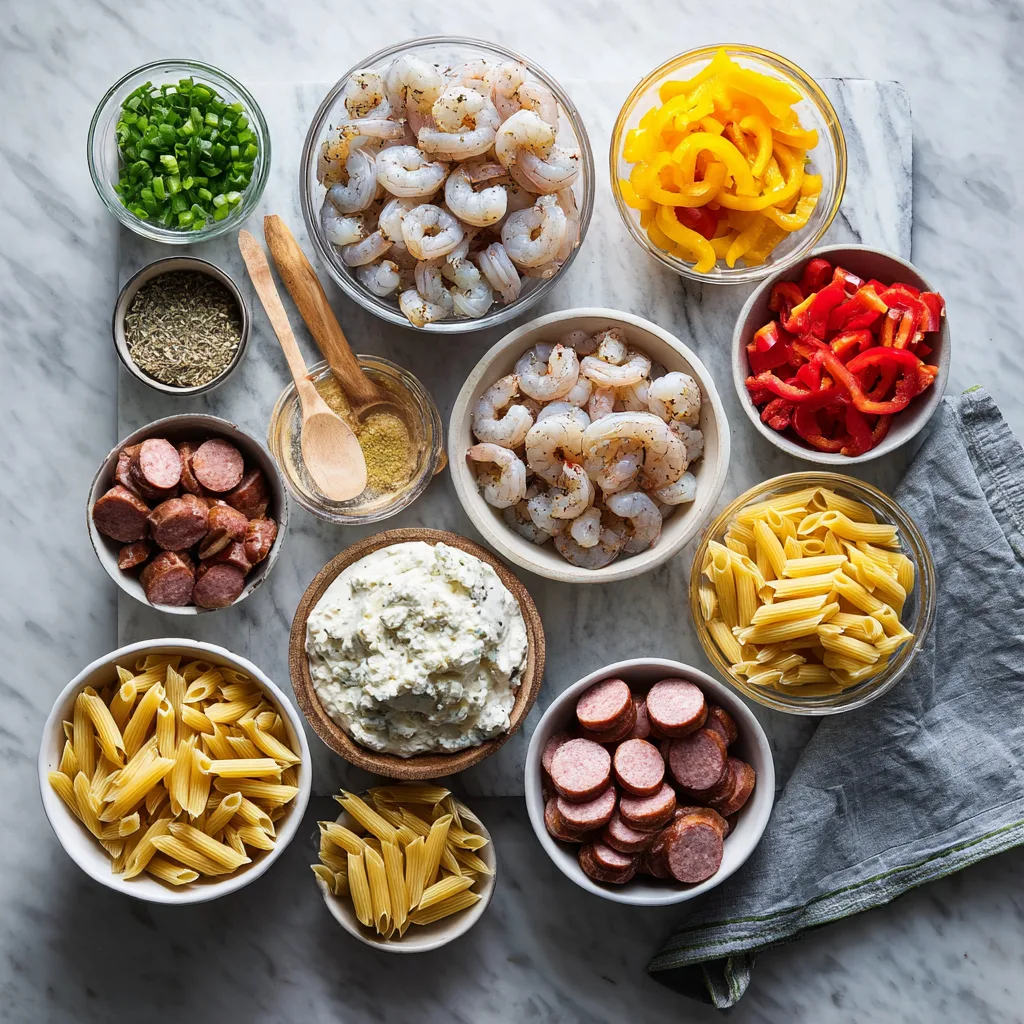
Ingredients
- 1 lb Penne Pasta – The ridges help hold the thick sauce. Fettuccine or linguine can also be used, but tube shapes are best for chunky sauces.
- 1 lb Medium Shrimp – Peeled, deveined, and tails removed.
- 1/2 lb Crawfish Tails – (Optional but authentic) Pre-cooked, peeled. If unavailable, double the shrimp.
- 12 oz Andouille Sausage – Sliced into 1/4 inch rounds.
- 4 tbsp Unsalted Butter – Divided for sautéing and finishing the sauce.
- 1 tbsp Olive Oil – To prevent butter from burning.
- 1 cup Red Bell Pepper – Diced finely for sweetness and color.
- 1 cup Mushrooms – Sliced (Baby Bella or Crimini work best).
- 1/2 cup Green Onions – Chopped, white and green parts separated.
- 2 tbsp Garlic – Freshly minced. Do not use jarred garlic for this recipe.
- 2 cups Heavy Whipping Cream – Do not substitute with milk or half-and-half; the sauce will not thicken correctly.
- 1/2 cup Parmesan Cheese – Freshly grated, not the shaker can variety.
- 1 tbsp Cajun or Creole Seasoning – Plus more to taste (brands like Slap Ya Mama or Tony Chachere’s).
- 1 tsp Smoked Paprika – Enhances the color and smoky flavor.
- 1/2 tsp Dried Oregano – For an herbal background note.
- 1/4 cup Marinara Sauce – A restaurant secret to give the sauce that pinkish-orange hue and a touch of acid.
- Salt and Black Pepper – To taste.
- Fresh Parsley – Chopped, for garnish.
Instructions
- Prep the Water: Bring a large pot of salted water to a rolling boil. Cook the penne pasta according to package directions for al dente. Drain, reserving about 1/2 cup of pasta water, and set aside. Drizzle with a little oil to prevent sticking.
- Sear the Sausage: While the water boils, heat a large skillet or Dutch oven over medium-high heat. Add the sliced Andouille sausage. Cook until browned and crispy on the edges, about 4-5 minutes. This renders the fat, which forms the flavor base for the entire dish. Remove sausage with a slotted spoon and set aside.
- Sauté the Seafood: In the same pan (leave the sausage fat!), melt 1 tablespoon of butter. Season the shrimp (and crawfish if using) with a pinch of Cajun seasoning. Sear the shrimp for 1-2 minutes per side until pink and opaque. Do not overcook. Remove and set aside with the sausage.
- Cook the Vegetables: Lower heat to medium. Add the remaining butter and olive oil to the skillet. Add the diced red peppers and sliced mushrooms. Sauté for 5-6 minutes until soft and the mushrooms have released their moisture. Add the white parts of the green onions and the minced garlic, cooking for another minute until fragrant.
- Build the Sauce: Pour the heavy cream into the skillet, scraping up any browned bits (fond) from the bottom of the pan—this is pure flavor. Stir in the marinara sauce, Cajun seasoning, smoked paprika, and oregano.
- Simmer and Thicken: Bring the mixture to a gentle simmer. Let it cook for 5-7 minutes, stirring occasionally, until the sauce coats the back of a spoon.
- Cheese and Combine: Reduce heat to low. Stir in the parmesan cheese until melted and smooth. Taste the sauce and adjust salt, pepper, or Cajun seasoning as needed.
- Final Assembly: Toss the cooked pasta, sausage, and seafood back into the skillet with the sauce. Stir gently to coat everything evenly. If the sauce is too thick, splash in a little of the reserved pasta water.
- Serve: Garnish immediately with the green parts of the green onions and fresh parsley. Serve hot with garlic bread.
Tips for the Perfect Mardi Gras Pasta
- Room Temperature Ingredients: Let your heavy cream sit out for 15 minutes before cooking. Adding cold cream to a hot pan can sometimes cause separation or increase cooking time.
- The Cheese Matters: Pre-shredded cheese contains anti-caking agents (like potato starch) that prevent it from melting smoothly. For a silky sauce, buy a wedge of Parmesan and grate it yourself.
- Handling Seafood: If you are using frozen crawfish tails, ensure they are fully thawed and drained of excess liquid before adding them to the pan, otherwise, they will water down your rich sauce.
- Spice Control: Cajun seasoning varies wildly in salt and heat content. Taste your seasoning before adding it. If it’s very salty, hold back on adding extra salt to the dish until the very end.
Variations and Substitutions
While the classic recipe calls for shrimp and crawfish, this base is incredibly versatile. You can easily adapt it to suit dietary preferences or pantry availability.
- Chicken Mardi Gras: If you aren’t a fan of seafood, swap the shrimp and crawfish for blackened chicken breast. Slice the chicken into strips, coat heavily in Cajun seasoning, and sear until cooked through before making the sauce.
- Vegetarian Option: Omit the sausage and seafood. Double the mushrooms and add zucchini, spinach, and artichoke hearts. Use a smoked paprika or liquid smoke to mimic the Andouille flavor.
- Gluten-Free: This sauce is naturally gluten-free (as long as your Cajun seasoning is GF). Simply swap the penne for a high-quality gluten-free corn or rice pasta.
- Lighter Version: While heavy cream is standard, you can use half-and-half mixed with a teaspoon of cornstarch to thicken the sauce, though the mouthfeel will be less rich.
Serving Suggestions
This pasta is a meal in itself, but it pairs beautifully with sides that can cut through the richness. A crisp green salad with a vinaigrette dressing provides a nice acid contrast. Garlic bread is almost mandatory for sopping up the leftover sauce. For a drink pairing, a cold lager beer or a white wine with high acidity, like a Sauvignon Blanc or an un-oaked Chardonnay, complements the spicy and creamy elements perfectly.
The History of “Mardi Gras” Dishes
Mardi Gras, or “Fat Tuesday,” is the carnival celebration leading up to Ash Wednesday. In New Orleans, food is central to this celebration. Dishes named “Mardi Gras” often feature the colors of the festival: purple, green, and gold. In this pasta, the green comes from the onions, parsley, and peppers; the gold from the rich, buttery sauce and pasta; and the purple is often abstractly represented by the dark searing on the meats or red onions. It is a festivity of excess before the fasting of Lent, making a calorie-dense, flavor-packed pasta the perfect culinary representative.
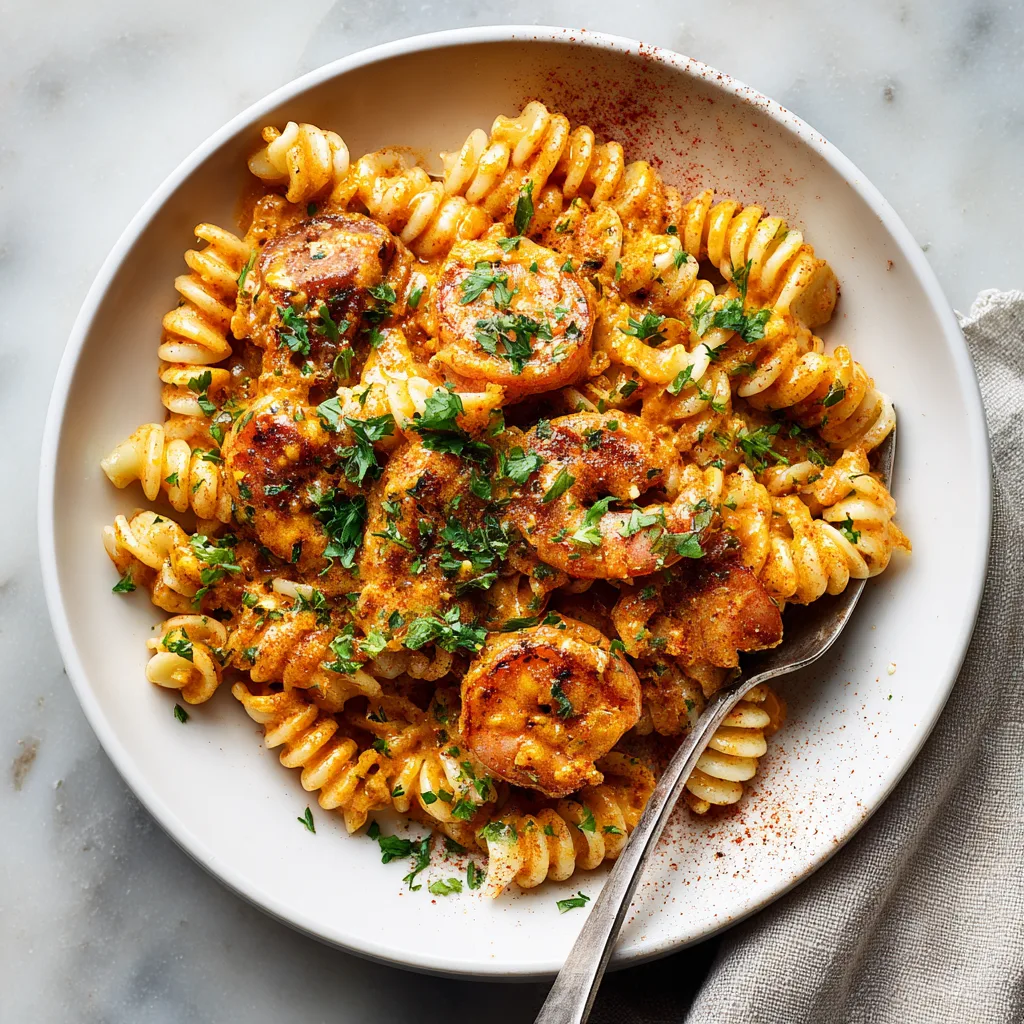
Pappadeaux Mardi Gras Pasta
A rich and spicy Cajun pasta dish featuring Andouille sausage, shrimp, and crawfish in a creamy vegetable sauce.
Ingredients
Equipment
Method
- Boil pasta in salted water until al dente. Reserve 1/2 cup water, drain, and set aside.
- In a large skillet, brown the sliced Andouille sausage over medium-high heat. Remove and set aside.
- Add 1 tbsp butter to the skillet. Sear shrimp (and crawfish) with a pinch of Cajun spice until pink. Remove and set aside.
- Add remaining butter and veggies (peppers, mushrooms) to the pan. Sauté until soft. Add garlic and cook 1 minute.
- Pour in heavy cream, marinara, and seasonings. Simmer 5-7 minutes until slightly thickened.
- Stir in parmesan cheese until melted. Add salt and pepper to taste.
- Return pasta, sausage, and seafood to the pan. Toss to coat evenly.
- Garnish with green onions and serve hot.
Notes
Use fresh grated parmesan for the smoothest sauce texture.
Storage and Reheating
Cream-based sauces can be tricky to reheat as they tend to “break” (separate into oil and solids).
- Storage: Store leftovers in an airtight container in the refrigerator for up to 3 days. Seafood pasta is best eaten fresh.
- Reheating: Do not microwave on high power. Instead, place the pasta in a saucepan over low heat. Add a splash of milk or water to loosen the sauce. Stir gently and constantly until heated through. If you must microwave, use 50% power and stir every 30 seconds.
- Freezing: It is not recommended to freeze this dish, as the cream sauce will become grainy and the texture of the shrimp will deteriorate upon thawing.
By following these steps, you are guaranteed a dinner that will impress. The Pappadeaux Mardi Gras Pasta is more than just a recipe; it’s a comfort food experience that brings the hospitality of the South right to your dining table. Enjoy the process of layering these bold flavors and dig in!