Follow Me On Social Media!
The Ultimate Better-Than-Takeout Chicken Chow Mein

There is a distinct sound that signifies comfort in a kitchen: the rhythmic clack-clack of chopsticks against a ceramic bowl and the sizzling hiss of a hot wok. Among the pantheon of Chinese-American takeout classics, few dishes evoke this sense of comfort quite like Chicken Chow Mein. It is the quintessential noodle stir-fry—savory, slightly sweet, packed with crunchy vegetables, and coated in a glossy, umami-rich sauce that clings to every strand of egg noodle.
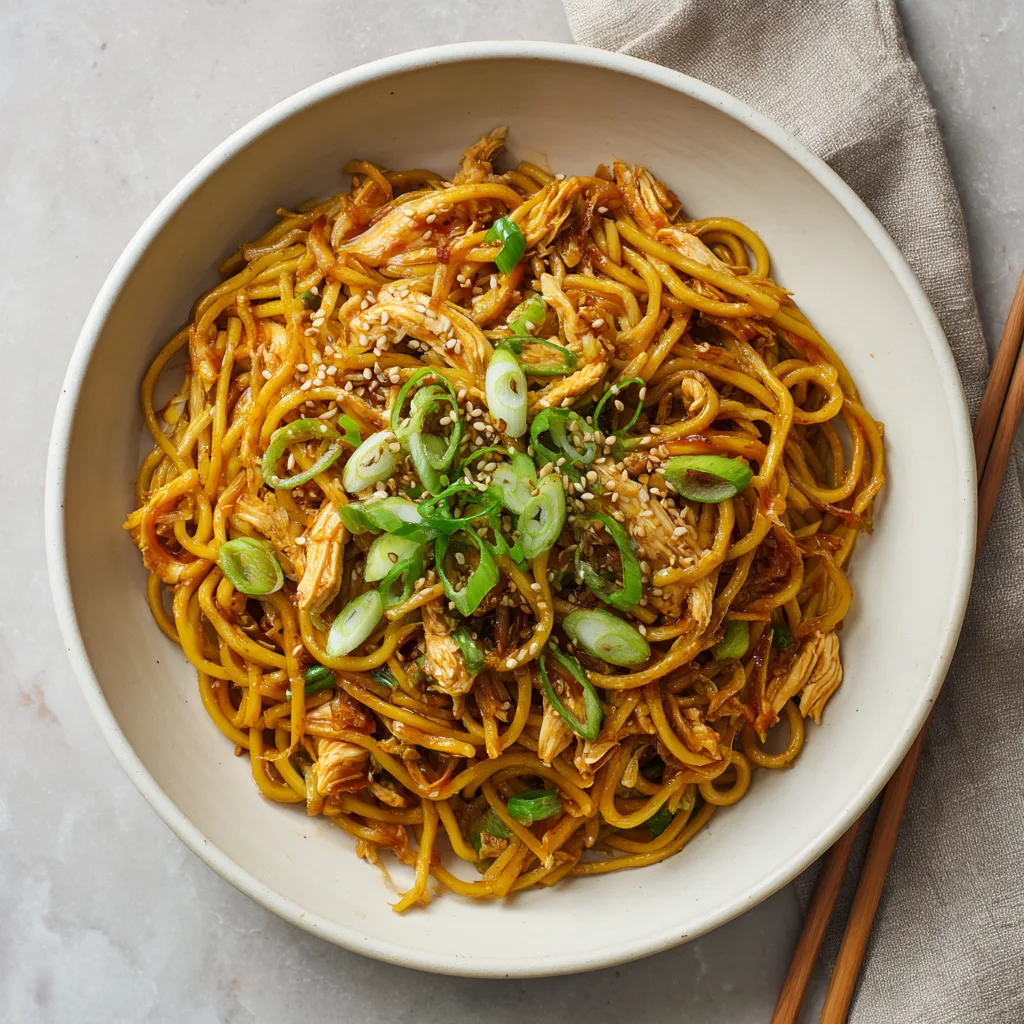
While it is incredibly easy to pick up the phone and order from your local spot, the truth is that making Chicken Chow Mein at home is not only faster than delivery, but it is also infinitely tastier. When you make it yourself, you control the quality of the chicken, the crispness of the vegetables, and the balance of the sauce. You avoid the excessive oiliness that often plagues restaurant versions, resulting in a dish that feels fresh, vibrant, and satisfying without the heavy aftermath.
This comprehensive guide will walk you through everything you need to know to master this dish. From selecting the right type of noodle to the secret technique of “velveting” chicken for buttery tenderness, we are diving deep into the art of the stir-fry.
The Foundation: Choosing the Right Noodle
The term “Chow Mein” literally translates to “fried noodles.” Therefore, the noodles are the undisputed star of the show. If you have ever been confused by the aisle in your Asian grocery store, you are not alone. The variety can be overwhelming, but for this recipe, specificity matters.
Fresh Egg Noodles: Ideally, you want to use fresh Chinese egg noodles. These are usually found in the refrigerator section of Asian markets. They have a yellow hue (from the egg/alkaline water) and a delightful chewiness. Dried Egg Noodles: If fresh aren’t available, dried egg noodles are a fantastic substitute. Look for “Chow Mein” noodles or “Hong Kong Style” noodles on the package. The Pre-Boil: Unlike Italian pasta, which you might finish cooking in the sauce, these noodles need to be par-boiled and drained well before they hit the wok. The goal is to have them cooked al dente so they can withstand the high heat of stir-frying without turning into mush.
The Secret to Tender Chicken: Velveting
Have you ever wondered why the chicken in Chinese restaurants is so impossibly silky and tender, while home-cooked chicken breast can often turn out dry and stringy? The secret is a technique called velveting.
Velveting involves marinating meat in a mixture of cornstarch, oil, and liquid (often soy sauce or wine) before cooking. The cornstarch creates a protective barrier around the meat, sealing in moisture and preventing the proteins from seizing up when they hit the hot pan. In this recipe, we use a simplified velveting method right in the marinade. By tossing your chicken strips with a little cornstarch and oil before searing, you ensure that every bite is succulent and tender, regardless of whether you use breast or thigh meat.
The Holy Trinity of Crunch: Vegetables
One of the defining characteristics of a great Chow Mein is the interplay of textures. You have the soft, chewy noodles and the tender chicken, which means you need vegetables that provide a distinct crunch.
Cabbage: Green cabbage is traditional. It holds up well to heat and adds a subtle sweetness. Carrots: Julienned carrots add a pop of vibrant orange color and an earthiness that grounds the savory sauce. Aromatics: Green onions (scallions), garlic, and ginger are non-negotiable. They provide the fragrant backbone of the dish.
The key to stir-frying these vegetables is speed. You want them “tender-crisp”—cooked enough to lose their raw bite, but crisp enough to snap when you chew them. Overcooked, soggy vegetables are the enemy of a good Chow Mein.
The Sauce: Balancing the Flavors
The sauce for Chicken Chow Mein is a simple yet powerful emulsion of salty, sweet, and savory elements. It does not require twenty different ingredients, but it does require the right ones.
Oyster Sauce: This provides the deep, savory umami flavor and the rich brown color. Soy Sauce: We use a mix of regular (or light) soy sauce for saltiness and a splash of dark soy sauce for that signature caramel color. Sesame Oil: Added at the end, toasted sesame oil provides a nutty aroma that is unmistakably authentic. Sugar: A small amount of sugar balances the high sodium content of the soy and oyster sauces.
Mastering the Wok: Heat Control
You do not strictly need a wok to make this dish—a large, heavy-bottomed skillet or Dutch oven works too—but you do need high heat. Stir-frying is a fast process. Before you turn on the stove, ensure your mise en place (prep work) is done. The sauce should be whisked, the veggies chopped, and the chicken marinated. Once the heat is on, things move quickly.
Cook in batches. If you crowd the pan with chicken, vegetables, and noodles all at once, the temperature will drop, and your food will steam instead of fry. Steamed noodles are fine, but they lack the complex flavor of fried noodles. Sear the chicken first, remove it, then flash-fry the vegetables, and finally bring everything together with the noodles and sauce.
Ingredients
For the Chicken & Marinade:
- 1 lb (450g) boneless, skinless chicken breasts or thighs, sliced into thin strips
- 1 tablespoon soy sauce
- 1 teaspoon sesame oil
- 1 tablespoon cornstarch
- 1 tablespoon vegetable oil (for the marinade)
For the Sauce:
- 1/4 cup oyster sauce
- 1/4 cup low-sodium soy sauce
- 1 tablespoon dark soy sauce (optional, for color)
- 1 teaspoon sugar
- 1 teaspoon sesame oil
- 1/4 teaspoon white pepper (black pepper works too)
- 1/4 cup chicken broth or water
For the Stir Fry:
- 10 oz (300g) dried chow mein noodles or fresh egg noodles
- 3 tablespoons vegetable oil, divided
- 2 cloves garlic, minced
- 1 teaspoon fresh ginger, grated
- 2 cups green cabbage, shredded
- 1 medium carrot, julienned
- 3 green onions, cut into 2-inch pieces (separate white and green parts)
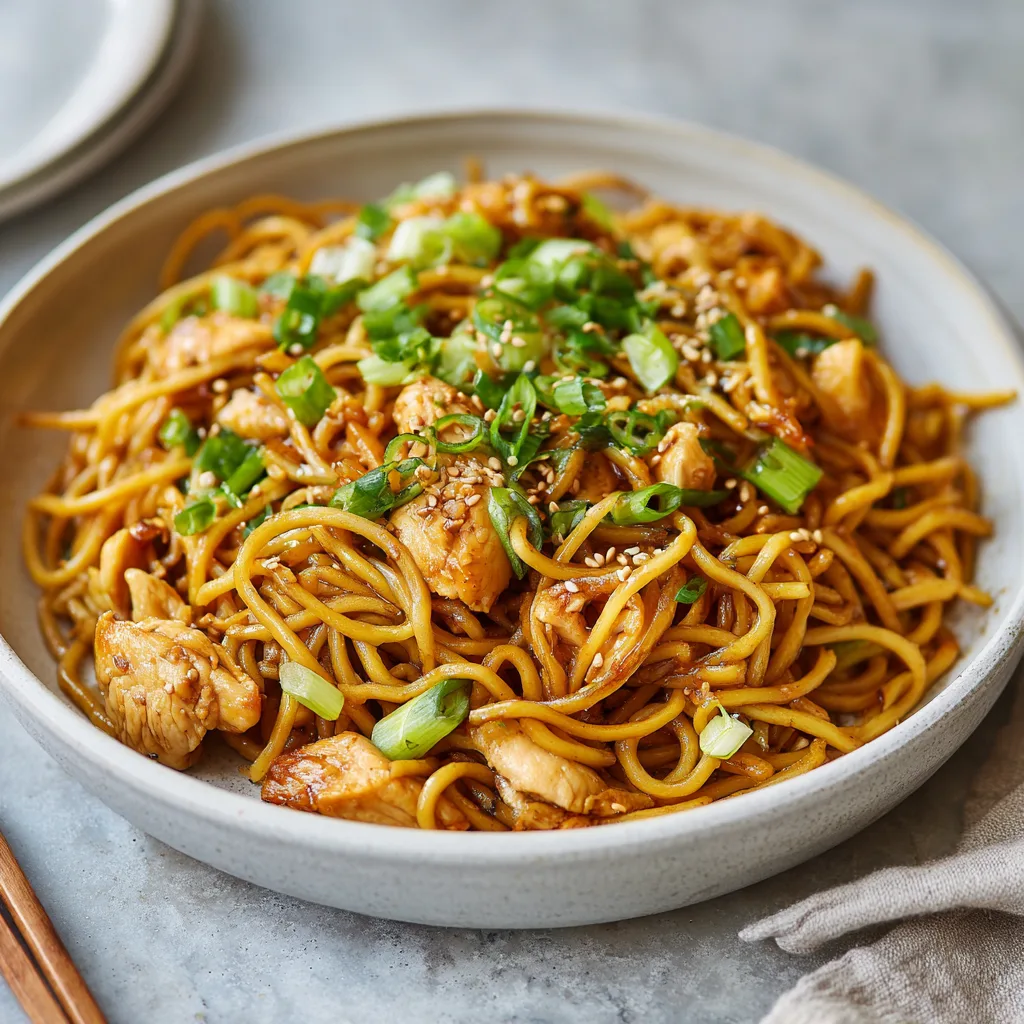
Instructions
- Prepare the Noodles: Cook the noodles according to package instructions. Aim for al dente. Drain, rinse with cold water to stop the cooking, and toss with a teaspoon of oil to prevent sticking. Set aside.
- Marinate the Chicken: In a medium bowl, combine the sliced chicken with soy sauce, sesame oil, and cornstarch. Mix well until the liquid is absorbed. Add the tablespoon of vegetable oil and mix again to coat. Let it sit for 10-15 minutes while you prep the vegetables.
- Make the Sauce: In a small bowl or jar, whisk together the oyster sauce, light soy sauce, dark soy sauce, sugar, sesame oil, white pepper, and chicken broth. Set aside.
- Sear the Chicken: Heat a wok or large skillet over medium-high heat. Add 1 tablespoon of oil. Add the chicken strips in a single layer (do this in two batches if necessary). Sear for 2-3 minutes per side until golden brown and cooked through. Remove chicken from the pan and set aside.
- Stir-Fry Vegetables: Wipe out the pan if needed and add another tablespoon of oil over high heat. Add the white parts of the green onions, minced garlic, and ginger. Stir-fry for 30 seconds until fragrant. Add the cabbage and carrots. Stir-fry for 2-3 minutes until the vegetables are slightly softened but still crisp.
- Combine: Add the cooked noodles and the chicken back into the pan with the vegetables. Pour the sauce mixture over everything.
- Toss and Finish: Toss everything together continuously for 2-3 minutes. You want the sauce to thicken slightly and coat every strand of noodle, and the noodles to get hot and slightly caramelized.
- Serve: Stir in the green parts of the green onions. Remove from heat immediately. Serve hot, optionally garnished with sesame seeds or chili oil.
Tips for Success
- Prep is King: Because stir-frying happens so fast, you cannot be chopping carrots while the chicken is cooking. Have everything cut, measured, and placed in bowls near the stove before you ignite the burner.
- Don’t Over-boil Noodles: If your package says boil for 4 minutes, check them at 3. They will finish cooking in the pan with the sauce. Mushy noodles will break apart when you toss them.
- Dark Soy Sauce: If your chow mein looks pale compared to restaurants, you are missing dark soy sauce. It is less salty than regular soy sauce but has a thick viscosity and rich color that stains the noodles that appetizing deep brown.
- Protein Variations: This recipe is incredibly versatile. Swap chicken for sliced flank steak, shrimp, or firm tofu. For a “House Special” version, use a combination of all three.
- Storage: Leftovers store surprisingly well. Keep them in an airtight container in the refrigerator for up to 3 days. Reheat in a pan or microwave.
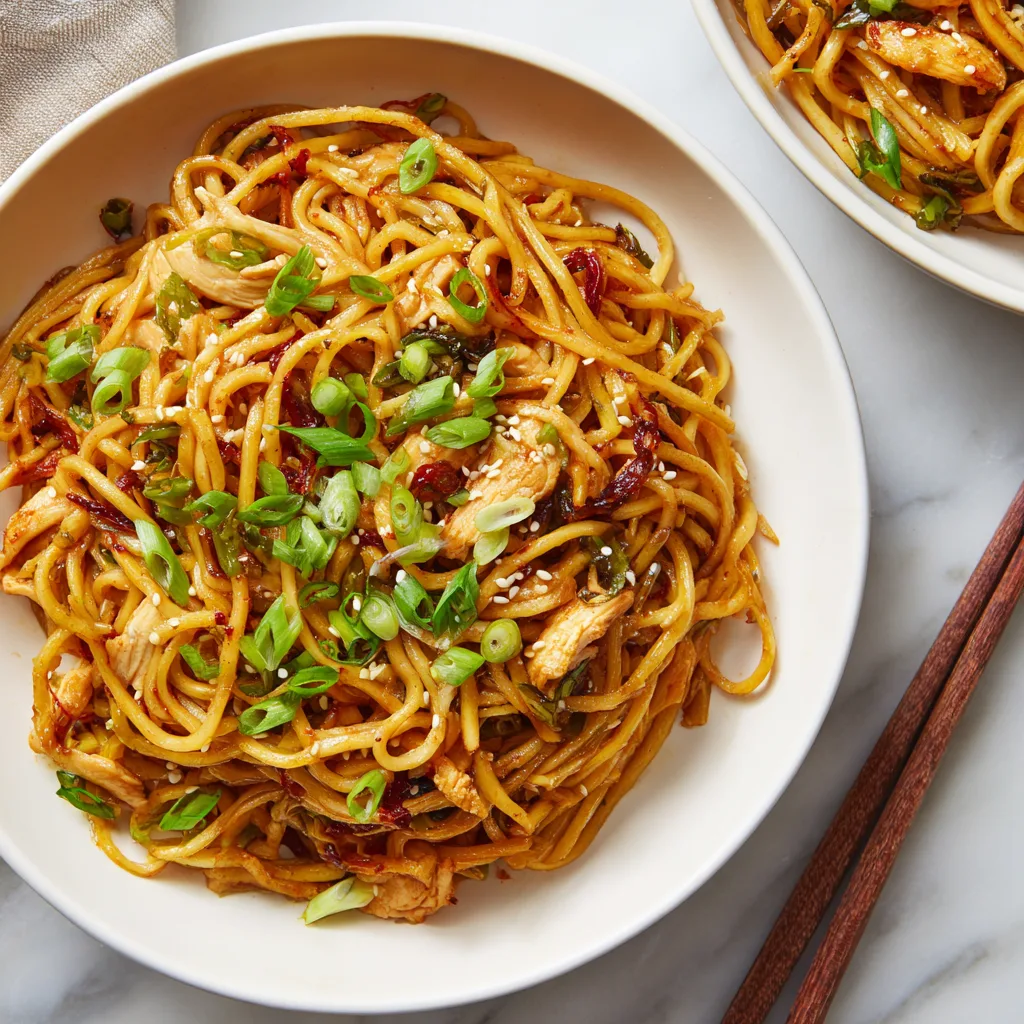
Chicken Chow Mein
A classic Chinese stir-fry with tender velveted chicken, crisp vegetables, and egg noodles tossed in a savory, umami-rich sauce.
Ingredients
Equipment
Method
- Boil noodles according to package instructions until al dente. Rinse with cold water and drain.
- Combine sliced chicken with marinade ingredients (soy sauce, sesame oil, cornstarch, oil). Let sit for 10 minutes.
- Whisk together all sauce ingredients in a small bowl.
- Sear chicken in a hot wok with oil until golden and cooked through. Remove and set aside.
- Stir-fry garlic, ginger, cabbage, and carrots in the same wok until tender-crisp.
- Return chicken and noodles to the wok. Pour sauce over the top.
- Toss everything together over high heat for 2-3 minutes until sauce coats noodles.
- Stir in green onions and serve immediately.
Notes
Use dark soy sauce for that authentic restaurant color.
Why Make This at Home?
Beyond the health benefits of controlling the oil and sodium, making Chicken Chow Mein at home is an act of creativity. You can adjust the vegetable ratio to your liking—add bean sprouts, snap peas, or bok choy. You can make it spicy with Sambal Oelek or keep it mild for the kids.
There is a satisfaction in tossing noodles in a wok, watching the steam rise, and smelling the garlic and ginger hit the hot oil. It transforms a standard weeknight dinner into a culinary event. Plus, the cost per serving is a fraction of takeout prices.
So, put down the takeout menu. Grab your skillet and your ingredients. Tonight, we are making the best Chicken Chow Mein you have ever tasted, right in your own kitchen.