Follow Me On Social Media!
Soft maple cookies with brown butter icing
Soft maple cookies with brown butter icing—tender, maple-infused cookies topped with a glossy, nutty brown-butter glaze. Step-by-step recipe, tips, variations and storage.

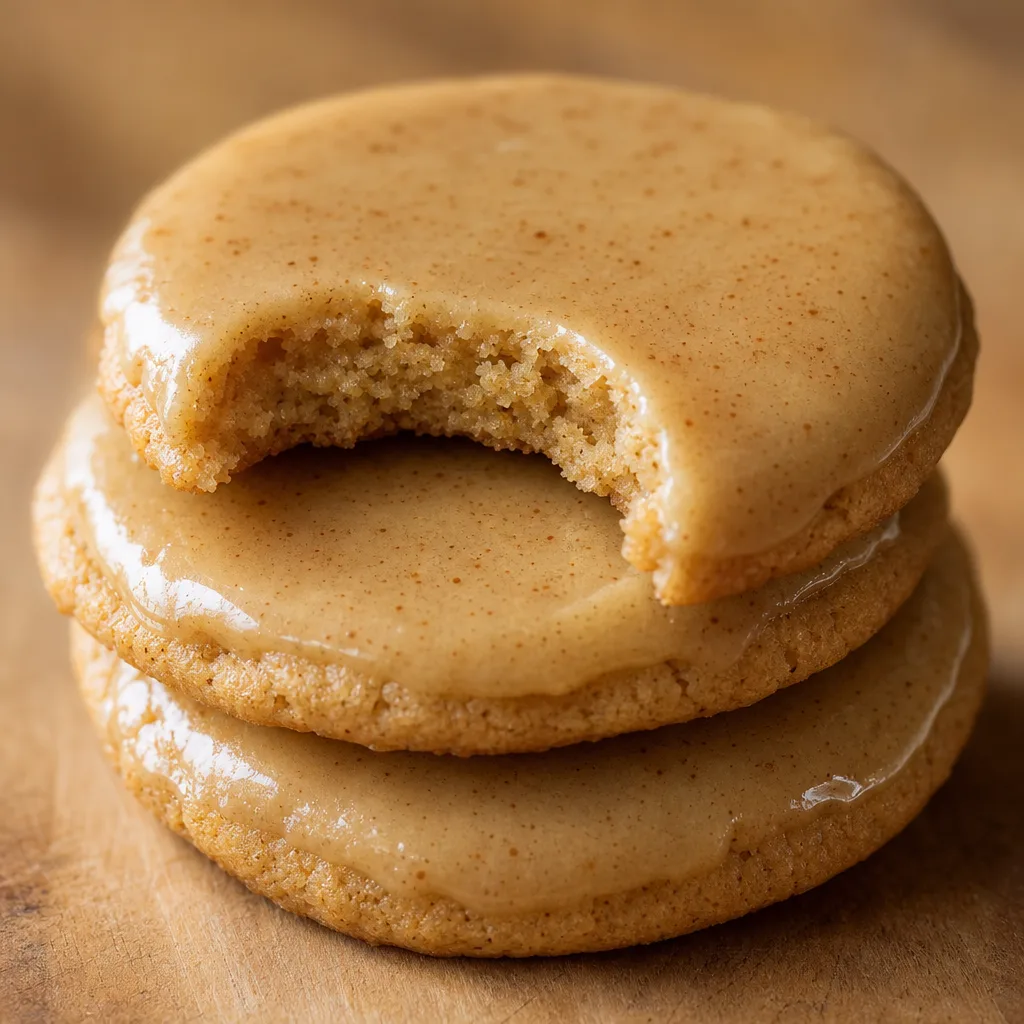
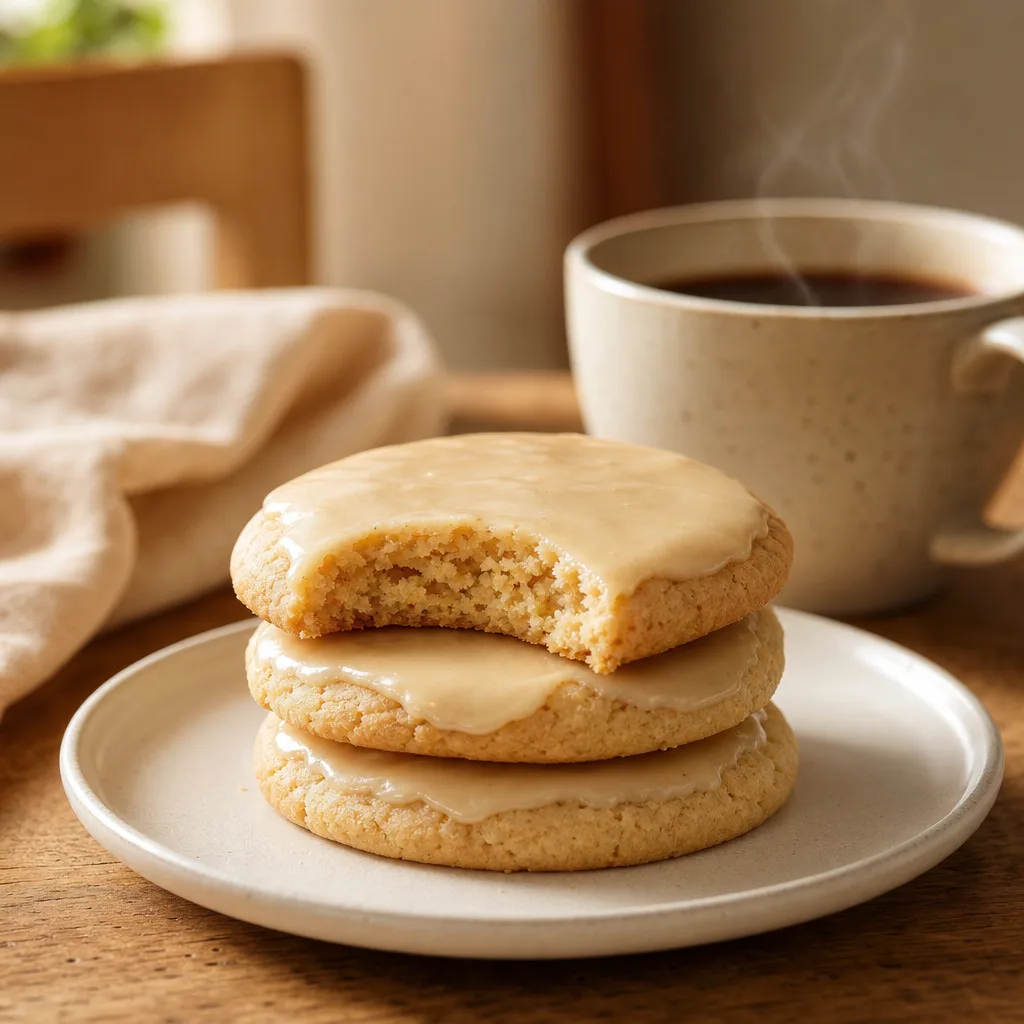
These soft maple cookies with brown butter icing are built for comfort: pillowy, tender cookies flavored with warm maple and finished with a glossy, deeply caramelized brown-butter glaze. The cookies are meant to be soft rather than crisp, with a slightly cakey interior that yields under a bite while still holding their shape. The icing is intentionally thick and shiny, the kind that sets to a smooth, glossy surface rather than forming a drippy glaze. The overall effect is cozy and refined—maple’s round sweetness balanced by the toasty, nutty notes of browned butter.
I developed this recipe to capture that close-up, golden-brown look and the soft texture suggested in the reference. The dough is butter-forward and uses both brown sugar and a touch of maple syrup so the maple flavor is present throughout. A light amount of leavening keeps the cookies tender without flattening them into a thin disc. The icing is made by browning butter gently, then whisking it into powdered sugar with a spoonful of maple syrup and a splash of cream to achieve a thick, spreadable consistency that firms to a glossy finish.
If you love soft, buttery cookies with an elevated finish, these are built to be shared at a weekend brunch, tucked into a lunchbox, or plated with coffee for an afternoon treat. They photograph beautifully—stacked, with a bite removed to reveal the interior—thanks to the smooth icing and warm color palette. Below you'll find step-by-step instructions, ingredient notes, variations, storage guidance and answers to the questions most bakers ask when making a new cookie with a rich, brown-butter topping.
Why this cookie structure works
The balance between brown sugar and a small amount of granulated sugar gives these cookies their soft, slightly chewy interior while maintaining a defined edge. Brown sugar brings moisture through its molasses content, contributing chew and a mild caramel character that pairs well with maple.
Including both baking powder and a small amount of baking soda helps the dough rise gently and then set, producing a tender interior rather than a thin, crisp cookie. The single egg provides structure and moisture without making the cookies cakey.
The brown butter icing adds depth because browning butter concentrates milk solids and creates nutty, caramel-like flavors that echo the caramel notes already present in the brown sugar. Spreading a somewhat thick layer of this icing gives the cookies the glossy, single-layer finish described in the visual brief.
Ingredient notes and substitutions
All-purpose flour works well here, but if you want a slightly cakier, tender result substitute 1/4 cup of the all-purpose flour with an equal amount of cake flour. That change reduces protein content and gives a softer crumb.
If you only have dark brown sugar, use it for a deeper molasses flavor; light brown sugar is more neutral. For a dairy-free variation, swap the butter in the cookie dough with a firm plant-based butter and use a plant-based cream or coconut milk in the icing, though browned butter flavor will be missing without real dairy.
Pure maple syrup is preferred for authentic maple flavor; maple-flavored syrups or pancake syrups tend to be sweeter and less nuanced. If you want to intensify maple presence, add a small amount of pure maple extract to the icing—start with 1/4 teaspoon.
Ingredients
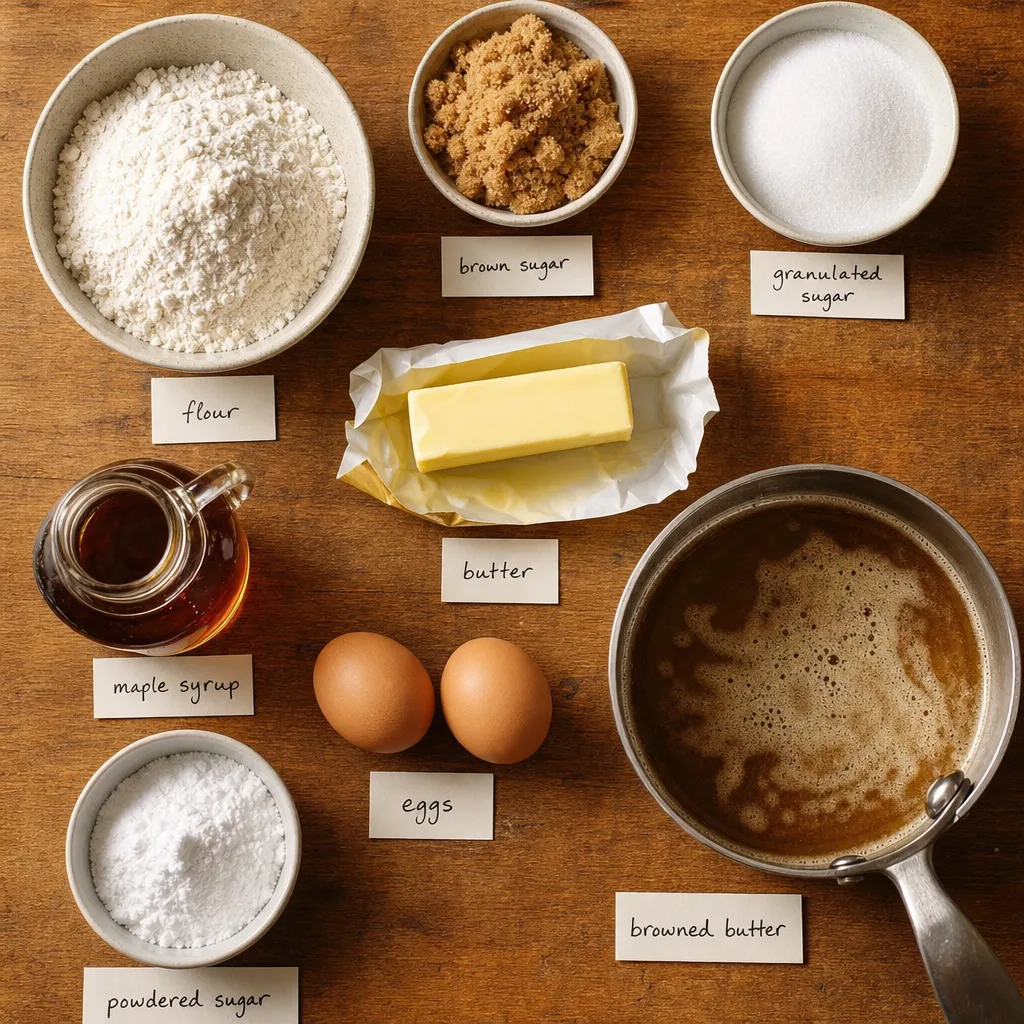
- All-purpose flour — 2 1/2 cups (312 g)
- Baking powder — 1 teaspoon
- Baking soda — 1/2 teaspoon
- Kosher salt — 1/2 teaspoon
- Unsalted butter (room temperature) — 1 cup (226 g) plus 6 tablespoons (85 g) for icing
- Light brown sugar — 3/4 cup (150 g), packed
- Granulated sugar — 1/4 cup (50 g)
- Large egg — 1
- Pure maple syrup — 2 tablespoons (for dough)
- Vanilla extract — 1 teaspoon
- Powdered sugar (confectioners') — 2 1/2 cups (300 g) for icing
- Pure maple syrup — 1 tablespoon (for icing)
- Heavy cream or whole milk — 1 to 2 tablespoons (for icing)
- Kosher salt — to taste (for icing)
- Neutral oil or additional butter — as needed for pan (to taste)
Instructions
- Prep: Preheat the oven to 350°F (175°C). Line two baking sheets with parchment paper or silicone mats and set aside. Lightly grease spaces on the baking sheet with a brush of neutral oil or softened butter if desired. (ingredient_ids: ["i12"])
- Dry ingredients: In a medium bowl whisk together the all-purpose flour, baking powder, baking soda, and 1/2 teaspoon kosher salt until evenly combined. Set aside. (ingredient_ids: ["i1","i2","i3","i4"])
- Cream butter and sugars: In a large bowl or the bowl of a stand mixer fitted with the paddle attachment, beat 1 cup (226 g) unsalted butter, the light brown sugar, and granulated sugar together on medium speed until the mixture is light, aerated and has lost some of the gritty sugar texture, about 2 to 3 minutes. Scrape down the bowl as needed. (ingredient_ids: ["i5","i6","i7"])
- Add egg and extracts: Add the large egg, 2 tablespoons pure maple syrup, and 1 teaspoon vanilla extract to the butter-sugar mixture and beat on low until just combined. Do not overmix. (ingredient_ids: ["i8","i9","i10"])
- Combine wet and dry: With the mixer on low, add half the dry ingredients and mix until incorporated, then add the remaining dry ingredients and mix just until a soft dough forms. The dough should be slightly sticky but able to hold a shape when scooped. (ingredient_ids: ["i1","i2","i3","i4"])
- Scoop cookies: Using a 2-tablespoon cookie scoop or spoon, portion dough into evenly sized balls and place them about 2 inches apart on the prepared baking sheets. Gently press each ball to flatten slightly so they will bake into a round, single-layer cookie. You should get roughly 20 to 24 cookies depending on exact scoop size. (ingredient_ids: ["i1"])
- Bake: Bake one sheet at a time in the center of the preheated oven for 10 to 12 minutes, or until the edges are set and the centers look just baked but still soft. The tops will be pale golden. Rotate the pan halfway through baking if your oven runs unevenly. (ingredient_ids: [])
- Cool for icing: Remove the cookies to a wire rack and allow them to cool completely before icing. While they cool, prepare the brown butter icing. (ingredient_ids: [])
- Brown the butter: In a small saucepan over medium heat, melt 6 tablespoons (85 g) unsalted butter. Continue to cook, swirling the pan occasionally, until the butter foams and then the milk solids turn deep golden brown and emit a nutty aroma, about 4 to 6 minutes. Immediately transfer the browned butter to a small heatproof bowl to stop cooking and allow it to cool for 3 to 5 minutes so it’s warm but not scalding. (ingredient_ids: ["i11"])
- Make icing base: In a medium mixing bowl, whisk together 2 1/2 cups (300 g) powdered sugar, 1 tablespoon pure maple syrup, and a pinch of kosher salt. Slowly add 1 tablespoon of the warm browned butter and whisk to combine; add the remaining browned butter as needed. If the mixture is very thick, whisk in 1 to 2 tablespoons heavy cream or whole milk until you reach a thick, spreadable consistency. The icing should be glossy and hold its shape when spread. (ingredient_ids: ["i12","i13","i11","i14"])
- Adjust and test: Taste the icing and add more salt if it needs contrast or an additional splash of maple syrup for more maple depth. If the icing becomes too thin, add a few tablespoons more powdered sugar; if it’s too thick to spread smoothly, add a drop more cream. (ingredient_ids: ["i13","i14"])
- Ice the cookies: Using an offset spatula or the back of a spoon, spread a thin, even layer of the brown butter icing over each cooled cookie. Aim for a smooth, glossy finish; the icing will firm as it cools. (ingredient_ids: ["i12"])
- Set and store: Allow the icing to set at room temperature for at least 30 minutes. Store the finished cookies in an airtight container at room temperature for up to 3 days or refrigerate for up to a week. Bring refrigerated cookies back to room temperature before serving for best texture. (ingredient_ids: [])
Pro Tips
- Brown the butter carefully and remove it from the heat as soon as those toasty brown bits appear; carryover heat will continue to cook the butter solids and they can quickly burn.
- If your cookie dough seems too soft to shape, chill it for 15 to 30 minutes; this will make scooping and shaping easier and prevent excessive spreading in the oven.
- For an ultra-smooth icing surface, let the cookies cool completely and spread one thin layer first, then add a slightly thicker topcoat once the base has set for a mirrored finish.
- Use room-temperature butter for the dough so it creams properly with the sugars and traps air for a tender crumb.
- Weigh ingredients with a kitchen scale for consistent results—flour packed differently by volume will influence texture more than most people expect.
Variations
- Maple walnut: Fold 3/4 cup of finely chopped toasted walnuts into the dough for crunch and extra nutty flavor; garnish the iced tops with a small walnut half.
- Spiced maple: Add 1/2 teaspoon cinnamon and 1/8 teaspoon ground cardamom to the dry mix for an autumnal spice lift.
- Maple-chocolate: Stir 1/2 cup mini chocolate chips into the dough and add 1 tablespoon unsweetened cocoa powder to the icing for a maple-chocolate complement.
- Maple glaze with citrus: Replace half the brown butter in the icing with orange zest and 1 teaspoon fresh orange juice for a brighter, citrus-kissed glaze.
Serving Suggestions
- Serve two cookies on a small dessert plate with a steaming cup of medium-roast coffee for a morning treat.
- Arrange a stack of three iced cookies on a simple wooden board as part of a brunch spread alongside scones and yogurt parfait.
- Pair the cookies with a small glass of chilled apple cider or a warmed mug of mulled tea for colder weather gatherings.
- Bring a box of these cookies as a hostess gift; wrap stacks of four in parchment and tie with twine for an attractive presentation.
Make-ahead and scaling
The dough can be made one day ahead: cover and refrigerate for up to 24 hours. Chilled dough often performs better because it relaxes the gluten and firms the butter, reducing spread. Bring scooped dough to room temperature for 10 minutes before baking if it is very firm.
To scale up for a party, the recipe multiplies cleanly. Bake multiple sheets in succession and cool them on racks. Make the brown butter icing in batches or keep it warm in a heatproof bowl set over a pot of very gentle simmering water to maintain spreadability for a longer decorating session.
If planning to transport iced cookies, allow the icing to set fully and stack cookies with parchment between layers. For very long travel, pack them in a rigid container to prevent crushing.
Storage and Reheating
Store iced cookies in an airtight container at room temperature for up to 3 days. For longer storage, keep them in the refrigerator for up to 7 days—bring to room temperature before serving to regain their soft texture. To refresh slightly stale cookies, warm them in a 300°F (150°C) oven for 5 to 7 minutes, then allow to cool briefly before serving so the icing firms but the interior remains tender.
Soft maple cookies with brown butter icing
Tender butter-forward cookies gently flavored with maple and finished with a glossy brown butter icing that adds a nutty, caramel depth.
Ingredients
Equipment
Method
- Prep: Preheat the oven to 350°F (175°C). Line two baking sheets with parchment paper or silicone mats and set aside. Lightly grease spaces on the baking sheet with a brush of neutral oil or softened butter if desired.
- Dry ingredients: In a medium bowl whisk together the all-purpose flour, baking powder, baking soda, and 1/2 teaspoon kosher salt until evenly combined. Set aside.
- Cream butter and sugars: In a large bowl or the bowl of a stand mixer fitted with the paddle attachment, beat 1 cup (226 g) unsalted butter, the light brown sugar, and granulated sugar together on medium speed until the mixture is light, aerated and has lost some of the gritty sugar texture, about 2 to 3 minutes. Scrape down the bowl as needed.
- Add egg and extracts: Add the large egg, 2 tablespoons pure maple syrup, and 1 teaspoon vanilla extract to the butter-sugar mixture and beat on low until just combined. Do not overmix.
- Combine wet and dry: With the mixer on low, add half the dry ingredients and mix until incorporated, then add the remaining dry ingredients and mix just until a soft dough forms. The dough should be slightly sticky but able to hold a shape when scooped.
- Scoop cookies: Using a 2-tablespoon cookie scoop or spoon, portion dough into evenly sized balls and place them about 2 inches apart on the prepared baking sheets. Gently press each ball to flatten slightly so they will bake into a round, single-layer cookie. You should get roughly 20 to 24 cookies depending on exact scoop size.
- Bake: Bake one sheet at a time in the center of the preheated oven for 10 to 12 minutes, or until the edges are set and the centers look just baked but still soft. The tops will be pale golden. Rotate the pan halfway through baking if your oven runs unevenly.
- Cool for icing: Remove the cookies to a wire rack and allow them to cool completely before icing. While they cool, prepare the brown butter icing.
- Brown the butter: In a small saucepan over medium heat, melt 6 tablespoons (85 g) unsalted butter. Continue to cook, swirling the pan occasionally, until the butter foams and then the milk solids turn deep golden brown and emit a nutty aroma, about 4 to 6 minutes. Immediately transfer the browned butter to a small heatproof bowl to stop cooking and allow it to cool for 3 to 5 minutes so it’s warm but not scalding.
- Make icing base: In a medium mixing bowl, whisk together 2 1/2 cups (300 g) powdered sugar, 1 tablespoon pure maple syrup, and a pinch of kosher salt. Slowly add 1 tablespoon of the warm browned butter and whisk to combine; add the remaining browned butter as needed. If the mixture is very thick, whisk in 1 to 2 tablespoons heavy cream or whole milk until you reach a thick, spreadable consistency. The icing should be glossy and hold its shape when spread.
- Adjust and test: Taste the icing and add more salt if it needs contrast or an additional splash of maple syrup for more maple depth. If the icing becomes too thin, add a few tablespoons more powdered sugar; if it’s too thick to spread smoothly, add a drop more cream.
- Ice the cookies: Using an offset spatula or the back of a spoon, spread a thin, even layer of the brown butter icing over each cooled cookie. Aim for a smooth, glossy finish; the icing will firm as it cools.
- Set and store: Allow the icing to set at room temperature for at least 30 minutes. Store the finished cookies in an airtight container at room temperature for up to 3 days or refrigerate for up to a week. Bring refrigerated cookies back to room temperature before serving for best texture.
Notes
Weights are provided for key ingredients to improve consistency.
This recipe aims for a soft cookie texture and a thick, glossy icing that sets rather than drips.
Frequently Asked Questions
Can I use pure maple extract instead of maple syrup?
Yes. If you prefer a stronger maple aroma without extra moisture, substitute 1/2 teaspoon pure maple extract for the 2 tablespoons of maple syrup in the dough and reduce the powdered sugar or cream in the icing as needed. Be mindful that extract is more concentrated—start small and taste the icing before adding more.
Why did my icing separate after adding the browned butter?
If the browned butter is too hot when added to the powdered sugar mixture, it can melt the sugar and cause separation. Let the browned butter cool for a few minutes so it’s warm but not scalding before whisking into the sugar. If separation occurs, whisk in a little more powdered sugar to re-emulsify or add a splash of cream and whisk vigorously until smooth.
How can I tell when the butter is properly browned?
Watch the butter carefully: it first melts, then foams, and finally the milk solids settle and begin to turn golden brown with a nutty aroma. Stir or swirl the pan so the solids color evenly. Remove the butter from the heat when you see even golden-brown flecks and smell a toasted fragrance—carryover heat will deepen the color slightly after removal.
Can I freeze these cookies?
Yes. Freeze undecorated baked cookies in a single layer on a sheet until firm, then transfer to an airtight container or freezer bag for up to 3 months. Freeze decorated cookies with care by placing them in a single layer between sheets of parchment in a rigid container so the icing is not crushed. Thaw at room temperature before serving.
My cookies spread too much. How can I prevent that next time?
Excess spreading often comes from over-soft butter, too warm dough, or too little flour. Chill the dough briefly before baking, ensure your butter is room temperature but not oily, and measure flour by weight. Also confirm your baking powder and soda are fresh and avoid over-creaming the butter and sugar.