Follow Me On Social Media!
Crispy Ham & Cheese Puff Pastry Stacks: The Irresistible Savory Bake You’ll Make on Repeat

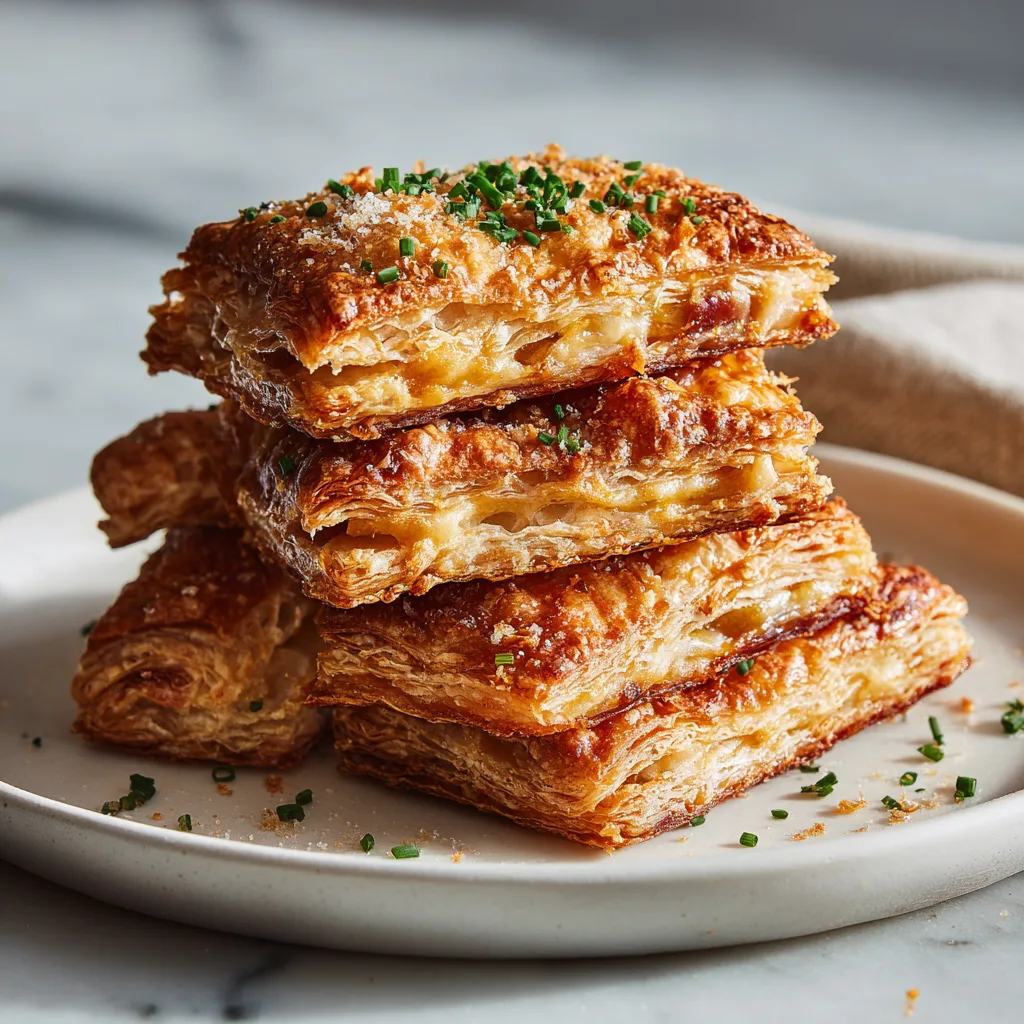
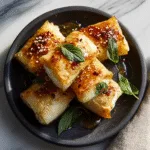
If you’re searching for a recipe that delivers jaw-dropping results with surprisingly little effort, Crispy Ham & Cheese Puff Pastry Stacks are exactly what you need. These golden, flaky, buttery layers of puff pastry sandwich generous folds of savory ham and perfectly melted cheese into something that looks like it came straight from a French bakery — yet comes together in your home kitchen in under 40 minutes. Whether you’re feeding a hungry crowd at brunch, assembling a quick weeknight dinner, or putting together an elegant party appetizer, this recipe checks every box: fast, foolproof, visually stunning, and absolutely delicious.
What Makes These Puff Pastry Stacks So Special?
The magic of this recipe lies entirely in the architecture of puff pastry itself. Store-bought puff pastry is one of the most underrated shortcuts in home cooking. Made from hundreds of paper-thin layers of dough and butter that puff and separate in the oven’s heat, it creates that signature shattering crisp exterior with a light, airy interior that no other dough can replicate. When you layer it with salty, smoky ham and nutty, gooey melted cheese, every bite becomes a contrast of textures — crisp against creamy, salty against buttery — that keeps you reaching for another piece.
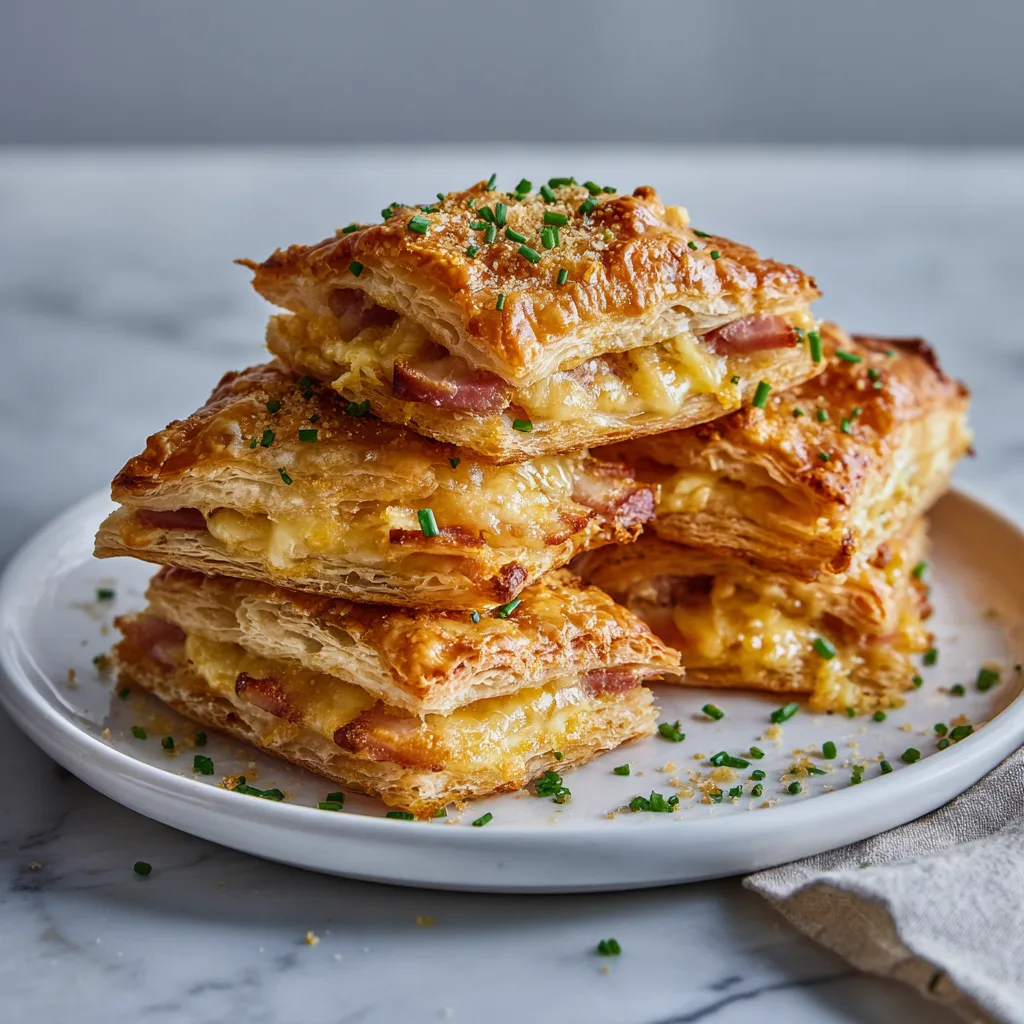
What sets these stacks apart from your average ham and cheese pastry is the deliberate layering approach. Rather than sealing everything inside a pocket (like a turnover), these are built as open stacks — two pastry squares sandwiching the filling with the top left slightly open so the cheese can bubble and caramelize at the edges. It’s a small but meaningful difference that takes the visual appeal and flavor to another level entirely.
A Brief History: Puff Pastry and Savory Traditions
Puff pastry — known in French as pâte feuilletée — has a storied history dating back to 17th-century France, though similar laminated doughs existed in the Middle East and Mediterranean long before. French culinary tradition elevated it into the architectural marvel we know today, using it as the base for everything from Napoleon pastries to beef Wellington. The combination of ham and cheese baked into or onto pastry became a staple across Europe, finding its most famous expression in the French croque monsieur and similar baked handheld snacks enjoyed in cafes from Paris to Lyon.
In modern kitchens, the ham and cheese puff pastry has become a beloved global comfort food. It appears on brunch menus, in school lunchboxes, at holiday gatherings, and as a quick weeknight lifesaver. This version draws on that tradition while adding a few thoughtful touches — a swipe of Dijon mustard for depth, a blend of cheeses for complexity, and a careful technique for achieving maximum crispness.
Ingredients
For the Pastry Stacks:
- 2 sheets store-bought puff pastry, thawed
- 200g (7 oz) thinly sliced ham (Black Forest, honey ham, or prosciutto)
- 1 ½ cups shredded Gruyère cheese (or Swiss, mozzarella, or a blend)
- 2 tablespoons Dijon mustard
- 1 egg, beaten (for egg wash)
- ½ teaspoon garlic powder
- ½ teaspoon dried thyme (or fresh, finely chopped)
- Freshly ground black pepper, to taste
- Fresh chives or parsley, chopped, for garnish
- Flaky sea salt, for finishing
Instructions
- Preheat your oven to 200°C (400°F). Line two large baking sheets with parchment paper and set aside.
- Prepare the pastry. On a lightly floured surface, unfold your thawed puff pastry sheets. Using a sharp knife or pastry cutter, cut each sheet into equal rectangles — approximately 8–10 cm (3–4 inches) wide. You should get about 8–10 rectangles per sheet, giving you 4–5 complete stacks.
- Dock the bottom pastry pieces. Using a fork, lightly prick the surface of half the rectangles (these will be your bases). This prevents them from puffing too dramatically and keeps the filling stable.
- Add the mustard base. Spread a thin, even layer of Dijon mustard over each docked base rectangle, leaving a 1 cm border around the edges. The mustard adds a subtle tang that balances the richness of the cheese and ham beautifully.
- Layer the filling. Fold 2–3 slices of ham neatly onto each mustard-coated base, keeping within the border. Pile the shredded Gruyère generously on top of the ham. Season with a pinch of garlic powder, dried thyme, and freshly ground black pepper.
- Top with the second pastry layer. Place the remaining (un-docked) rectangles on top of each filled base. Press the edges gently to seal, then use a fork to crimp the borders firmly.
- Apply the egg wash. Brush the tops of each stack generously with beaten egg. This is the key to achieving that deep, glossy, bakery-golden finish. Sprinkle a tiny pinch of flaky sea salt over each stack.
- Score the tops lightly. Using the tip of a sharp knife, score a shallow cross-hatch or diagonal pattern on the top of each pastry stack. This is purely decorative but adds a beautiful professional touch and helps steam escape.
- Bake for 18–22 minutes, or until the pastry is deeply golden, puffed, and audibly crisp when tapped. Keep an eye on them after the 18-minute mark — oven temperatures vary.
- Rest briefly and garnish. Allow the stacks to cool on the baking sheet for 3–5 minutes before transferring. Sprinkle with freshly chopped chives or parsley and serve immediately.
Pro Tips for Perfect Puff Pastry Stacks Every Time
Keep the pastry cold. Puff pastry needs to go into the oven cold — the cold butter is what creates those distinct, separated layers when it meets the oven’s heat. If your pastry starts to feel warm or sticky while you’re assembling, pop it back in the fridge for 10 minutes before baking.
Don’t overfill. It’s tempting to pile on extra ham and cheese, but too much filling prevents the edges from sealing properly and can cause the stacks to burst open during baking. Stick to 2–3 layers of ham and a generous but controlled handful of cheese.
Use freshly shredded cheese. Pre-shredded cheese is coated in anti-caking agents that prevent it from melting as smoothly. For the most luscious, gooey result, buy a block of Gruyère or Swiss and shred it yourself.
The docking trick matters. Pricking the base pastry with a fork keeps it relatively flat so it can support the filling, while the unpricked top layer puffs dramatically — giving you that beautiful height contrast.
Let them rest before cutting. As tempting as it is to cut into them straight from the oven, waiting 3–5 minutes allows the cheese to set slightly so it doesn’t completely pour out when you slice.
Cheese Variations to Try
The beauty of this recipe is its versatility. While Gruyère is the gold standard for its meltability and nutty, complex flavor, there are many excellent alternatives:
- Sharp Cheddar — for a more pronounced, tangy cheese pull
- Brie — for a luxurious, creamy result (remove the rind first)
- Smoked Gouda — adds a deep, smoky dimension that pairs beautifully with ham
- Mozzarella and Parmesan blend — for an Italian-inspired version with maximum stretch
- Emmental — the classic Swiss option with a mild, slightly sweet flavor
Ham Variations and Upgrades
- Prosciutto di Parma — Use two thin layers for a more delicate, elegant version
- Smoked turkey — A lighter alternative with a different but equally satisfying flavor profile
- Salami or pepperoni — For a pizza-inspired spin that kids absolutely love
- Leftover roast ham — Thinly sliced holiday ham works brilliantly here and reduces food waste
Serving Suggestions
These stacks are incredibly versatile in how they’re served. For a weekend brunch, plate them alongside a simple arugula salad dressed with lemon and olive oil — the peppery greens cut through the richness perfectly. For a party or gathering, cut each stack into smaller finger-food pieces and serve with small dipping bowls of Dijon mustard, honey, or a simple tomato chutney.
They also work wonderfully as a weeknight dinner paired with a bowl of creamy tomato soup or a light vegetable minestrone. The pastry’s butteriness complements the acidity of tomato-based dishes in a way that feels deeply satisfying.
For a more substantial brunch plate, add a soft-poached egg on top of each stack — the runny yolk acts as a natural sauce that soaks into the crispy pastry layers in the most indulgent way imaginable.
Make-Ahead and Storage Tips
Make-ahead: You can assemble the stacks up to 24 hours in advance, cover them on the baking sheet with plastic wrap, and refrigerate. Bake directly from cold — they may need an extra 2–3 minutes.
Freezing: Assembled, unbaked stacks can be frozen on a tray until solid, then transferred to a freezer bag. Bake from frozen at 200°C (400°F) for 25–28 minutes.
Reheating: Already-baked stacks reheat beautifully in a 180°C (350°F) oven for 8–10 minutes. Avoid the microwave — it softens the pastry and ruins the crisp texture.
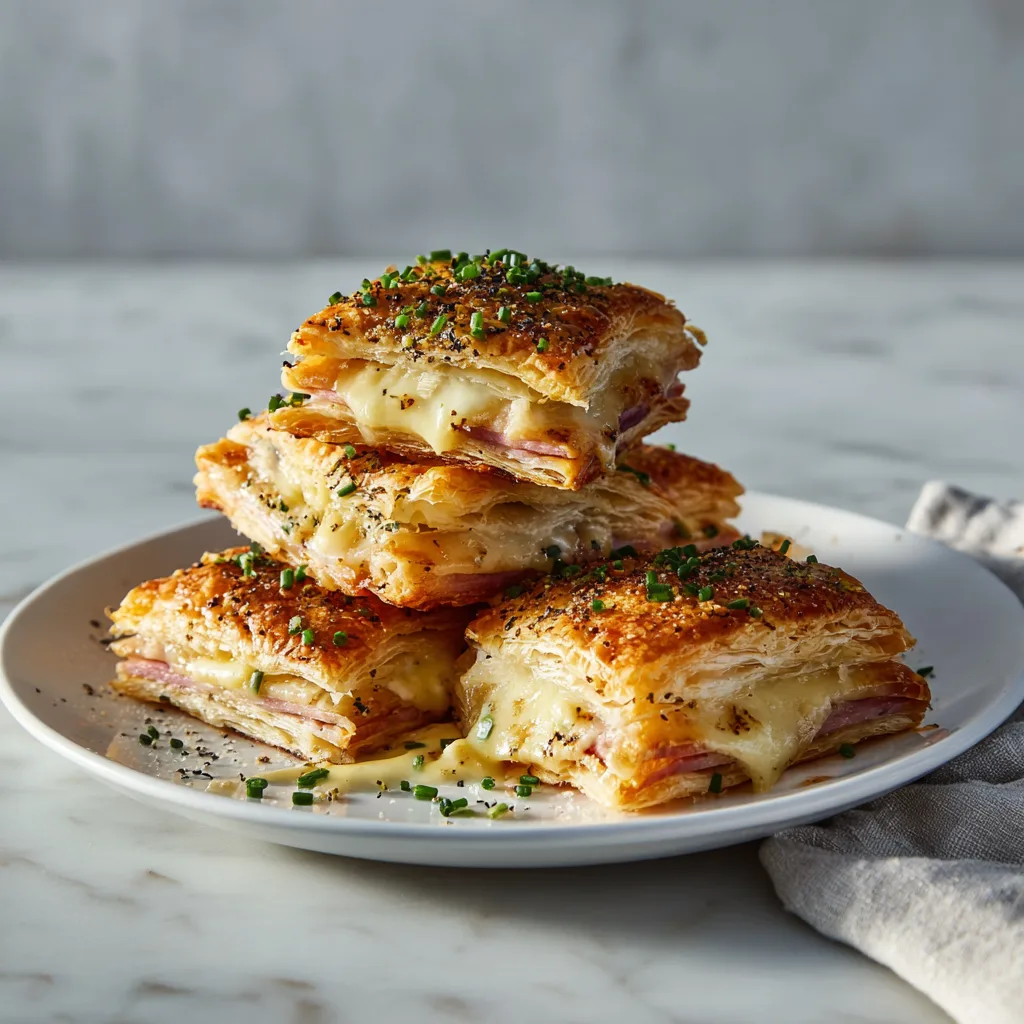
Crispy Ham & Cheese Puff Pastry Stacks
Golden, flaky puff pastry stacks layered with savory ham, melted Gruyère, and Dijon mustard — a quick and impressive savory bake ready in under 40 minutes.
Ingredients
Equipment
Method
- Preheat oven to 200°C (400°F). Line two large baking sheets with parchment paper.
- On a lightly floured surface, cut each puff pastry sheet into equal rectangles approximately 8–10 cm wide, yielding 4–5 complete stacks.
- Using a fork, lightly dock (prick) half the rectangles to use as bases, preventing excessive puffing.
- Spread a thin layer of Dijon mustard over each docked base rectangle, leaving a 1 cm border around the edges.
- Layer 2–3 slices of ham onto each mustard-coated base within the border. Top generously with shredded Gruyère. Season with garlic powder, thyme, and black pepper.
- Place remaining un-docked rectangles on top of each filled base. Press edges to seal and crimp firmly with a fork.
- Brush the tops generously with beaten egg wash. Sprinkle a pinch of flaky sea salt over each stack. Score the tops lightly with a sharp knife in a decorative pattern.
- Bake for 18–22 minutes until deeply golden, puffed, and crisp. Rest 3–5 minutes, garnish with fresh chives or parsley, and serve immediately.
Notes
Keep assembled pastry cold before baking for best puff. Freshly shredded cheese melts far more smoothly than pre-shredded. Assembled unbaked stacks can be frozen and baked from frozen at 200°C for 25–28 minutes. Reheat baked stacks in a 180°C oven for 8–10 minutes — avoid microwave.
Why This Recipe Belongs in Your Regular Rotation
There’s a reason Crispy Ham & Cheese Puff Pastry Stacks appear again and again on food blogs, dinner tables, and holiday spreads worldwide. They combine the universally beloved flavors of ham and cheese with the theatrical beauty of puff pastry in a way that feels special without demanding hours of work. The ingredient list is short, the technique is forgiving, and the results are consistently spectacular.
Whether you’re a seasoned home cook or someone who rarely ventures beyond pasta and stir-fries, this recipe will make you feel like a genuine pastry chef. The moment you pull that tray from the oven — golden, puffed, fragrant, with cheese bubbling at the seams — you’ll understand exactly why this dish has earned its place as one of the most satisfying savory bakes in the home cooking repertoire.
Make it once, and it will become a permanent fixture in your kitchen.