Follow Me On Social Media!
Creamy Tomato Ricotta Pasta
Learn how to make Creamy Tomato Ricotta Pasta: quick blistered cherry tomatoes, silky ricotta sauce, fresh basil, and simple pantry ingredients for an easy weeknight meal.

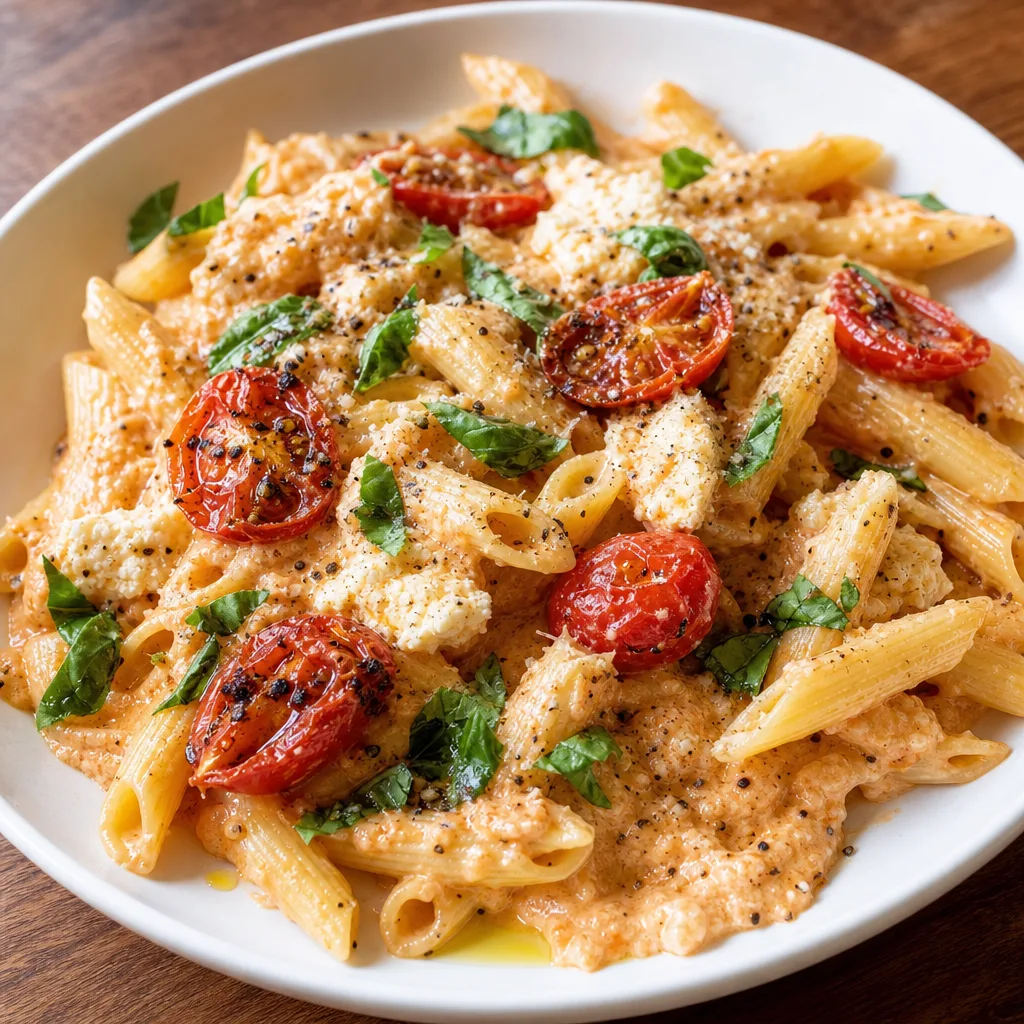
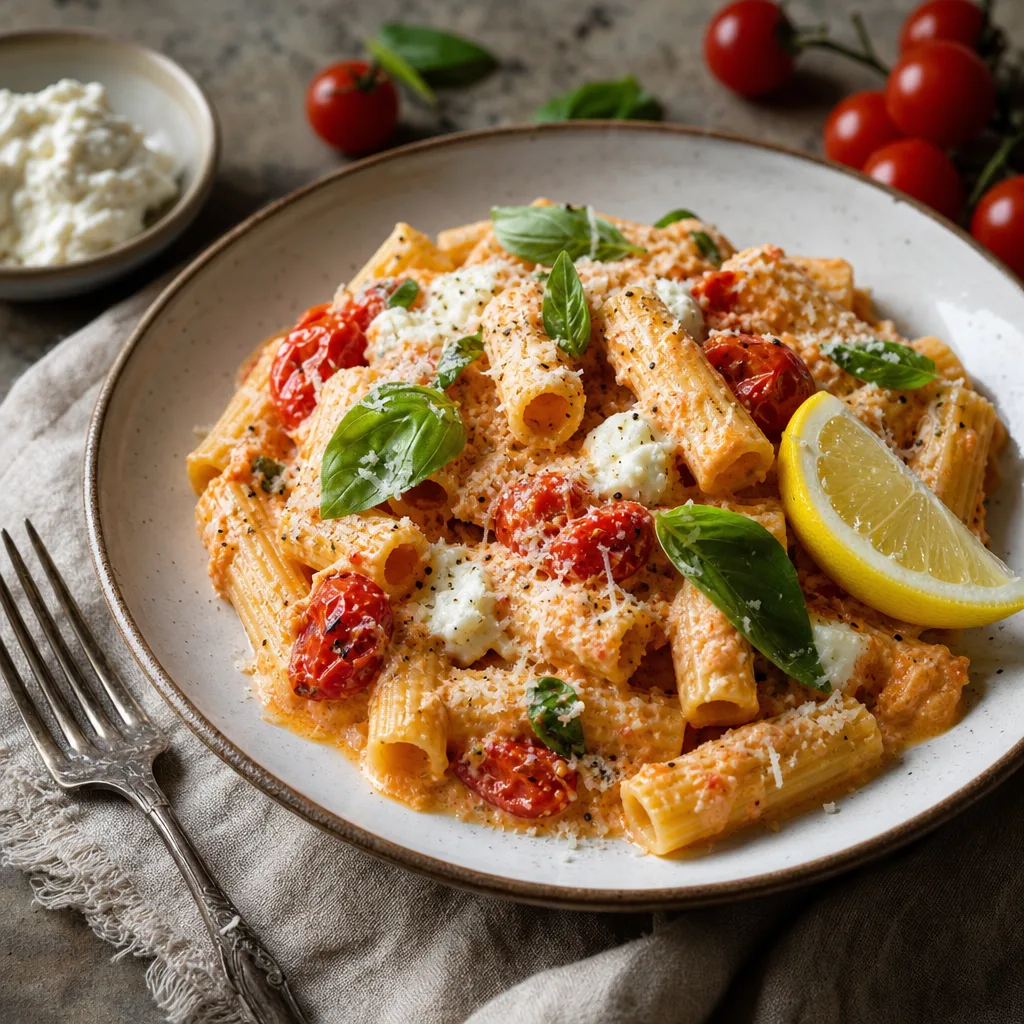
Creamy Tomato Ricotta Pasta is the kind of weeknight pasta that feels indulgent yet comes together in under 30 minutes. A silky ricotta-enriched sauce wraps around ridged short pasta while blistered cherry tomatoes add bright pops of sweetness and tang. Fresh basil and a crack of black pepper finish the dish with aromatic green freshness and a gentle peppery bite. The texture balance—pillowy ricotta curds, satiny sauce, and slightly blistered tomatoes—makes it comforting but not heavy. It’s an ideal dish for a small dinner, a casual gathering, or a quick lunch that still feels special.
This version leans into fresh, approachable ingredients: good-quality ricotta stirred with starchy pasta water to create a luscious emulsion, olive oil and garlic for a fragrant backbone, and cherry tomatoes roasted or blistered to concentrate their flavor without long oven times. A little grated hard cheese (Parmesan or Pecorino) and lemon zest lift the flavors, while red pepper flakes lend optional warmth. The technique is straightforward: cook the pasta until al dente, blister the tomatoes to coax sweetness, then marry ricotta and pasta water to form a creamy coating that clings to each tube.
What makes this recipe special is how little it asks of you for how much reward it returns. You do not need cream or elaborate reduction—simple ricotta, hot pasta, and reserved cooking water are all it takes to produce a silken sauce. The dish is flexible: swap short tubular pasta for your favorite shape, use whole-milk or part-skim ricotta depending on richness preferences, or add greens and proteins to tailor the plate. Below you’ll find detailed ingredients, step-by-step instructions, techniques to guarantee success, and smart variations to personalize the recipe.
Why this combination works
The interplay between ricotta’s mild tang and the concentrated sweetness of blistered cherry tomatoes creates a balanced, layered flavor profile. Ricotta tames acidity while contributing a light, fresh dairy note that feels creamy without being oily. The tomatoes, when cooked briefly at high heat, release sugars and their natural umami, which contrasts beautifully with the cool creaminess of the cheese.
Starchy pasta water is the unsung hero: the dissolved starch acts as an emulsifier that joins water-soluble and fat-soluble components into a cohesive sauce. This makes it possible to achieve a smooth, clingy finish using ricotta rather than heavy cream, and it also reduces the need for lengthy reductions or extra fat.
Ingredient notes and substitutions
Ricotta: Whole-milk ricotta yields the best texture. If you must use part-skim ricotta, whisk it vigorously before using to break down larger curds, and add slightly less reserved water to prevent thinning. For a richer finish, substitute half the ricotta with mascarpone.
Tomatoes: Use ripe cherry or grape tomatoes for concentrated sweetness. If only large tomatoes are available, core and dice them, and briefly pan-sear to achieve some caramelization. Canned cherry tomatoes can work in a pinch but cook them longer to evaporate excess liquid and concentrate flavor.
Tips for picking the best ricotta
Look for ricotta in the refrigerated dairy case rather than shelf-stable containers; it will taste fresher and have a creamier texture. Read labels when possible: fewer preservatives and additives usually signal a cleaner, more natural-tasting product.
If texture is a concern, pass ricotta through a fine-mesh sieve or whisk it vigorously to smooth out larger curds. You can also fold in a tablespoon of olive oil while whisking to emulsify the ricotta slightly and add silkiness.
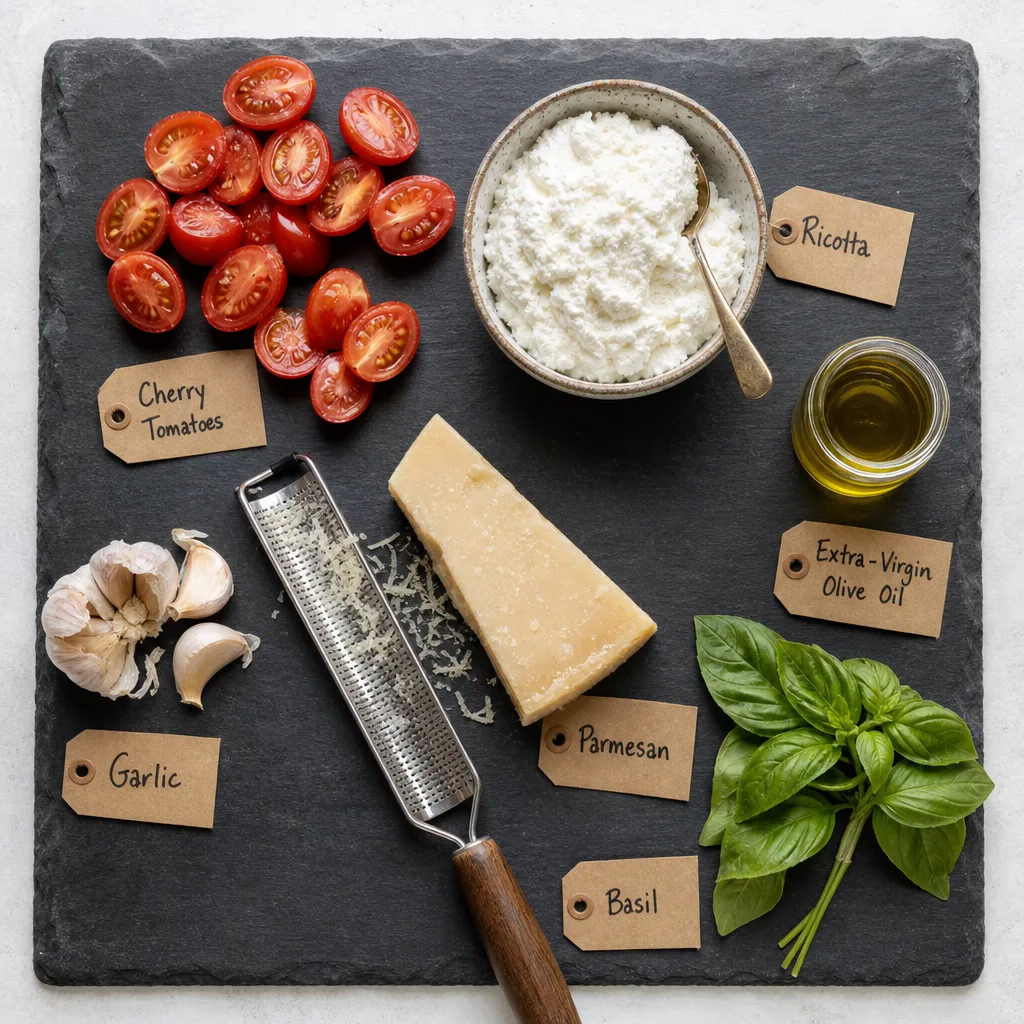
Ingredients
- 12 ounces penne or short tubular pasta
- 1 1/2 cups whole-milk ricotta
- 1 pint (about 10–12 ounces) cherry or grape tomatoes, halved
- 3 tablespoons extra-virgin olive oil, plus more for finishing
- 3 cloves garlic, finely minced
- 1 small yellow onion (about 3–4 ounces), finely diced
- 1/2 teaspoon red pepper flakes (optional)
- 1/2 cup finely grated Parmesan or Pecorino (plus extra for serving)
- 1/2 cup reserved pasta cooking water
- 1 tablespoon unsalted butter (optional, for sheen)
- Salt (to taste)
- Freshly ground black pepper (to taste)
- 6–8 fresh basil leaves, torn or chiffonade
- Zest of 1 lemon (optional, for brightness)
- Fresh parsley leaves for garnish (optional)
Instructions
- Bring a large pot of salted water to a vigorous boil. Add 12 ounces penne and cook according to package directions until al dente, usually 9–11 minutes. Reserve 1/2 cup of the pasta cooking water before draining, then drain the pasta. (ingredient_ids: ["ing_pasta", "ing_salt", "ing_water"])
- While the pasta cooks, heat 3 tablespoons extra-virgin olive oil in a large heavy skillet over medium heat. Add 1 small yellow onion and a pinch of salt; sauté until the onion is translucent and beginning to soften, about 4–5 minutes. (ingredient_ids: ["ing_olive_oil", "ing_onion", "ing_salt"])
- Add 3 cloves minced garlic and 1/2 teaspoon red pepper flakes (if using) to the skillet and cook, stirring, until fragrant, about 30–45 seconds. Take care not to brown the garlic. (ingredient_ids: ["ing_garlic", "ing_red_pepper_flakes"])
- Increase the heat to medium-high and add the halved cherry tomatoes cut-side down. Cook undisturbed for 3–4 minutes to blister and caramelize the cut surfaces, then stir and cook an additional 2–3 minutes until most tomatoes are softened but still hold some shape. Season with a pinch of salt and a few grinds of black pepper. (ingredient_ids: ["ing_cherry_tomatoes", "ing_salt", "ing_black_pepper"])
- Reduce the heat to low. In a medium bowl, stir together 1 1/2 cups ricotta and 1/2 cup finely grated Parmesan until fairly smooth. Add a few tablespoons of the reserved pasta water to loosen the ricotta mixture so it becomes spreadable but still thick. (ingredient_ids: ["ing_ricotta", "ing_parmesan", "ing_pasta_water"])
- Add the drained penne to the skillet with the blistered tomatoes, then remove the skillet from direct heat. Spoon the ricotta mixture over the hot pasta and gently fold everything together, adding more reserved pasta water a tablespoon at a time as needed to create a creamy emulsion that coats the pasta. Stir in 1 tablespoon unsalted butter if using, which will give extra silkiness. (ingredient_ids: ["ing_pasta", "ing_ricotta", "ing_pasta_water", "ing_butter"])
- Taste and adjust seasoning with salt and freshly ground black pepper. Stir in the zest of 1 lemon if using and most of the torn basil leaves, reserving a few for garnish. The final sauce should cling to the pasta and show little pockets of ricotta curd. (ingredient_ids: ["ing_salt", "ing_black_pepper", "ing_lemon_zest", "ing_basil"])
- Divide the pasta among shallow bowls. Finish each serving with a drizzle of extra-virgin olive oil, an extra sprinkle of grated Parmesan, torn basil leaves, and a crack of black pepper. Garnish with parsley if desired and serve immediately. (ingredient_ids: ["ing_olive_oil", "ing_parmesan", "ing_basil", "ing_black_pepper", "ing_parsley"])
Pro Tips
- Reserve ample pasta water: the starchy water is essential for loosening ricotta into a silky sauce that clings to pasta. Start with 1/2 cup reserved and add more by the tablespoon if needed.
- Use whole-milk ricotta for best texture: part-skim ricotta will work, but whole-milk ricotta creates a creamier, richer sauce without adding cream.
- Blister tomatoes with patience: letting the cut sides sit undisturbed creates caramelization that concentrates sweetness and adds depth.
- Avoid overheating the ricotta: keep the pan off high heat when you add the ricotta so it won’t separate or curdle; warm residual heat is enough to loosen it.
- Adjust consistency gradually: add reserved pasta water a tablespoon at a time to reach the perfect coating; too much water at once can make the sauce thin.
Variations
- Add wilted greens: stir in two handfuls of baby spinach or chopped kale at the step when you fold in the ricotta so the greens wilt in the residual heat.
- Protein boost: brown 8 ounces of Italian sausage or sliced chicken breast, then fold it into the sauce with the pasta for a heartier main.
- Lemon-herb ricotta: mix 1 teaspoon lemon juice and 1 tablespoon chopped fresh parsley into the ricotta before combining with the pasta for a brighter, herb-forward profile.
- Spicy tomato kick: increase red pepper flakes to 1 teaspoon and add 1 tablespoon tomato paste to the onion/garlic step for a deeper, spicier sauce.
Serving Suggestions
- Serve with a simple green salad dressed with lemon vinaigrette to cut through the creaminess.
- Offer crusty garlic bread or toasted sourdough for mopping up any remaining sauce.
- Pair with a chilled glass of Sauvignon Blanc or a light-bodied red like Chianti for a classic Italian-style pairing.
- Top with extra grated Parmesan and a drizzle of high-quality extra-virgin olive oil at the table for finishing flair.
Make-ahead and serving logistics
To host with less stress, do the tomato blistering and prepare the ricotta mixture earlier in the day. Keep both refrigerated separately and reheat the tomatoes in a skillet just before finishing the pasta. Warm the bowls in the oven for a few minutes to help maintain heat when serving.
If serving a crowd, multiply the ingredients but cook pasta in batches or use a very large pot to avoid overcrowding. Assemble as much as possible off heat and finish with basil and lemon zest at the last minute to preserve brightness and color.
Storage and Reheating
Refrigerate leftovers in an airtight container for up to 3 days. When reheating, add a splash of water or milk to loosen the sauce and warm gently over low heat on the stove, stirring frequently to avoid curdling. You can also reheat in the microwave in 30-second bursts, stirring between intervals and adding a teaspoon of water or olive oil as needed. For best texture, freshly prepared is preferred, since ricotta may firm up after refrigeration.
Creamy Tomato Ricotta Pasta
A quick, comforting pasta made with ricotta folded into starchy pasta water to form a silky sauce, blistered cherry tomatoes, garlic, and fresh basil. Ready in about 30 minutes and perfect for weeknights.
Ingredients
Equipment
Method
- Bring a large pot of salted water to a vigorous boil. Add the penne and cook until al dente according to package instructions, usually 9–11 minutes. Before draining, reserve 1/2 cup of the pasta cooking water; then drain the pasta in a colander. The reserved starchy water will be used to loosen the ricotta into a sauce.
- While the pasta cooks, heat extra-virgin olive oil in a large heavy skillet over medium heat. Add the finely diced yellow onion with a pinch of salt and sauté until translucent and softened, about 4–5 minutes; stirring occasionally will ensure even cooking.
- Add the minced garlic and red pepper flakes to the skillet and cook for 30–45 seconds until aromatic. Be careful not to let the garlic brown, which can add a bitter taste.
- Increase heat to medium-high and add the halved cherry tomatoes cut-side down. Allow them to blister without stirring for 3–4 minutes to develop caramelized flavor, then stir and cook an additional 2–3 minutes until slightly softened. Season with a pinch of salt and freshly ground black pepper.
- Lower the heat to gentle. In a separate bowl, whisk together the ricotta and grated Parmesan until fairly smooth. Add a few tablespoons of the reserved pasta water to loosen the mixture into a spreadable cream; the goal is a thick but easily foldable texture.
- Add the drained pasta to the skillet with the blistered tomatoes and remove the pan from direct heat. Spoon the ricotta-Parmesan mixture over the hot pasta and fold gently to combine, adding more reserved pasta water a tablespoon at a time until a silky emulsion forms that coats each piece of pasta. Stir in the unsalted butter if using for extra gloss.
- Finish the dish by tasting and adjusting salt and pepper. Stir in lemon zest if using, and fold in most of the torn basil leaves, saving a few for garnish. The finished pasta should show pockets of ricotta curd and a creamy orange-tinged sauce from the tomato juices.
- Serve immediately in shallow bowls. Drizzle with additional extra-virgin olive oil, sprinkle extra grated Parmesan on top, add reserved basil leaves and a crack of black pepper, and garnish with parsley if desired.
Notes
Texture and flavor come together best when ricotta is combined with starchy pasta water rather than heated directly. This creates a creamy emulsion without needing heavy cream.
If you prefer a smoother ricotta, whisk it before adding to the pasta or pass through a sieve.
Frequently Asked Questions
Can I use mascarpone or cream instead of ricotta?
Yes. Mascarpone will create an even silkier, richer sauce and melts smoothly into hot pasta. If you prefer cream, use 1/3 to 1/2 cup heavy cream combined with 1/2 cup ricotta or alone to finish the sauce; you may need to reduce the amount of reserved pasta water. Keep in mind that mascarpone and cream increase calories and change the flavor profile slightly from the lighter tang of ricotta.
How do I prevent ricotta from becoming grainy?
Use whole-milk ricotta for a creamier mouthfeel and avoid boiling the sauce after adding ricotta. Combine ricotta with hot pasta and reserved starchy water off direct high heat and stir gently to create an emulsion rather than subjecting the ricotta to prolonged high heat, which can cause separation.
Can I make this recipe ahead of time for a dinner party?
You can prepare the blistered tomatoes and the ricotta mixture ahead of time—store them separately in the refrigerator for up to 24 hours. Reheat tomatoes gently in a skillet, warm the pasta until just heated, then combine everything and finish with fresh basil. Avoid combining and storing fully assembled pasta because the sauce will thicken and the texture will degrade.
What pasta shapes work best?
Short tubular shapes like penne, rigatoni, or ziti catch the ricotta-laden sauce well. Ridged pastas provide extra surface area for clinging sauce. Smaller shapes such as orecchiette or cavatappi also work and offer a fun texture variation. Long pastas will coat differently but are still a valid option if you prefer spaghetti or linguine.
How spicy does the dish get with red pepper flakes?
With 1/2 teaspoon of red pepper flakes the heat is gentle and adds background warmth rather than outright spiciness. Increase to 1 teaspoon for a medium kick, or omit entirely if you prefer no heat. Always taste and adjust according to your heat tolerance.