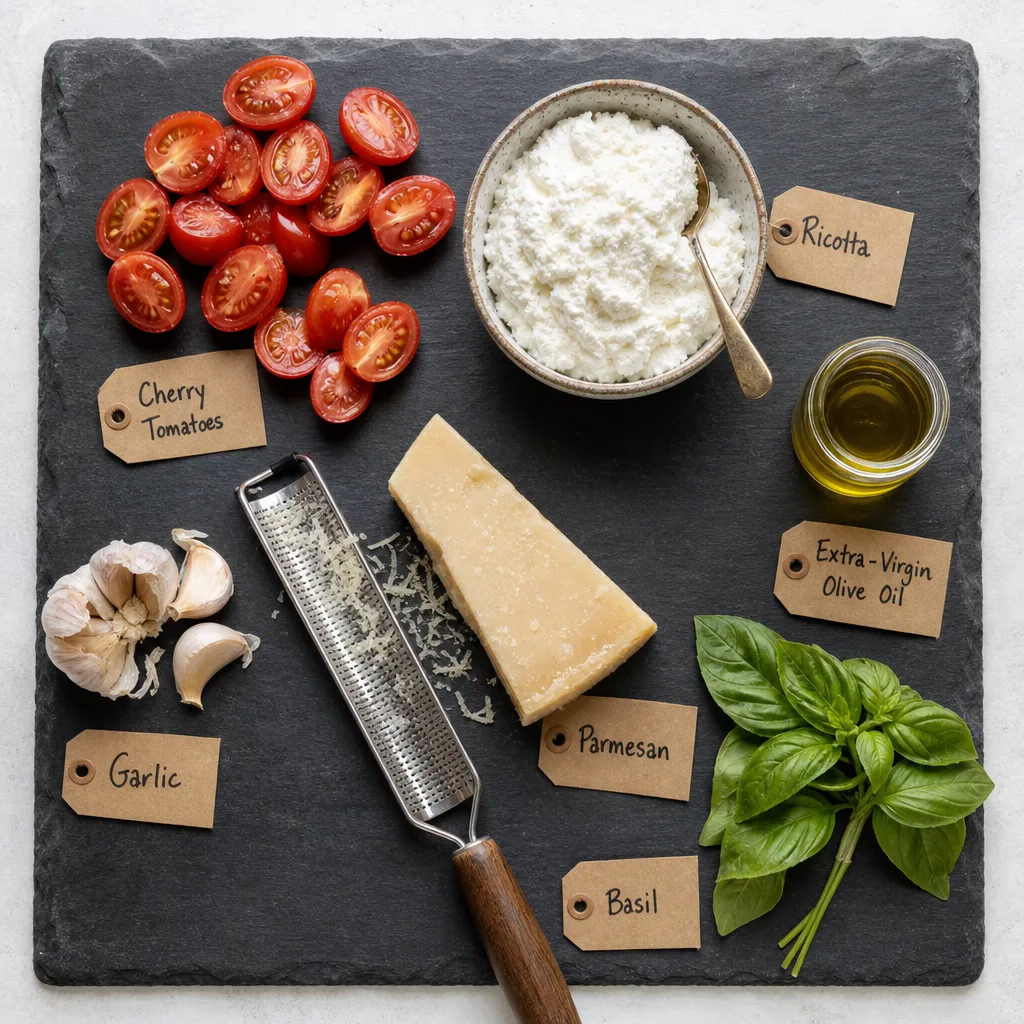
Ingredients
Equipment
Method
- Bring a large pot of salted water to a vigorous boil. Add the penne and cook until al dente according to package instructions, usually 9–11 minutes. Before draining, reserve 1/2 cup of the pasta cooking water; then drain the pasta in a colander. The reserved starchy water will be used to loosen the ricotta into a sauce.
- While the pasta cooks, heat extra-virgin olive oil in a large heavy skillet over medium heat. Add the finely diced yellow onion with a pinch of salt and sauté until translucent and softened, about 4–5 minutes; stirring occasionally will ensure even cooking.
- Add the minced garlic and red pepper flakes to the skillet and cook for 30–45 seconds until aromatic. Be careful not to let the garlic brown, which can add a bitter taste.
- Increase heat to medium-high and add the halved cherry tomatoes cut-side down. Allow them to blister without stirring for 3–4 minutes to develop caramelized flavor, then stir and cook an additional 2–3 minutes until slightly softened. Season with a pinch of salt and freshly ground black pepper.
- Lower the heat to gentle. In a separate bowl, whisk together the ricotta and grated Parmesan until fairly smooth. Add a few tablespoons of the reserved pasta water to loosen the mixture into a spreadable cream; the goal is a thick but easily foldable texture.
- Add the drained pasta to the skillet with the blistered tomatoes and remove the pan from direct heat. Spoon the ricotta-Parmesan mixture over the hot pasta and fold gently to combine, adding more reserved pasta water a tablespoon at a time until a silky emulsion forms that coats each piece of pasta. Stir in the unsalted butter if using for extra gloss.
- Finish the dish by tasting and adjusting salt and pepper. Stir in lemon zest if using, and fold in most of the torn basil leaves, saving a few for garnish. The finished pasta should show pockets of ricotta curd and a creamy orange-tinged sauce from the tomato juices.
- Serve immediately in shallow bowls. Drizzle with additional extra-virgin olive oil, sprinkle extra grated Parmesan on top, add reserved basil leaves and a crack of black pepper, and garnish with parsley if desired.
Notes
Texture and flavor come together best when ricotta is combined with starchy pasta water rather than heated directly. This creates a creamy emulsion without needing heavy cream.
If you prefer a smoother ricotta, whisk it before adding to the pasta or pass through a sieve.