Follow Me On Social Media!
Pumpkin cheesecake (cream-topped slice)
Make a creamy, slightly higher-protein pumpkin cheesecake with a graham-oat crust, spiced pumpkin filling, and a silky cream-yogurt topping. Perfect for fall entertaining.

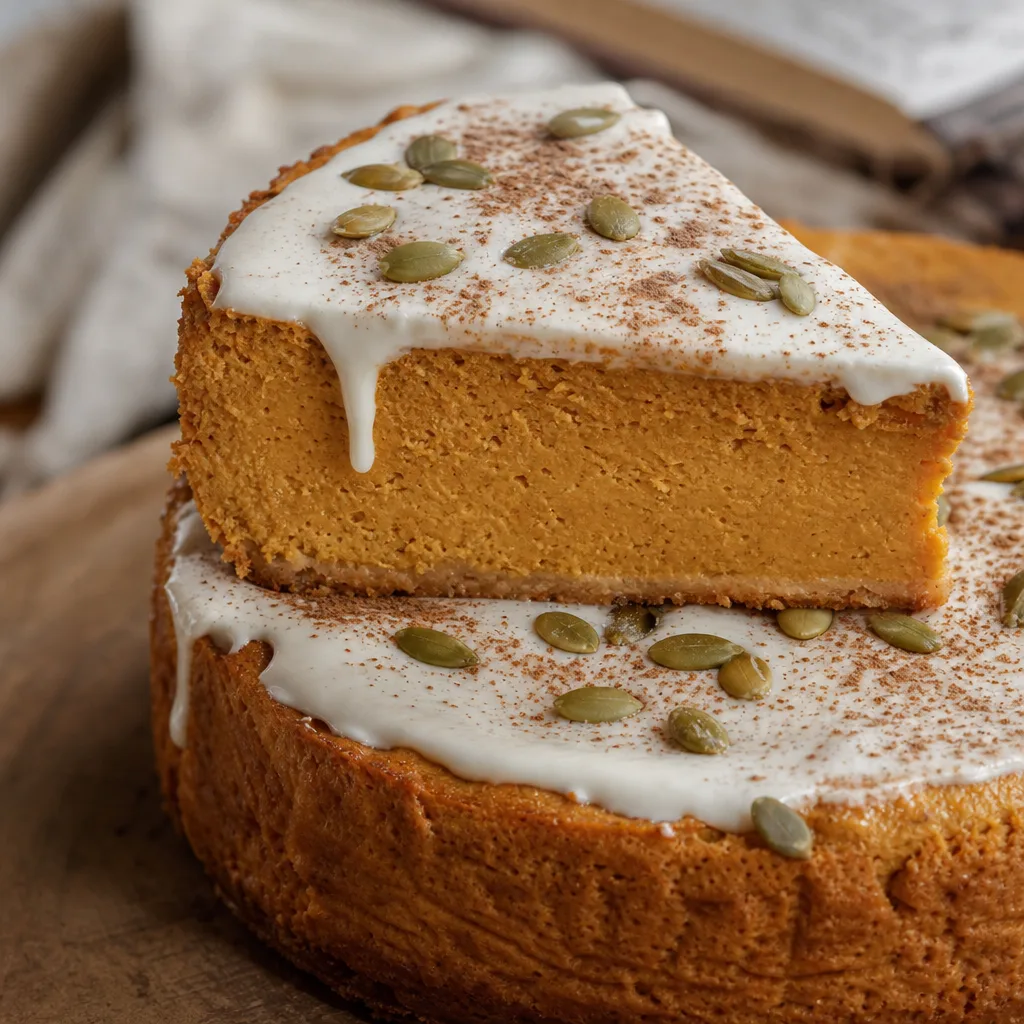
There’s something especially comforting about a pumpkin cheesecake in the cooler months — rich, warmly spiced filling balanced by a crisp golden base and finished with a silky cream topping and crunchy pepitas. This Pumpkin cheesecake (cream-topped slice) recipe takes those autumnal flavors and leans into a slightly lighter, protein-forward approach without sacrificing that indulgent, velvety mouthfeel. The filling blends classic cream cheese with Greek yogurt and a touch of cottage cheese for structure and extra protein; combined with pumpkin purée and warming spices, it sets into a dense, smooth slice that still feels decadent.
This version aims to be approachable: the crust is a simple graham-oat hybrid that provides familiar caramel notes and a little heartiness; the filling is baked gently to avoid cracks and to achieve the matte, dense interior you see when a slice is cut; and the finishing touches — a thin cream drizzle, a dusting of ground cinnamon and a scattering of toasted pumpkin seeds — give bright contrast in color and texture. The overall effect is a rustic, bakery-style presentation: a single thick slice placed back onto the remaining cake for a photograph-ready moment, but simple enough to make on a weekday or to prepare ahead for guests.
Below you’ll find a complete, tested method for making this pumpkin cheesecake from start to finish, plus practical notes on ingredients and technique, tips for avoiding common problems, ideas for variations, and serving suggestions. If you’re baking for company or craving a solo treat that feels seasonal and satisfying, this recipe will become a dependable staple.
Why this recipe works
This pumpkin cheesecake balances richness and structure by combining cream cheese with Greek yogurt and a small amount of blended cottage cheese. The cream cheese delivers the classic tang and velvetiness expected in cheesecake; the Greek yogurt contributes acidity and a lighter mouthfeel; and the cottage cheese, when blended smooth, provides protein and body that helps the filling set without relying solely on eggs or starches.
The inclusion of cornstarch is intentional: it acts as a gentle stabilizer and prevents weeping during and after baking, especially in recipes with higher moisture from pumpkin purée and yogurt. Cornstarch also reduces the risk of the center sinking after cooling, helping you achieve a dense, sliceable texture that cuts cleanly.
Ingredient notes and substitutions
Pumpkin purée: use plain canned or homemade pureed pumpkin. Do not use pumpkin pie filling because it contains added sugar and spices that will throw off the balance. If fresh pumpkin is available, roast, puree, and drain any excess moisture before measuring.
Cream cheese and cottage cheese: full-fat cream cheese yields the creamiest texture. For a slightly lighter result, low-fat versions can be used, but expect some difference in mouthfeel. Cottage cheese can be swapped for equal weight of ricotta if desired — blend ricotta until smooth before adding.
Crust options: this recipe uses graham cracker crumbs and oats for a slightly rustic base. For a gluten-free option, substitute almond flour or gluten-free graham crumbs in a roughly 1:1 ratio and reduce the butter by one tablespoon if using particularly oily nut flours.
Ingredients
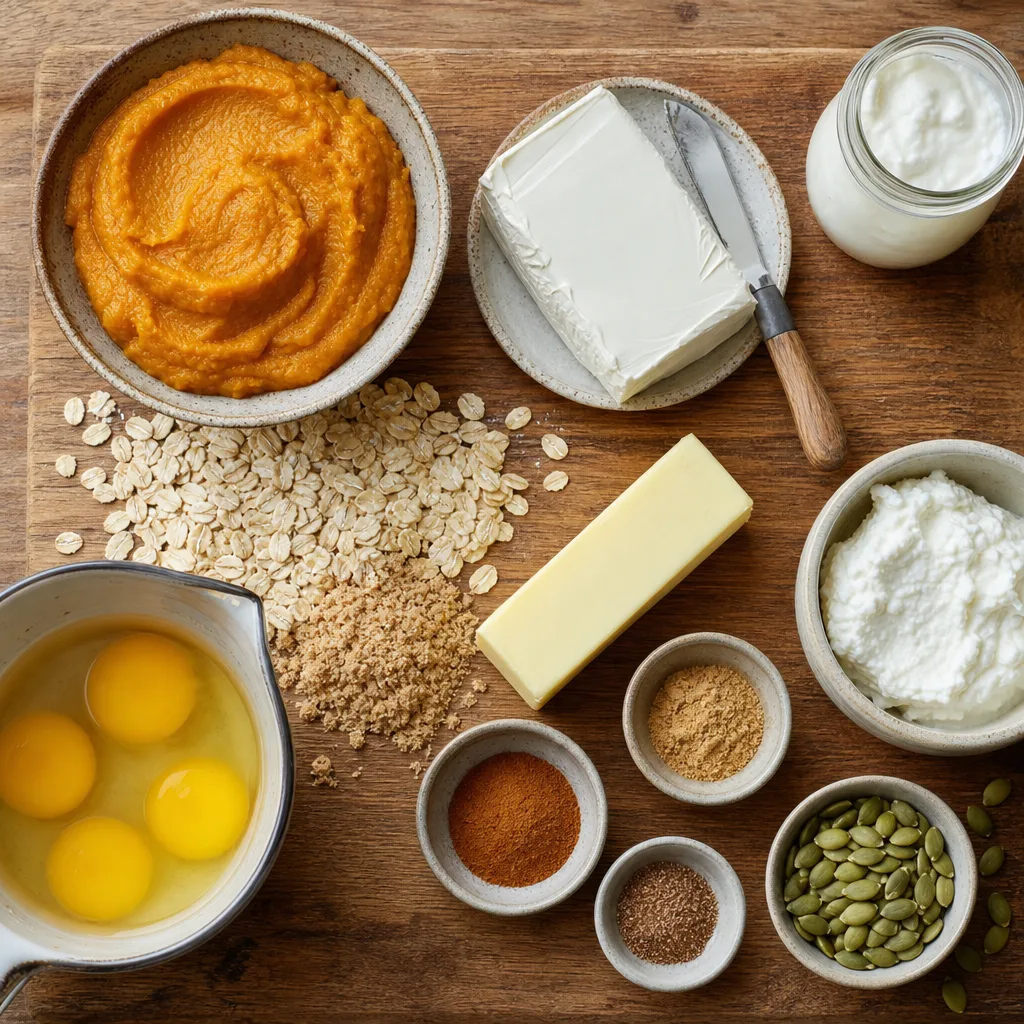
- Graham cracker crumbs – 1 1/2 cups (150 g)
- Rolled oats – 1/2 cup (45 g)
- Light brown sugar – 2 tbsp
- Ground cinnamon – 1/2 tsp
- Unsalted butter, melted – 6 tbsp (85 g)
- Full-fat cream cheese, room temperature – 16 oz (450 g)
- Cottage cheese (small-curd), drained and blended – 1 cup (240 g)
- Plain Greek yogurt (full-fat or 2%) – 1/2 cup (120 g)
- Granulated sugar – 3/4 cup (150 g)
- Light brown sugar (for filling) – 2 tbsp
- Large eggs – 3
- Large egg yolk – 1
- Pure pumpkin purée (not pumpkin pie filling) – 1 cup (225 g)
- Pure vanilla extract – 1 tsp
- Fresh lemon juice – 1 tsp
- Ground cinnamon (for filling) – 1 1/2 tsp
- Ground ginger – 1/2 tsp
- Ground nutmeg – 1/4 tsp
- Salt – 3/4 tsp
- Cornstarch – 2 tbsp
- Heavy cream (for topping) – 1/2 cup (120 ml)
- Powdered sugar (for topping) – 1 1/2 tbsp
- Greek yogurt (for topping/drizzle) – 2 tbsp
- Pumpkin seeds (pepitas), toasted – 2 tbsp
- Ground cinnamon (for dusting) – to taste
- Vanilla extract (for whipped topping) – 1/4 tsp
- Butter or nonstick spray (for pan) – as needed
- Salt (for crust) – 1/8 tsp
Instructions
- Preheat the oven to 325°F (160°C). Prepare a 9-inch (23 cm) springform pan by greasing the bottom and sides with butter or nonstick spray and placing a circle of parchment on the bottom for easy removal. [ingredient_ids: "ing18"]
- Make the crust: in a medium bowl, combine graham cracker crumbs, rolled oats, light brown sugar (crust), ground cinnamon (crust) and salt. Pour in the melted butter and stir until the mixture holds together when pressed. Transfer to the prepared springform pan and press firmly and evenly across the bottom and slightly up the sides to create a compact crust. Chill in the refrigerator while you prepare the filling. [ingredient_ids: "ing1","ing2","ing3","ing4","ing19"]
- Blend the cottage cheese: place the cottage cheese in a blender or food processor and pulse until mostly smooth with just a few small curds remaining. This step creates a creamy texture but preserves some curd body for structure. [ingredient_ids: "ing6"]
- Make the filling: in the bowl of a stand mixer fitted with the paddle (or using a large bowl and electric mixers), beat the room-temperature cream cheese on medium speed until smooth and free of lumps, scraping down the bowl as needed. Add granulated sugar and light brown sugar (filling) and beat until well combined and slightly aerated, about 1–2 minutes. [ingredient_ids: "ing5","ing8","ing9"]
- Add the blended cottage cheese and Greek yogurt to the cream cheese mixture and mix on low until incorporated. Beat in the eggs one at a time, mixing just until combined after each addition to avoid over-incorporating air. Stir in the additional egg yolk, pumpkin purée, vanilla extract, fresh lemon juice, ground cinnamon (filling), ground ginger, ground nutmeg, salt and cornstarch; mix on low speed until smooth and uniform in color, scraping the bowl as necessary. [ingredient_ids: "ing6","ing7","ing10","ing11","ing12","ing13","ing14","ing15","ing16"]
- Assemble and smooth: remove the crust from the refrigerator. Pour the filling over the crust and smooth the top with a spatula. Tap the pan gently on the countertop a few times to release any large air bubbles. [ingredient_ids: "ing1","ing5"]
- Bake in a water bath (recommended for a crack-free finish): wrap the outside of the springform pan with a double layer of heavy-duty foil to prevent water seeping in. Place the wrapped pan in a larger roasting pan and pour hot water into the roasting pan until it reaches about halfway up the side of the springform pan. Transfer to the oven and bake for 55–70 minutes, or until the edges are set but the center still has a slight wobble when the pan is gently shaken. If you prefer not to use a water bath, bake at the same temperature and check at 50 minutes; the cheesecake may brown more and is more likely to crack. [ingredient_ids: "ing18"]
- Cool gradually: when the cheesecake is done, turn off the oven and crack the oven door open. Let the cheesecake rest inside the warm oven for 45 minutes to cool slowly and reduce cracking. After that, remove the cheesecake from the water bath carefully and place on a wire rack to cool to room temperature. Once cooled, refrigerate for at least 6 hours, preferably overnight, to fully set. [ingredient_ids: []]
- Prepare the cream topping: in a small bowl, whip the heavy cream with powdered sugar and vanilla extract until soft peaks form. Fold in the Greek yogurt gently to create a silky, slightly tangy topping that’s easy to drizzle. If you prefer a thinner drizzle, whisk the heavy cream and yogurt together with additional milk (1–2 teaspoons) until pourable. [ingredient_ids: "ing20","ing21","ing23","ing22"]
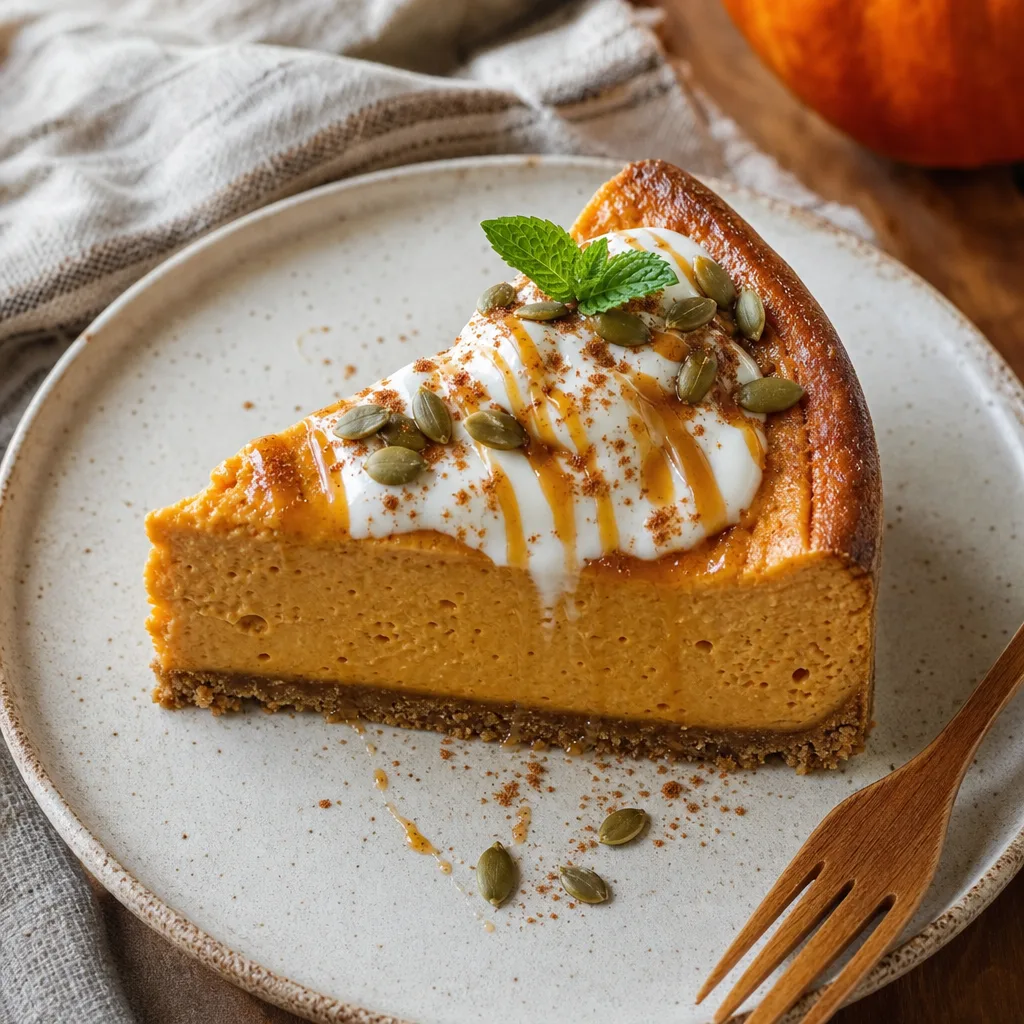
- Unmold and top: run a thin knife around the edge of the springform pan to loosen the cheesecake, then release the springform ring and transfer the cake to a serving plate. Spoon or pipe a thin layer of the cream-yogurt drizzle over the top of the cheesecake slice or over the whole cake. Dust lightly with ground cinnamon and scatter toasted pumpkin seeds across the cream. [ingredient_ids: "ing20","ing21","ing23","ing17"]
- Serve: slice with a hot, dry knife for clean edges. Wipe the blade between cuts for neat slices. Each slice can be finished with an extra drizzle of yogurt-cream and a few more pepitas, if desired. [ingredient_ids: "ing20","ing23","ing17"]
- Store leftovers covered in the refrigerator for up to 4 days. For longer storage, freeze individual slices wrapped tightly in plastic and foil for up to 2 months; thaw overnight in the refrigerator before serving. [ingredient_ids: []]
Pro Tips
- Room-temperature dairy ingredients mix more smoothly. Take the cream cheese out of the fridge 60–90 minutes before you plan to start so it softens evenly.
- Avoid overwhipping the filling or adding too much air; that’s what causes cracks. Mix until just combined and tap the pan to release bubbles.
- A water bath helps the cheesecake bake gently and stay crack-free, but if you’re short on time you can bake without one—expect some surface browning.
- To test doneness, the outer two inches should look set while the center should have a slight jiggle. It will firm up as it cools.
- If you prefer a lighter topping, use only the whipped cream folded with Greek yogurt; for a tangier finish, increase the yogurt proportion slightly.
Variations
- Spiced pecan crunch: replace pumpkin seeds with chopped toasted pecans and add 1 tsp of maple syrup to the crust for a nutty, autumnal crunch.
- Maple-swirled: swirl two tablespoons of maple syrup into the pumpkin filling before baking for an added maple note and beautiful marbling.
- No-bake set version: for a refrigerator set cheesecake, reduce the cream cheese total to 12 oz, add 1 tsp powdered gelatin (bloomed and dissolved) and chill for at least 8 hours to set; skip the oven steps.
- Gluten-free crust: substitute gluten-free graham crumbs or almond flour (1 1/4 cups) with 3 tbsp coconut sugar and proceed the same way.
Serving Suggestions
- Serve slightly chilled with a dollop of the cream-yogurt topping and a scattering of toasted pumpkin seeds for textural contrast.
- Pair slices with a hot spiced chai, dark coffee, or an espresso martini for an elevated dessert course.
- For brunch, serve small wedges alongside lightly sweetened whipped ricotta and thin apple slices for a fall-themed spread.
- Plate with a warm caramel sauce or a thin ribbon of maple syrup and a sprinkle of flaky sea salt for a sweet-salty finish.
Make-ahead and transport
Cheesecake is one of the easiest desserts to make ahead: bake, cool, and refrigerate overnight to allow flavors to mature and the texture to firm. If you’re transporting the cake to a party, keep the topping separate and add it on arrival for the freshest presentation.
For long-distance transport, freeze the whole cheesecake (well wrapped) after initial chilling. Place it in a rigid cake box and thaw in the refrigerator for 24 hours before serving. If you’re taking slices as individual portions, wrap each slice tightly and keep cool with ice packs or in a cooler.
Storage and Reheating
Refrigerate covered for up to 4 days; individual slices freeze well for up to 2 months. To reheat a chilled slice, bring it to room temperature for 20–30 minutes or warm briefly (10–15 seconds) in the microwave on low power to soften the cream slightly—do not overheat, as the texture will change and the topping may separate.
Pumpkin cheesecake (cream-topped slice)
A dense, spiced pumpkin cheesecake that blends cream cheese, Greek yogurt and blended cottage cheese for a creamy, slightly higher-protein filling. Baked in a graham-oat crust and finished with a whipped cream–yogurt drizzle, toasted pepitas and a dusting of cinnamon.
Ingredients
Equipment
Method
- Preheat the oven to 325°F (160°C). Prepare a 9-inch springform pan by greasing the bottom and sides with butter or nonstick spray and placing a circle of parchment on the bottom for easy removal.
- Make the crust: in a medium bowl, combine graham cracker crumbs, rolled oats, light brown sugar (crust), ground cinnamon (crust) and salt. Pour in the melted butter and stir until the mixture holds together when pressed. Transfer to the prepared springform pan and press firmly and evenly across the bottom and slightly up the sides to create a compact crust. Chill in the refrigerator while you prepare the filling.
- Blend the cottage cheese: place the cottage cheese in a blender or food processor and pulse until mostly smooth with just a few small curds remaining.
- Make the filling: in the bowl of a stand mixer fitted with the paddle (or using a large bowl and electric mixers), beat the room-temperature cream cheese on medium speed until smooth and free of lumps, scraping down the bowl as needed. Add granulated sugar and light brown sugar (filling) and beat until well combined and slightly aerated, about 1–2 minutes.
- Add the blended cottage cheese and Greek yogurt to the cream cheese mixture and mix on low until incorporated. Beat in the eggs one at a time, mixing just until combined after each addition to avoid over-incorporating air. Stir in the additional egg yolk, pumpkin purée, vanilla extract, fresh lemon juice, ground cinnamon (filling), ground ginger, ground nutmeg, salt and cornstarch; mix on low speed until smooth and uniform in color, scraping the bowl as necessary.
- Assemble and smooth: remove the crust from the refrigerator. Pour the filling over the crust and smooth the top with a spatula. Tap the pan gently on the countertop a few times to release any large air bubbles.
- Bake in a water bath (recommended for a crack-free finish): wrap the outside of the springform pan with a double layer of heavy-duty foil to prevent water seeping in. Place the wrapped pan in a larger roasting pan and pour hot water into the roasting pan until it reaches about halfway up the side of the springform pan. Transfer to the oven and bake for 55–70 minutes, or until the edges are set but the center still has a slight wobble when the pan is gently shaken. If you prefer not to use a water bath, bake at the same temperature and check at 50 minutes; the cheesecake may brown more and is more likely to crack.
- Cool gradually: when the cheesecake is done, turn off the oven and crack the oven door open. Let the cheesecake rest inside the warm oven for 45 minutes to cool slowly and reduce cracking. After that, remove the cheesecake from the water bath carefully and place on a wire rack to cool to room temperature. Once cooled, refrigerate for at least 6 hours, preferably overnight, to fully set.
- Prepare the cream topping: in a small bowl, whip the heavy cream with powdered sugar and vanilla extract until soft peaks form. Fold in the Greek yogurt gently to create a silky, slightly tangy topping that’s easy to drizzle. If you prefer a thinner drizzle, whisk the heavy cream and yogurt together with additional milk (1–2 teaspoons) until pourable.
- Unmold and top: run a thin knife around the edge of the springform pan to loosen the cheesecake, then release the springform ring and transfer the cake to a serving plate. Spoon or pipe a thin layer of the cream-yogurt drizzle over the top of the cheesecake slice or over the whole cake. Dust lightly with ground cinnamon and scatter toasted pumpkin seeds across the cream.
- Serve: slice with a hot, dry knife for clean edges. Wipe the blade between cuts for neat slices. Each slice can be finished with an extra drizzle of yogurt-cream and a few more pepitas, if desired.
- Store leftovers covered in the refrigerator for up to 4 days. For longer storage, freeze individual slices wrapped tightly in plastic and foil for up to 2 months; thaw overnight in the refrigerator before serving.
Notes
This recipe intentionally blends cream cheese, Greek yogurt and blended cottage cheese to create a creamier, higher-protein filling while preserving a traditional cheesecake texture.
If you skip the water bath, watch the baking time more closely and accept a somewhat different crust and surface finish.
To toast pumpkin seeds, spread them on a small baking sheet and bake at 350°F (175°C) for 6–8 minutes, stirring once, until fragrant and slightly golden.
Frequently Asked Questions
Can I make this cheesecake ahead of time?
Yes. Cheesecakes benefit from making ahead because they need several hours to chill and set. Bake the cheesecake the day before or early the same day and allow it to chill in the refrigerator for at least 6 hours, preferably overnight. If transporting, keep cool in an insulated carrier.
How do I prevent cracks on the surface?
Cracks are usually caused by rapid temperature changes or too much air in the batter. Mix the filling until smooth but avoid excessive whipping, bake in a water bath to regulate temperature, and cool slowly by leaving the cheesecake in the oven with the door cracked for 30–60 minutes after turning the oven off. Also, don’t overbake; remove it when the center still has a slight jiggle.
What’s the best way to get a smooth cream topping like in the photo?
For a silky topping, whip heavy cream to soft peaks before folding in Greek yogurt and a small amount of powdered sugar for sweetness and stability. Keep the topping chilled until just before serving. If you want a thinner drizzle, whisk the mixture with 1–2 teaspoons of milk to loosen the texture.
Can I make this dairy-free or vegan?
Converting this recipe to dairy-free or vegan requires substitutions: use full-fat vegan cream cheese and coconut yogurt or a blended silken tofu base to mimic the cottage cheese/Greek yogurt components. Replace butter in the crust with coconut oil or vegan butter. You may need a setting agent such as agar-agar or a vegan gelatin alternative and to adjust baking/chilling times. Texture will differ but it can be delicious with careful testing.
Why is there cottage cheese in the filling, and can I skip it?
Cottage cheese adds protein and moisture while still contributing to a dense, creamy mouthfeel when blended smooth; it helps reduce total cream cheese volume without losing structure. You can skip it and use all cream cheese, but the filling will be richer and slightly heavier. If you remove the cottage cheese, consider increasing Greek yogurt by 1/4 cup for balance.