Follow Me On Social Media!
Red wine–style braised beef stew with mashed potatoes
A comforting red wine–style braised beef stew served with creamy mashed potatoes, baby potatoes, carrots, and a glossy, reduced sauce. Make-ahead tips, variations, and full instructions included.

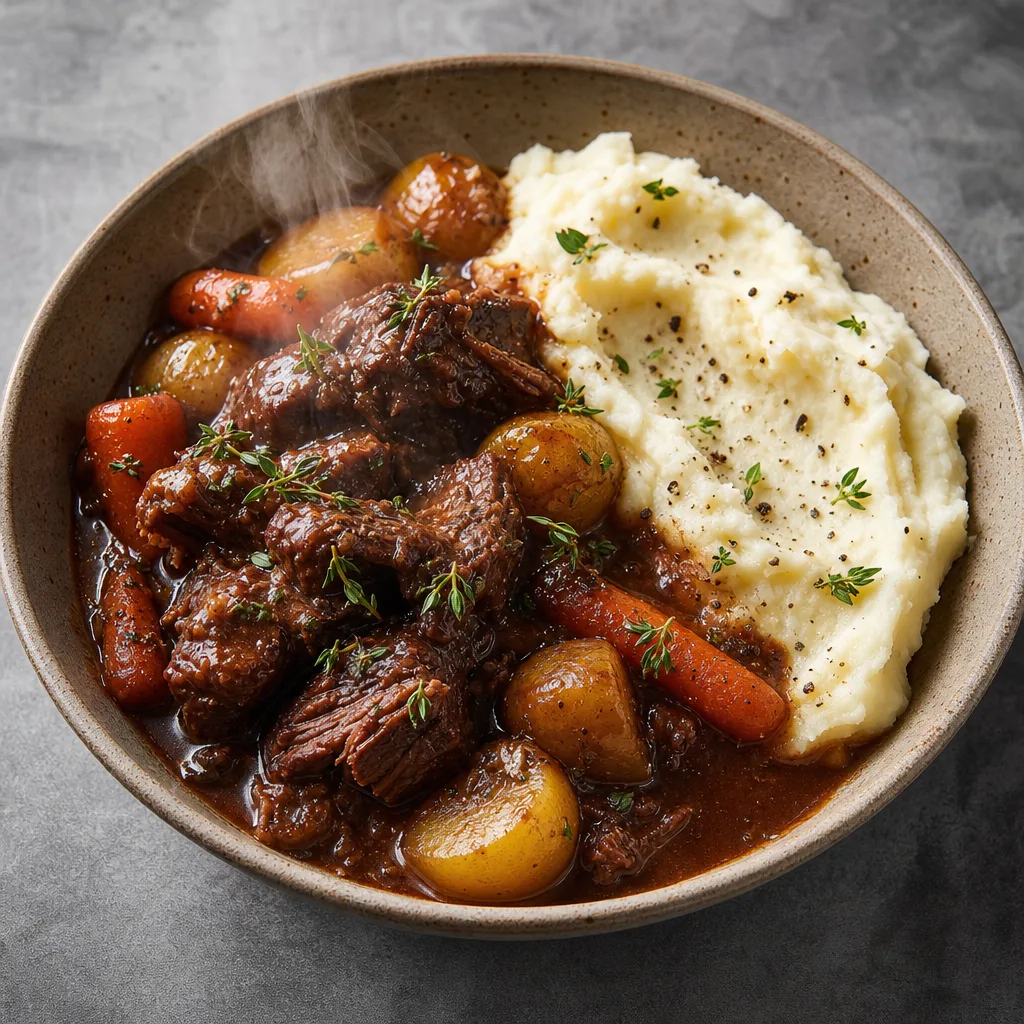
This Red wine–style braised beef stew with mashed potatoes is the sort of dish that makes a kitchen feel like home. Rich, glossy braised beef chunks nestle beside a cloud of creamy mashed potatoes, while tender baby potatoes and whole baby carrots mingle in a reduced, savory sauce flecked with fresh thyme. It’s the kind of meal that rewards time and gentle heat: a long simmer turns inexpensive beef into fork-tender morsels and concentrates the flavors of wine, stock, and aromatics into a sauce you will want to spoon onto everything.
Although the name calls it “red wine–style,” the recipe below is deliberately flexible: there’s an assertive, wine-forward version and a version that’s lighter on alcohol but equal in depth. The mash on the side is intentionally creamy and neutral to highlight the braise’s glossy, umami-rich sauce. Serve this on a cloudy afternoon or save it for a weekend dinner when you want to feed a few friends without standing over the stove the whole time.
In the paragraphs that follow you’ll find a complete ingredient list, step-by-step instructions, time-saving tips, and variations that adapt the stew to different diets and ingredient availability. There are also storage and reheating notes, suggested wine pairings, and a thorough FAQ addressing timing, substitutions, and how to make the sauce perfectly silky. If you like food that tastes like slow afternoons and cozy kitchens, this stew will become a dependable favorite.
Why this combination works
Red wine and beef are classic partners because the wine’s acidity helps break down collagen in the meat while contributing tannins and fruit notes that balance the stew’s richness. The tomato paste deepens the savory backbone and adds subtle sweetness when it cooks down in the pot.
Creamy mashed potatoes provide a neutral, soft canvas for the braise’s concentrated sauce. The starch in the potatoes absorbs flavor and contrasts texture: silky mash versus tender, slightly fibrous meat and whole, yielding root vegetables.
Ingredient notes and substitutions
Beef stock: low-sodium stock gives you control over seasoning. If you only have high-sodium stock, reduce added salt and taste as you finish the stew.
Baby potatoes vs. large potatoes: the recipe uses baby/new potatoes left whole so they cook through and present nicely on the plate. If you only have larger potatoes, cut them into 1–1½-inch pieces so they braise in the same time as the beef.
Ingredients
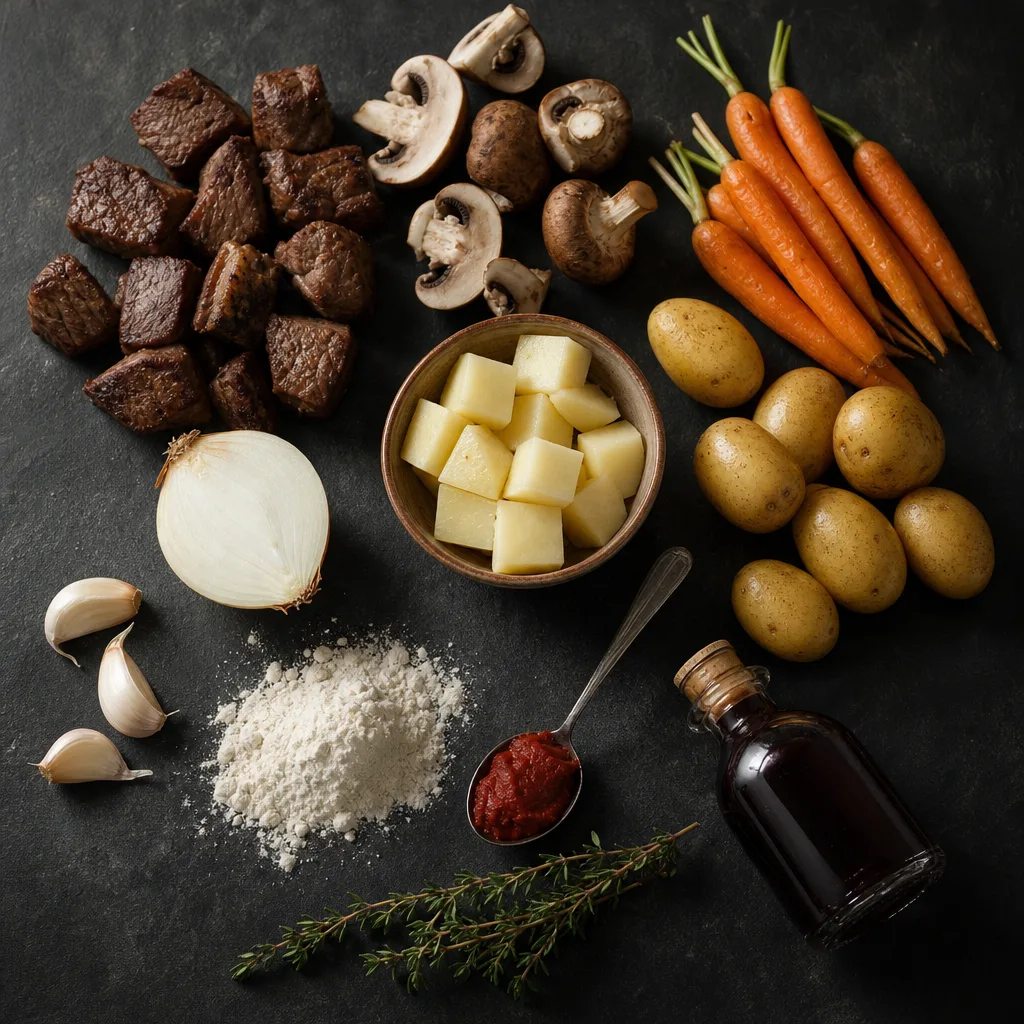
- 2.5 lb (1.1 kg) beef chuck, trimmed and cut into 1½–2-inch chunks
- 1 cup (240 ml) dry red wine (or additional beef stock for no-alcohol option)
- 4 cups (960 ml) beef stock, low-sodium
- 2 tablespoons tomato paste
- 3 tablespoons all-purpose flour
- 3 tablespoons olive oil
- 2 tablespoons unsalted butter
- 1 large yellow onion, diced
- 4 garlic cloves, minced
- 1 tablespoon Worcestershire sauce
- 2 sprigs fresh thyme plus extra for garnish
- 1 bay leaf
- 1 lb (450 g) baby/new potatoes, left whole
- 8–10 baby carrots or small whole carrots, peeled
- 8 oz (225 g) cremini mushrooms, halved (optional)
- 12–15 pearl onions, peeled (optional)
- Salt, to taste
- Coarse black pepper, to taste
- 1 teaspoon granulated sugar (optional, to balance acidity)
- 2 tablespoons chopped fresh parsley (for finishing)
- For the mashed potatoes: 2 lb (900 g) russet or Yukon Gold potatoes, peeled and cut into even chunks
- 4 tablespoons unsalted butter (for mash)
- 1/2 cup (120 ml) whole milk or cream (for mash)
- Salt (for boiling potatoes and to taste in mash)
- Coarse black pepper (for mash, to taste)
- Water (as needed for braising and boiling potatoes)
Instructions
- Prepare the beef: pat the beef chunks very dry with paper towels and season generously with salt and coarse black pepper. (ing1, ing18, ing19)
- Lightly dust the beef with flour: place the flour in a shallow bowl and toss the beef pieces to coat lightly; shake off excess. This helps the meat brown and will thicken the braising liquid later. (ing3, ing1)
- Brown the beef in batches: heat 2 tablespoons olive oil in a large Dutch oven over medium-high heat. Add half the beef, leaving space between pieces, and brown on all sides until deeply caramelized, about 3–4 minutes per side. Transfer browned beef to a plate and repeat with remaining beef, adding more oil if necessary. (ing6, ing3, ing1)
- Sauté aromatics: reduce heat to medium and add 1 tablespoon olive oil and 1 tablespoon butter to the Dutch oven. Add the diced onion and a pinch of salt; cook, stirring, until the onion is soft and beginning to brown, about 6–8 minutes. Add the minced garlic and cook 30–60 seconds until fragrant. (ing8, ing9, ing6, ing7)
- Deglaze and build flavor: stir in the tomato paste and cook 1 minute. Pour in the red wine (or substitute beef stock) and use a wooden spoon to scrape up browned bits from the bottom of the pot. Let the liquid reduce by about half, 4–6 minutes. (ing4, ing2, ing20)
- Return beef and add liquids: return all browned beef and any accumulated juices to the pot. Add the beef stock, Worcestershire sauce, thyme sprigs, and bay leaf. If the wine used was very acidic, stir in the optional teaspoon of sugar to round the flavors. Bring to a simmer. (ing1, ing4, ing3, ing10, ing11, ing12, ing17)
- Add vegetables for braising: nestle the baby/new potatoes, baby carrots, pearl onions (if using), and mushrooms (if using) into the braising liquid so they are partially submerged. Tuck any remaining thyme sprigs on top. (ing13, ing14, ing15, ing16, ing11)
- Braise low and slow: cover the Dutch oven and simmer gently on the stovetop over the lowest heat, or transfer to a 325°F (160°C) oven. Cook until the beef is fork-tender and the sauce is glossy and slightly thickened, about 2 to 2½ hours. Check after 90 minutes for tenderness and skim any excess fat from the surface. (ing1, ing20)
- Finish the sauce: remove the lid for the last 20–30 minutes to encourage reduction if needed. If more thickening is desired, remove a cup of braising liquid and whisk in 1 teaspoon of flour or a small pat of cold butter until smooth, then return and stir. Adjust salt and pepper to taste. Remove thyme stems and bay leaf. (ing3, ing7, ing18, ing19, ing11)
- While braise finishes, make the mashed potatoes: place the peeled and cut potatoes in a large saucepan and cover with cold water by 1 inch; season with a tablespoon of salt. Bring to a boil, then simmer until tender, about 15–18 minutes. Drain well. (ing22, ing24)
- Mash and enrich: return hot drained potatoes to the warm pot. Add 4 tablespoons butter and mash until mostly smooth. Warm the milk or cream and add a splash at a time until you reach a creamy consistency. Season to taste with salt and coarse black pepper. For silkier mash, beat briefly with a hand mixer or pass through a ricer. (ing23, ing21, ing24, ing18, ing19)
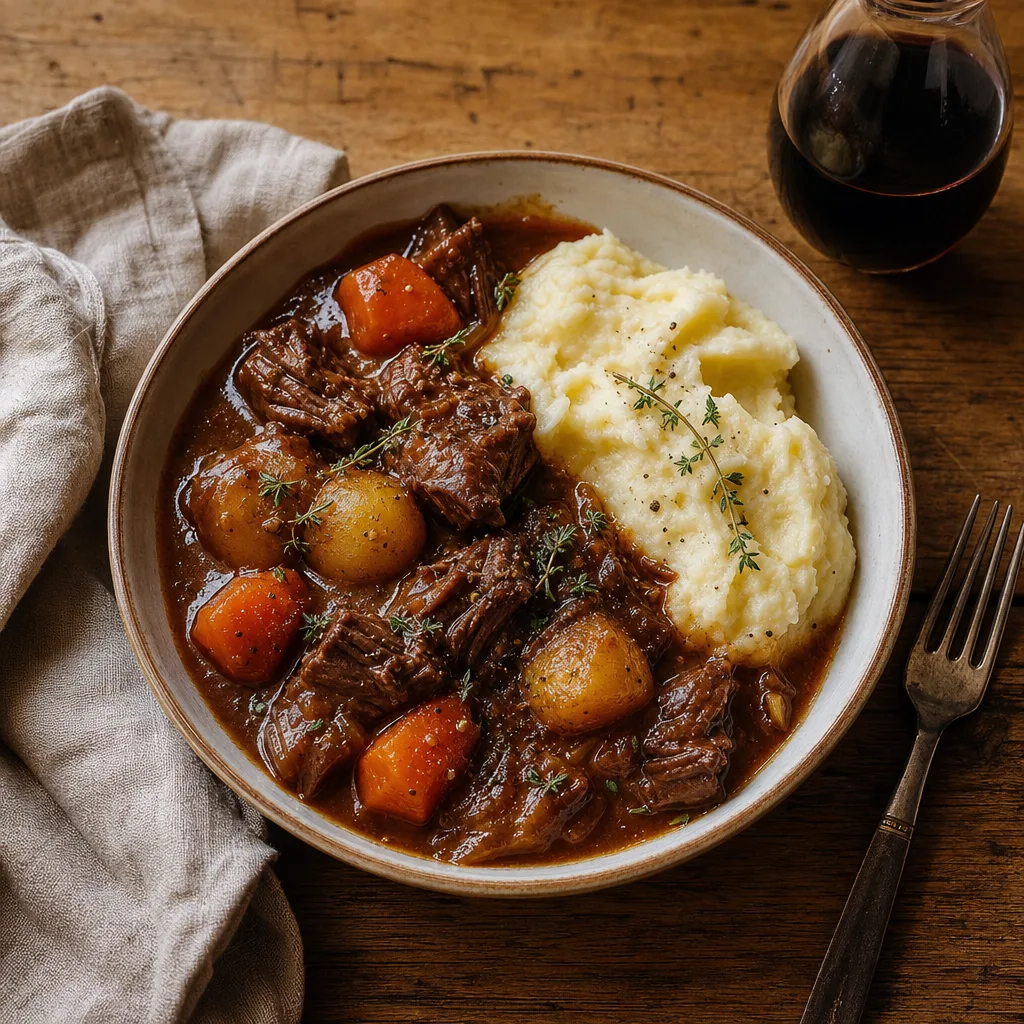
- Plate: spoon a generous portion of mashed potatoes to one side of a shallow bowl. Ladle several pieces of beef, a few whole baby potatoes, carrots, and some mushrooms from the braise beside the mash. Spoon abundant glossy sauce over the meat and around the mash. Garnish with sprigs of fresh thyme and a sprinkle of chopped parsley and coarse black pepper. (ing1, ing13, ing14, ing15, ing16, ing11, ing21, ing25, ing19)
- Make-ahead and reheat notes: cool the stew completely before refrigerating. To reheat gently on the stovetop, warm over low heat until steaming, adding a splash of water or stock if the sauce has thickened too much. Reheat mashed potatoes with a little cream and butter over low heat, stirring frequently. (ing20, ing21, ing23)
- Optional quick sauce finish: for a restaurant-style glossy finish, swirl in 1 tablespoon cold butter right at the end of reheating and whisk vigorously. This enriches and slightly thickens the sauce. (ing7)
- Taste and final adjustments: always taste for salt and pepper before serving; braised foods often need a final seasoning lift after resting. If the sauce tastes flat, a teaspoon of red wine vinegar or a squeeze of lemon will brighten it without changing the braising character. Use sparingly. (ing18, ing19, ing17)
Pro Tips
- Brown beef in small batches and don’t crowd the pan: good browning builds the stew’s flavor and prevents steaming.
- Use a heavy-bottomed pot or Dutch oven: it distributes heat evenly and makes braising reliable.
- Trim excess fat from the beef but leave a little marbling for flavor and a silky mouthfeel in the final sauce.
- If you’re short on time, finish the braise in a 350°F (175°C) oven for slightly less time, checking tenderness every 20 minutes.
- Reserve a cup of warm braising liquid before thickening so you can adjust consistency without over-reducing.
Variations
- Classic beef bourguignon twist: increase the red wine to 2 cups and add a tablespoon of Cognac or brandy during deglazing for deeper complexity.
- No-wine braise: replace the wine with extra beef stock and a tablespoon of balsamic vinegar to add acidity and depth.
- Mushroom-forward vegetarian style: swap beef for large chunks of roasted king oyster mushrooms and use vegetable stock; finish with soy sauce or tamari for umami.
- Herb and mustard finish: stir in 1 teaspoon Dijon mustard and a tablespoon of chopped fresh tarragon at the end for a bright, savory lift.
Serving Suggestions
- Serve with a simple green salad dressed in lemon vinaigrette to cut through the richness.
- Offer crusty bread or buttered dinner rolls to mop up the glossy sauce.
- Pair with steamed green beans or braised leeks to add brightness and a different texture on the plate.
- For a full dinner, serve with roasted Brussels sprouts tossed with a little balsamic reduction for complementary acidity.
Make-ahead and convenience tips
This stew is ideal for making ahead. Prepare the braise a day early, refrigerate, skim solidified fat from the surface, and gently reheat the next day. The resting time allows gelatin to firm slightly and flavors to meld for a more cohesive dish.
If short on hands-on time, brown the beef the night before and keep it refrigerated. The next day, finish the braising step and add the vegetables so they don’t overcook. Alternatively, use an oven set to low heat for a slow, unattended finish.
Storage and Reheating
Store cooled stew and mashed potatoes separately in airtight containers in the refrigerator for up to 3–4 days. The stew often tastes better the day after cooking as flavors deepen. To reheat the stew, warm gently on the stovetop over low heat and add a splash of stock or water if the sauce is too thick. Stir in a cold pat of butter at the end for gloss. Reheat mashed potatoes over low heat with a little warmed milk or cream, stirring frequently to restore creaminess. For longer storage, freeze the stew (without mash) for up to 3 months; thaw overnight in the refrigerator before reheating gently.
Red wine–style braised beef stew with mashed potatoes
Tender beef chuck braised in red wine and beef stock with baby potatoes, carrots, mushrooms, and pearl onions, served alongside creamy mashed potatoes.
Ingredients
Equipment
Method
- Prepare the beef by patting it dry and seasoning with salt and coarse black pepper.
- Dust the beef lightly with flour so it browns evenly and helps thicken the braising liquid later.
- Heat 2 tablespoons olive oil in a heavy-bottomed Dutch oven over medium-high heat and brown the beef in batches, transferring browned pieces to a plate.
- Add remaining olive oil and 1 tablespoon butter to the pot, then sauté the diced onion with a pinch of salt until soft and lightly caramelized; add the garlic and cook until fragrant.
- Stir in the tomato paste, cook briefly, then pour in the red wine and scrape up any brown bits from the bottom of the pot; reduce the wine by about half.
- Return the beef to the pot; add beef stock, Worcestershire sauce, thyme sprigs, and the bay leaf; bring to a gentle simmer.
- Nestle whole baby potatoes, baby carrots, pearl onions, and mushrooms into the braising liquid so they are partially submerged.
- Cover and simmer on low on the stovetop or transfer to a 325°F (160°C) oven and cook until the beef is fork-tender and the sauce is reduced and glossy, about 2 to 2½ hours.
- Remove the lid for the last 20–30 minutes to reduce the sauce if necessary; optionally whisk a small amount of reserved braising liquid with flour or stir in a cold pat of butter to finish the sauce. Remove thyme stems and bay leaf and adjust seasoning.
- While the stew finishes, cook the potatoes for the mash: cover peeled and cut potatoes with cold water, add salt, bring to a boil, then simmer until fork-tender; drain thoroughly.
- Return drained potatoes to the pot, add butter, and mash. Warm the milk or cream and add gradually until you reach a creamy, smooth texture. Season with salt and pepper.
- Serve by spooning mashed potatoes to one side of a bowl and ladling braised beef, whole baby potatoes, carrots, and mushrooms alongside. Spoon sauce over the meat and mash, and garnish with fresh thyme sprigs, chopped parsley, and a grind of coarse black pepper.
- If the sauce tastes flat after resting or reheating, add a teaspoon of red wine vinegar or a squeeze of lemon to brighten the flavors.
Notes
This recipe makes a generous amount of braising liquid; reduce the stock slightly if you prefer a thicker, more concentrated finished dish.
Leftover stew freezes well; for best texture, freeze without the mashed potatoes and prepare a fresh batch of mash when serving.
Frequently Asked Questions
Can I use a different cut of beef?
Yes. The best cuts for braising are those with connective tissue and some marbling—chuck roast, short ribs, or brisket work well. They become tender and flavorful after slow cooking. Leaner cuts like sirloin will cook faster but can dry out; if using lean cuts, reduce braising time and monitor for tenderness.
Do I have to use red wine?
No, you can omit alcohol and substitute additional beef stock plus a tablespoon of balsamic vinegar or a splash of red wine vinegar to mimic the acidity and depth of wine. Use a rich, reduced stock for best results.
How do I get a glossy, thick sauce?
There are three simple ways: reduce the sauce by simmering uncovered, whisk in a small amount of flour mixed into warm liquid, or swirl in a pat of cold butter at the end (monter au beurre). Browning the beef well at the start also contributes flavor and body to the sauce.
Can I make this in a slow cooker or Instant Pot?
Yes. For a slow cooker, brown the beef and sauté aromatics first, then transfer everything to the slow cooker and cook on low for 6–8 hours. For an Instant Pot, use the sauté function for browning and aromatics, then pressure-cook on high for about 45 minutes with a natural release. Finish by reducing the sauce on sauté mode if needed.
What’s the best way to peel pearl onions quickly?
Blanch the whole pearl onions in boiling water for 1 minute, then transfer to an ice bath. The skins will slip off easily. Trim the root end slightly with a knife to help remove any remaining skin.