Follow Me On Social Media!
Prosciutto and Burrata Pizza
Learn how to make Prosciutto and Burrata Pizza with a blistered crust, creamy burrata, paper-thin prosciutto, peppery arugula and a glossy balsamic reduction. Step-by-step dough, assembly and serving tips for an impressive gourmet pizza.

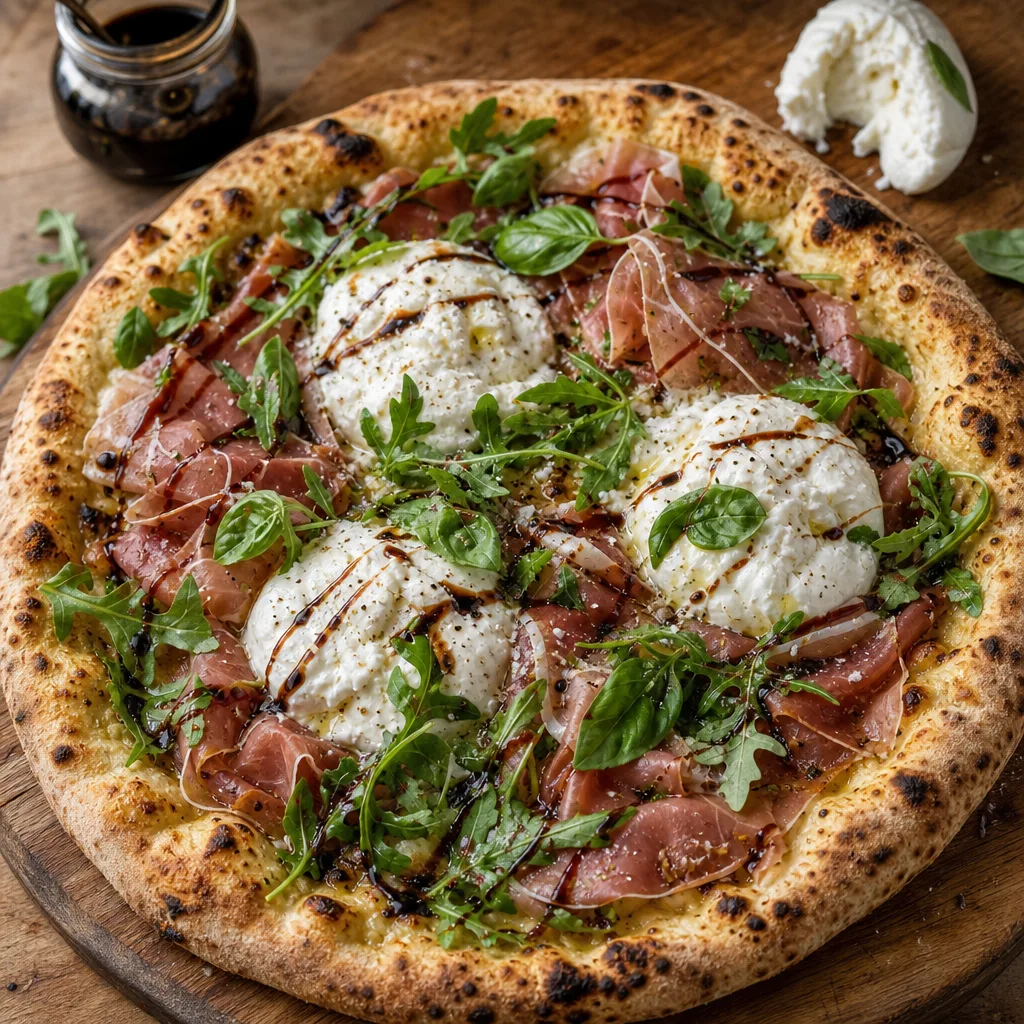
This Prosciutto and Burrata Pizza is a celebration of contrast: a blistered, slightly charred crust that crackles at the edges, creamy pillow-like burrata, paper-thin ribbons of prosciutto, and a scatter of bright peppery greens. A glossy balsamic reduction threads through the top, tying the savory, salty and tangy notes together. It’s the kind of pizza that looks effortless on a board yet rewards a little attention to technique — from handling a high-hydration dough to finishing the pizza with cool, delicate ingredients off the heat.
What makes this pizza special is the balance between hot and cold, crisp and creamy. The hot crust and any warmed base create a rustic platform; once the burrata and prosciutto are placed on top after baking, their textures remain luxurious rather than melted away. The finishing drizzle — a syrupy balsamic reduction — provides an acidic-sweet counterpoint that cuts through the richness, and fresh arugula or basil keeps every bite feeling lively.
This recipe walks you through a straightforward dough you can make a day ahead, a quick homemade balsamic reduction, and practical tips for assembling the pizza so it looks restaurant-ready. If you’re serving this at a dinner party, it’s an ideal centerpiece: dramatic, fast to finish, and impressive without being fussy. Whether you have a pizza stone, a pizza steel, or a heavy baking sheet, this method adapts. Expect deep, resonant flavors and a flexible approach that still yields an elevated result.
Why this combination works
Prosciutto and burrata are complementary partly because they play different roles on the palate. Prosciutto brings a concentrated, salty, slightly sweet cured-meat flavor while burrata contributes a cool, luscious creaminess. Combining them on a crispy pizza crust creates contrast: crisp and charred textures, creamy and silky fillings, and a balance of savory and sweet.
The balsamic reduction finishes the pizza by providing an acidic-sweet counterpoint that reduces any cloying sensation from the cheese. Meanwhile, fresh peppery arugula or bitter greens cut through the richness and refresh the palate between bites.
Ingredient notes and substitutions
Burrata: If you can source real burrata, its stracciatella center is worth seeking out. When burrata is unavailable, fresh mozzarella or a mix of mozzarella with a spoonful of mascarpone can mimic the creaminess, though the flavor will differ slightly.
Prosciutto: Choose a thinly sliced, high-quality prosciutto. If you prefer a less salty option, you can substitute with thinly sliced cured ham such as speck or jamón serrano, keeping in mind the specific flavor characteristics will change.
Troubleshooting common issues
If your crust is dense rather than airy, the dough may have been overworked or not proofed long enough. Allow adequate rise time and handle the dough gently when shaping to preserve gas pockets.
If the pizza browns too fast on the top but the bottom is undercooked, slide it closer to the hot element or use a preheated stone/steel; alternatively, finish under a broiler for 30–60 seconds while watching closely to avoid burning.
Ingredients
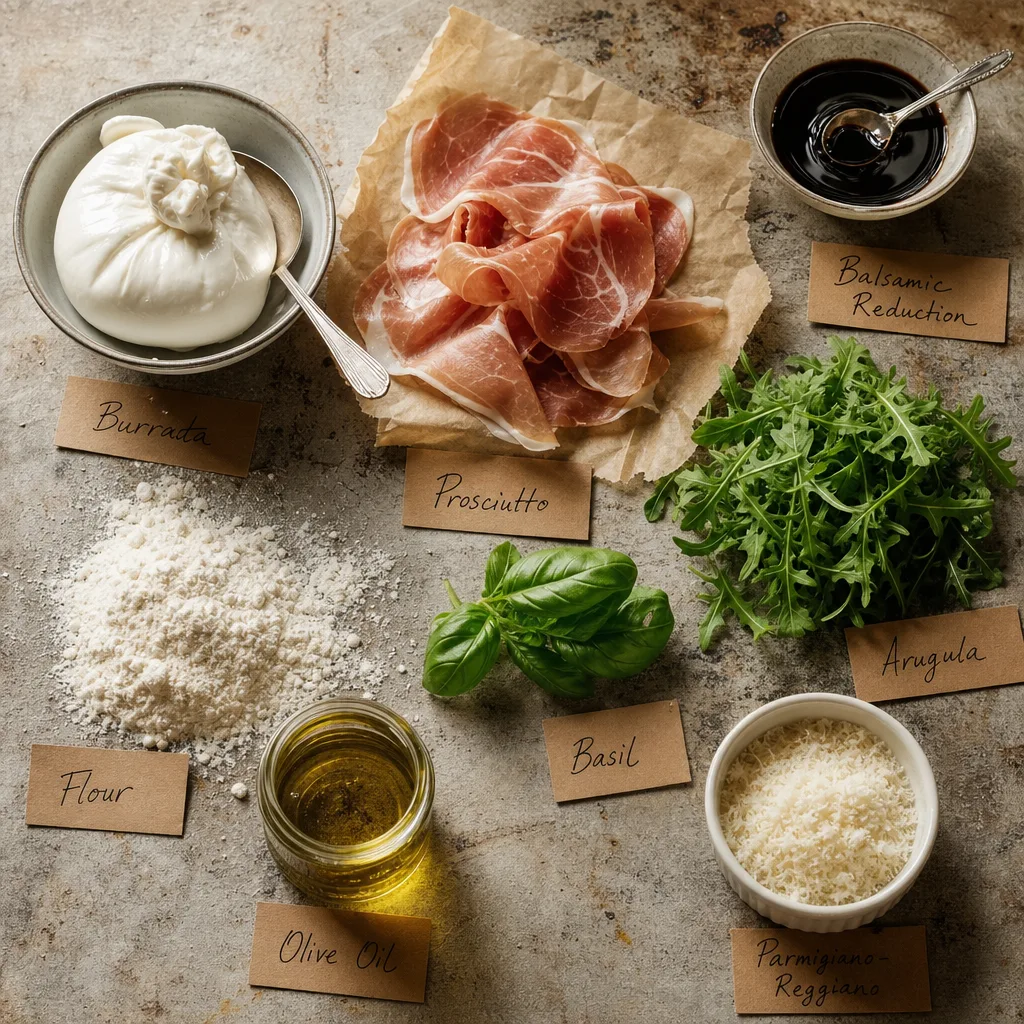
- 500 g (about 4 cups) strong bread flour or Tipo 00
- 325 g (about 1 1/3 cups) lukewarm water
- 2 tsp fine sea salt
- 1/2 tsp active dry yeast
- 1 tsp sugar
- 2 tbsp extra-virgin olive oil, plus more for drizzling
- 1 ball fresh burrata (about 200 g / 7 oz)
- 100–150 g (3.5–5 oz) thinly sliced prosciutto
- 60 g (about 2 cups loosely packed) fresh arugula
- 12–16 fresh basil leaves
- 50 g (about 1/2 cup) freshly grated Parmigiano-Reggiano or Pecorino
- 3 tbsp balsamic vinegar
- 1 tbsp honey (optional, for smoother reduction)
- 1–2 cloves garlic, minced
- Sea salt, to taste
- Freshly ground black pepper, to taste
- Semolina or extra flour for dusting, as needed
- Cornmeal or fine flour, for dusting the peel or sheet (optional)
Instructions
- Make the dough: In a large bowl, dissolve 1 tsp sugar and 1/2 tsp active dry yeast in 325 g lukewarm water; let sit 5–7 minutes until foamy. (ingredient_ids: ["ing002","ing003"])
- Add 500 g flour and 2 tsp fine sea salt to the bowl and mix with a spatula until a shaggy dough forms. Drizzle in 2 tbsp olive oil and continue folding until incorporated. (ingredient_ids: ["ing001","ing002","ing004"])
- Knead the dough for 8–10 minutes by hand on a lightly floured surface, or 6–7 minutes in a stand mixer with a dough hook, until it’s smooth, elastic and slightly tacky. (ingredient_ids: ["ing001","ing004"])
- First rise: Place the dough in a lightly oiled bowl, cover with plastic or a damp towel, and let it rise at room temperature for 1.5–2 hours or until doubled. (ingredient_ids: ["ing004"])
- Optionally cold-ferment: For more flavor and better texture, refrigerate the covered dough for 24–72 hours after the initial rise; bring back to room temperature for 1 hour before shaping. (ingredient_ids: ["ing004"])
- Prepare the balsamic reduction: In a small saucepan combine 3 tbsp balsamic vinegar and 1 tbsp honey (optional). Bring to a gentle simmer and reduce over medium-low heat until thickened and syrupy, about 8–12 minutes. Remove from heat and let cool slightly. (ingredient_ids: ["ing011","ing012"])
- Preheat oven and stone/steel: Place a pizza stone or steel on the middle rack and preheat the oven to the highest temperature it allows (250–290°C / 475–550°F) for at least 45 minutes. If using a baking sheet, preheat the sheet upside down. (ingredient_ids: [])
- Divide and shape: Turn the dough onto a lightly floured surface. Divide into 2 equal pieces for two medium pizzas or keep whole for one large. Gently stretch each portion into a rough round about 25–30 cm / 10–12 inches across, leaving a slightly thicker rim. Use your fingers to coax air into the edge for a bubbly crust. Dust a pizza peel or inverted baking sheet with semolina or cornmeal. (ingredient_ids: ["ing001"])
- Flavor the base: Lightly brush the stretched dough with extra-virgin olive oil and rub the surface with the minced garlic (use less if you prefer subtle garlic). Sprinkle a few tablespoons of grated Parmigiano-Reggiano across the base — this adds an umami layer without covering the crust in sauce. (ingredient_ids: ["ing004","ing010","ing009"])
- Bake: Slide the pizza onto the preheated stone or baking sheet. Bake for 6–10 minutes depending on oven temperature and thickness, until the crust is blistered and golden with a few charred spots. Rotate once if your oven has hot spots. (ingredient_ids: [])
- Prepare toppings while hot: Tear open the burrata and let the creamy center remain intact for serving. Tear the outer shell into large pieces if desired. (ingredient_ids: ["ing006"])
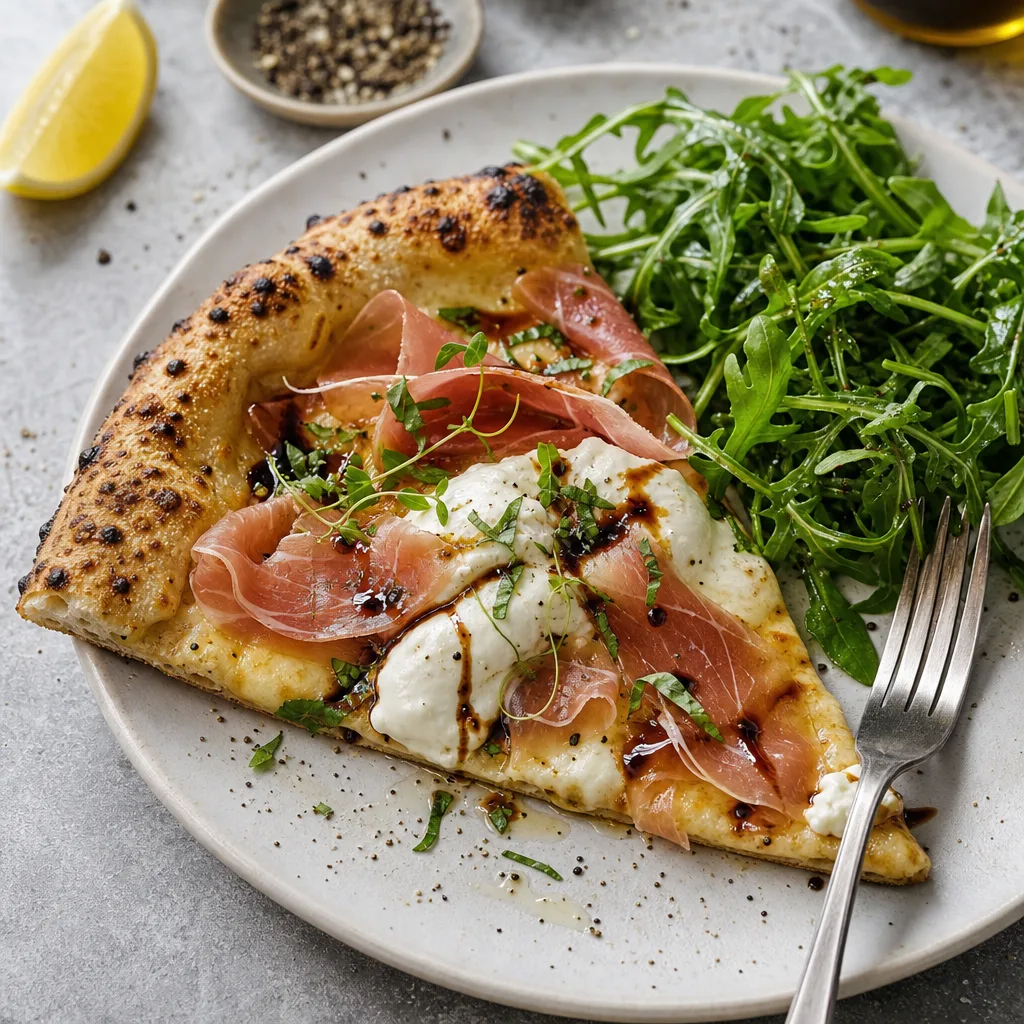
- Finish assembly: When the pizza is out of the oven, immediately scatter the burrata pieces across the hot pizza so they settle but do not fully melt. Drape thin slices of prosciutto over the burrata and exposed crust so the residual heat warms but keeps the prosciutto delicate. (ingredient_ids: ["ing006","ing007"])
- Add greens and cheese: Toss the arugula lightly with a drizzle of olive oil, a pinch of sea salt and a grind of black pepper, then pile it over the pizza. Scatter the fresh basil leaves and remaining grated Parmigiano-Reggiano. (ingredient_ids: ["ing006","ing008","ing010","ing013","ing014"])
- Drizzle balsamic reduction: Using a spoon, drizzle the cooled balsamic reduction in thin lines or dots across the pizza. Adjust amount to taste — the reduction should emphasize acidity and sweetness without overwhelming the other ingredients. (ingredient_ids: ["ing011"])
- Season and serve: Finish with a final drizzle of extra-virgin olive oil, a pinch of flaky sea salt if needed and freshly ground black pepper. Serve immediately, slicing with a pizza wheel or serving whole for the table. (ingredient_ids: ["ing004","ing013","ing014"])
Pro Tips
- Cold fermentation of the dough for 24–72 hours develops flavor and improves crust texture; plan ahead and divide into portions before refrigerating.
- To avoid soggy pizza, keep the burrata and prosciutto out of the oven — add them after the crust is baked so textures remain distinct.
- If you don’t have a pizza stone or steel, preheat a heavy inverted baking sheet to simulate the effect; the key is a hot surface to encourage oven spring.
- When stretching dough, don’t overwork it; gentle coaxing keeps air pockets intact and produces a bubbly edge.
- Taste the balsamic reduction as it cools. If it’s too sharp, stir in a touch more honey; if too sweet, thin with a splash of balsamic vinegar and simmer briefly.
Variations
- Prosciutto, Fig and Burrata: Add thinly sliced fresh figs or fig jam after baking for extra fruity sweetness that pairs beautifully with the prosciutto.
- Lemon-Arugula Burrata Pizza: Toss the arugula with lemon zest and a squeeze of lemon juice before topping to introduce a bright citrus note.
- Walnut and Honey Finish: Sprinkle toasted chopped walnuts over the assembled pizza and switch the reduction to a light honey drizzle for added crunch.
- Truffle Oil Accent: After baking, lightly drizzle a small amount of high-quality truffle oil over the finished pizza for an indulgent aroma — a little goes a long way.
Serving Suggestions
- Serve alongside a crisp, chilled white wine such as Pinot Grigio or a light-bodied Chardonnay to complement the creamy burrata and salty prosciutto.
- For a casual gathering, present the pizza whole on a wooden board with a small bowl of extra balsamic reduction and red pepper flakes for guests to adjust their slices.
- Pair with a bright, simple salad of shaved fennel, orange segments and olive oil to introduce crisp, citrusy contrasts to the rich pizza.
- Offer crust-dippers: small plates of extra-virgin olive oil with a pinch of flaky salt and a grind of pepper so guests can dunk those crispy edges.
Make-ahead and timing
Dough can be made up to 72 hours in advance and kept in the refrigerator. Divide into portions before cold-proofing so that you can pull out just the amount you need and let it rest at room temperature while the oven heats.
Balsamic reduction stores in the refrigerator for up to two weeks in a sealed jar; rewarm gently before using if it firms up. Prepare the reduction a day ahead to reduce last-minute tasks and focus on baking and assembly when guests arrive.
Storage and Reheating
Store leftover pizza in an airtight container in the refrigerator for up to 2 days. Because the burrata and prosciutto are best fresh, remove any remaining fresh burrata and prosciutto before reheating; keep them refrigerated separately. Reheat slices in a skillet over medium heat for 3–4 minutes with a lid to warm through and crisp the bottom, or use a 200°C / 400°F oven on a sheet for 6–8 minutes. Reassemble with fresh burrata, prosciutto and balsamic reduction before serving.
Prosciutto and Burrata Pizza
A gourmet pizza with a blistered crust, creamy burrata added after baking, thin prosciutto, peppery arugula, fresh basil and a balsamic reduction finish. Designed for home ovens with options for cold fermentation and practical assembly tips.
Ingredients
Equipment
Method
- Make the dough: In a large bowl, dissolve 1 tsp sugar and 1/2 tsp active dry yeast in 325 g lukewarm water; let sit 5–7 minutes until foamy.
- Add 500 g flour and 2 tsp fine sea salt to the bowl and mix with a spatula until a shaggy dough forms. Drizzle in 2 tbsp olive oil and continue folding until incorporated.
- Knead the dough for 8–10 minutes by hand on a lightly floured surface, or 6–7 minutes in a stand mixer with a dough hook, until it’s smooth, elastic and slightly tacky.
- First rise: Place the dough in a lightly oiled bowl, cover with plastic or a damp towel, and let it rise at room temperature for 1.5–2 hours or until doubled.
- Optionally cold-ferment: For more flavor and better texture, refrigerate the covered dough for 24–72 hours after the initial rise; bring back to room temperature for 1 hour before shaping.
- Prepare the balsamic reduction: In a small saucepan combine 3 tbsp balsamic vinegar and 1 tbsp honey (optional). Bring to a gentle simmer and reduce over medium-low heat until thickened and syrupy, about 8–12 minutes. Remove from heat and let cool slightly.
- Preheat oven and stone/steel: Place a pizza stone or steel on the middle rack and preheat the oven to the highest temperature it allows (250–290°C / 475–550°F) for at least 45 minutes. If using a baking sheet, preheat the sheet upside down.
- Divide and shape: Turn the dough onto a lightly floured surface. Divide into 2 equal pieces for two medium pizzas or keep whole for one large. Gently stretch each portion into a rough round about 25–30 cm / 10–12 inches across, leaving a slightly thicker rim. Dust a pizza peel or inverted baking sheet with semolina or cornmeal.
- Flavor the base: Lightly brush the stretched dough with extra-virgin olive oil and rub the surface with the minced garlic (use less if you prefer subtle garlic). Sprinkle a few tablespoons of grated Parmigiano-Reggiano across the base — this adds an umami layer without covering the crust in sauce.
- Bake: Slide the pizza onto the preheated stone or baking sheet. Bake for 6–10 minutes depending on oven temperature and thickness, until the crust is blistered and golden with a few charred spots. Rotate once if your oven has hot spots.
- Prepare toppings while hot: Tear open the burrata and let the creamy center remain intact for serving. Tear the outer shell into large pieces if desired.
- Finish assembly: When the pizza is out of the oven, immediately scatter the burrata pieces across the hot pizza so they settle but do not fully melt. Drape thin slices of prosciutto over the burrata and exposed crust so the residual heat warms but keeps the prosciutto delicate.
- Add greens and cheese: Toss the arugula lightly with a drizzle of olive oil, a pinch of sea salt and a grind of black pepper, then pile it over the pizza. Scatter the fresh basil leaves and remaining grated Parmigiano-Reggiano.
- Drizzle balsamic reduction: Using a spoon, drizzle the cooled balsamic reduction in thin lines or dots across the pizza. Adjust amount to taste — the reduction should emphasize acidity and sweetness without overwhelming the other ingredients.
- Season and serve: Finish with a final drizzle of extra-virgin olive oil, a pinch of flaky sea salt if needed and freshly ground black pepper. Serve immediately, slicing with a pizza wheel or serving whole for the table.
Notes
The recipe is flexible: you can make two medium pizzas or one large depending on your oven and serving needs.
Adjust the amount of prosciutto and burrata to your preference; both are rich so a little can go a long way.
Frequently Asked Questions
Can I use fresh mozzarella instead of burrata?
Yes. Fresh mozzarella will give you a milder, more elastic cheese topping that melts more than burrata. To better mimic burrata’s creamy contrast, tear fresh mozzarella and scatter small pieces, and add a few spoonfuls of stracciatella if available. Remember that burrata’s creamy center is part of the textural appeal, so using regular mozzarella will change the mouthfeel but still be delicious.
What can I substitute for balsamic reduction?
You can substitute a light honey drizzle or a honey-balsamic glaze if you prefer sweeter notes. For a more acidic finish, use a simple dressing of good-quality balsamic vinegar mixed with a touch of olive oil, but drizzle sparingly. Another option is a reduction of aged red wine vinegar with a little sugar to balance acidity.
Is it necessary to preheat the stone or steel for so long?
Yes. Preheating the stone or steel for at least 30–45 minutes ensures the surface is hot enough to give the dough an immediate burst of heat, creating a blistered crust and better oven spring. If it’s not fully preheated, the crust will cook more slowly and become denser rather than airy and bubbly.
How do I prevent the crust from getting soggy under the burrata?
Avoid placing burrata on the dough before baking. Bake a lightly dressed or oiled crust with a sprinkle of cheese for flavor, then add burrata and prosciutto right after the pizza comes out. This way the heat warms the burrata slightly but doesn’t make the center watery or limp.
Can I make the dough without sugar or with instant yeast?
Yes. The teaspoon of sugar in this recipe just helps the yeast activate more quickly but can be omitted. If using instant yeast, sprinkle it into the flour instead of blooming it in water and proceed; you may need to reduce the mixing time slightly. Always keep an eye on dough consistency rather than strict timing — humidity and flour type affect hydration.