Follow Me On Social Media!
The Ultimate Guide to Authentic Chinese Beef and Onion Stir-Fry: Better Than Takeout

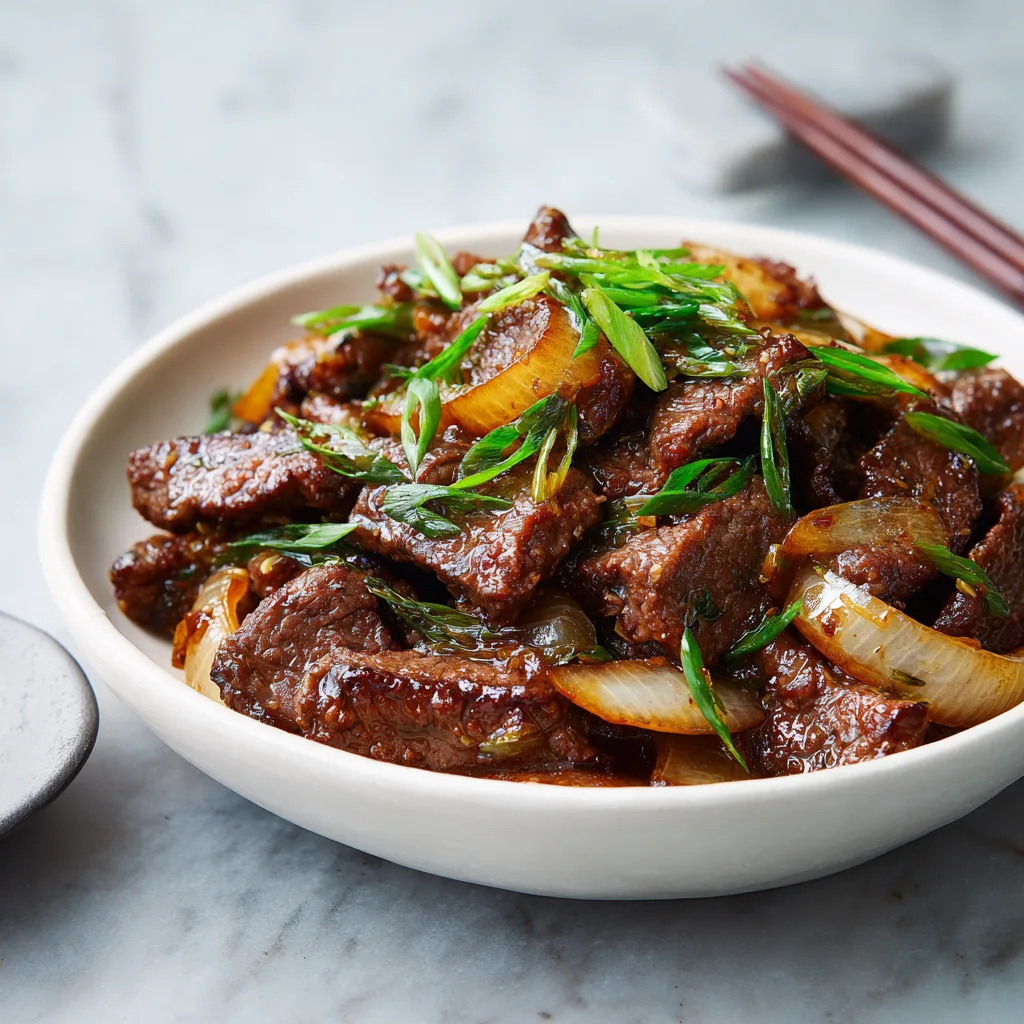
There is something undeniably comforting about the classic combination of savory beef and sweet, caramelized onions. It is a staple of Chinese takeout menus across the globe, often arriving in a white carton, steaming hot and coated in a glossy, rich brown sauce. But as delicious as the restaurant version can be, making Chinese Beef and Onion Stir-Fry at home is a revelation. It allows you to control the quality of the meat, the crunch of the vegetables, and the depth of the flavor profile, resulting in a dish that is fresher, healthier, and surprisingly easy to master.
This dish is a celebration of texture and umami. The beef, when treated correctly, melts in your mouth, contrasting perfectly with the slight crunch of onions that have been stir-fried just to the point of sweetness without losing their structural integrity. The sauce ties it all together—a savory symphony of soy, oyster sauce, and aromatics that demands to be spooned over a fluffy bed of white rice.
In this comprehensive guide, we aren’t just giving you a recipe; we are breaking down the science of the stir-fry. We will explore the “velveting” technique that restaurants use to keep meat tender, the importance of high heat, and how to build a sauce that clings to every bite. Whether you are a seasoned home cook or a kitchen novice, this article will equip you with the knowledge to create a restaurant-quality meal in under 30 minutes.
The Secret to Melt-in-Your-Mouth Beef
The most common complaint about homemade stir-fries is tough, chewy meat. If you have ever wondered why restaurant beef is so impossibly silky while your home attempts turn out rubbery, the secret lies in a technique called “velveting.”
Velveting is a marinating process that coats the meat in a mixture of cornstarch, oil, and sometimes baking soda or egg white. This coating protects the meat fibers from the harsh heat of the wok, sealing in moisture and creating a slippery, velvety texture. For this Beef and Onion Stir-Fry, we use a simplified marinade of soy sauce, cornstarch, and oil. The cornstarch creates a barrier, while the oil ensures the beef separates easily in the pan.
Choosing the Right Cut: The success of this dish starts at the butcher counter. You don’t need the most expensive cut of beef, but you do need the right one.
- Flank Steak: This is the gold standard for stir-fries. It has a loose grain that absorbs marinade beautifully and becomes incredibly tender when sliced correctly.
- Sirloin Steak: A great alternative that is naturally tender and flavorful.
- Skirt Steak: Flavorful but can be tougher; requires very thin slicing.
The Golden Rule of Slicing: Regardless of the cut you choose, you must slice the beef against the grain. Look at the meat; you will see lines of muscle fibers running in one direction. You want to cut perpendicular to those lines. This shortens the fibers, making each piece easier to chew. Freezing the meat for 20 minutes before slicing can make it firm and easier to cut into thin, uniform strips.
The Onion Trinity
While beef is the protein star, the onions are the flavor engine of this dish. We use a combination of onions to achieve a complex flavor profile.
- Yellow or White Onions: These provide the bulk of the vegetable content. When stir-fried over high heat, they caramelize slightly on the edges while remaining crisp-tender in the center. They add natural sweetness that balances the salty sauce.
- Scallions (Green Onions): We use both the white and green parts. The white parts are added early with the aromatics to infuse the oil, while the green tops are tossed in at the very end for a burst of fresh, grassy flavor and vibrant color.
- Shallots (Optional): For an extra layer of depth, thinly sliced shallots can be fried until crispy as a garnish, though the standard recipe relies heavily on the interplay between the yellow onions and scallions.
Mastering the Wok Hei
“Wok Hei” translates to “breath of the wok.” It refers to that distinct, smoky flavor achieved by stir-frying over extremely high heat. While it is difficult to perfectly replicate a commercial restaurant burner at home, you can get close by following a few rules:
- Get Your Pan Smoking Hot: Do not add oil until your pan is hot.
- Don’t Overcrowd: If you add too much beef at once, the temperature of the pan drops, and the meat steams instead of searing. Cook in batches if necessary.
- Dry Vegetables: Ensure your onions are dry before they hit the pan. Water is the enemy of a good stir-fry.
Ingredients
The Beef & Marinade:
- 1 lb (450g) Flank steak or top sirloin, thinly sliced against the grain
- 1 tablespoon Soy sauce
- 1 tablespoon Shaoxing wine (or dry sherry)
- 1 teaspoon Cornstarch
- 1 teaspoon Baking soda (optional, for extra tenderness)
- 1 tablespoon Vegetable oil
The Aromatics & Vegetables:
- 2 medium Yellow onions, cut into thick wedges
- 3 stalks Green onions (scallions), cut into 2-inch pieces (separate white and green parts)
- 3 cloves Garlic, minced
- 1 inch Ginger, peeled and julienned or minced
The Stir-Fry Sauce:
- 2 tablespoons Regular soy sauce
- 1 tablespoon Dark soy sauce (for color and richness)
- 2 tablespoons Oyster sauce
- 1 teaspoon Sugar (white or brown)
- 1 teaspoon Sesame oil
- 1/4 teaspoon White pepper
- 1 tablespoon Cornstarch
- 2 tablespoons Water (or low-sodium beef broth)
Instructions
1. Prepare the Beef: Slice the beef against the grain into 1/4-inch thick strips. In a medium bowl, combine the beef with the marinade ingredients (soy sauce, Shaoxing wine, cornstarch, baking soda if using, and oil). Mix well by hand until the liquid is absorbed. Let it marinate for at least 15–20 minutes at room temperature.
2. Make the Sauce: While the beef marinates, whisk together all the sauce ingredients in a small bowl: regular soy sauce, dark soy sauce, oyster sauce, sugar, sesame oil, white pepper, cornstarch, and water. Set aside.
3. Sear the Beef: Heat a wok or large heavy skillet over high heat until it begins to smoke lightly. Add 1 tablespoon of cooking oil to coat the pan. Add the marinated beef in a single layer (do this in two batches if your pan is small). Sear undisturbed for 1 minute to get a nice brown crust, then stir-fry for another minute until about 80% cooked. Remove the beef from the pan and set aside on a plate.
4. Stir-Fry the Onions: Wipe out the wok if needed and add another tablespoon of oil. Add the yellow onion wedges. Stir-fry for 2–3 minutes until the layers start to separate and the edges develop a slight char, but they are still crisp.
5. Add Aromatics: Push the onions to the side of the pan. Add the ginger, garlic, and the white parts of the green onions to the center. Cook for 30 seconds until fragrant, being careful not to burn the garlic. Toss everything together with the onions.
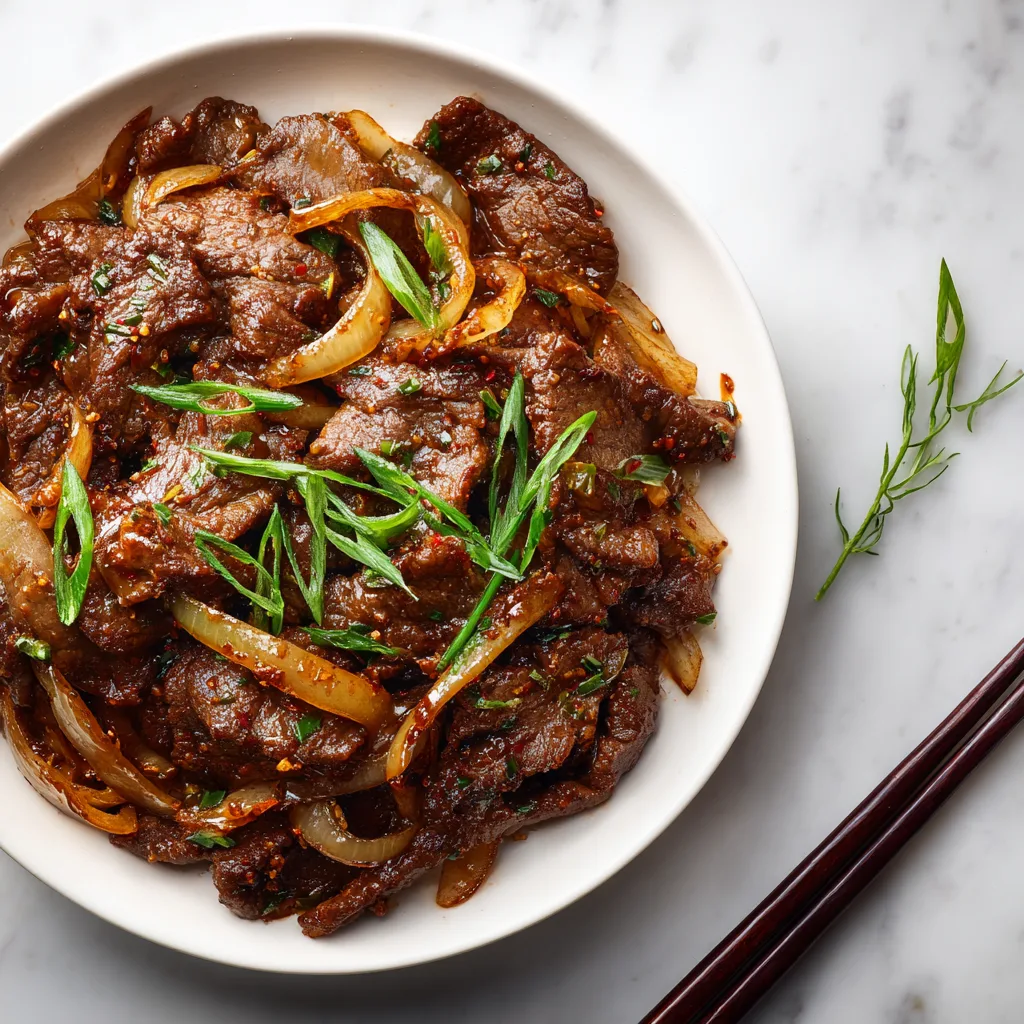
6. Combine and Serve: Add the beef (and any resting juices) back into the pan. Give the sauce mixture a quick whisk (cornstarch settles) and pour it over the beef and onions. Toss everything continuously for 1–2 minutes. The sauce will bubble and thicken rapidly, coating everything in a glossy brown glaze.
7. Final Touch: Turn off the heat. Toss in the green parts of the green onions. The residual heat will wilt them perfectly. Serve immediately over steamed jasmine rice.
Tips for Success
- Prep is Key: Stir-frying happens fast—in a matter of minutes. Have all your vegetables chopped, sauces mixed, and meat marinated before you turn on the stove. This is called mise en place.
- The Cornstarch Slurry: The cornstarch in the sauce acts as a thickener. If your sauce looks too thick, add a splash of water. If it’s too thin, let it bubble for another 30 seconds.
- Adjusting Salinity: Soy sauce brands vary in sodium content. Taste your sauce before adding it to the wok. If you are sensitive to salt, start with less soy sauce and add more at the end if needed.
Variations to Try
While the classic onion and beef combo is timeless, this recipe is a fantastic canvas for other flavors.
- Make it Spicy: Add a tablespoon of chili garlic sauce (Sambal Oelek) or sliced fresh red chilies with the aromatics for a kick.
- Add More Veggies: Bell peppers, snap peas, or broccoli florets can be added with the onions for extra nutrition and crunch.
- Black Pepper Beef: Increase the white pepper to 1 teaspoon or swap it for coarse ground black pepper for a zesty, peppery variation.
Serving Suggestions
This dish is traditionally served family-style in the center of the table.
- Rice: Jasmine rice is the classic pairing, but brown rice or cauliflower rice works for a healthier twist.
- Noodles: Boil some egg noodles and toss them directly into the wok at the end for a beef lo mein style dish.
- Sides: Pair with smashed cucumber salad or garlicky bok choy to cut through the richness of the beef.
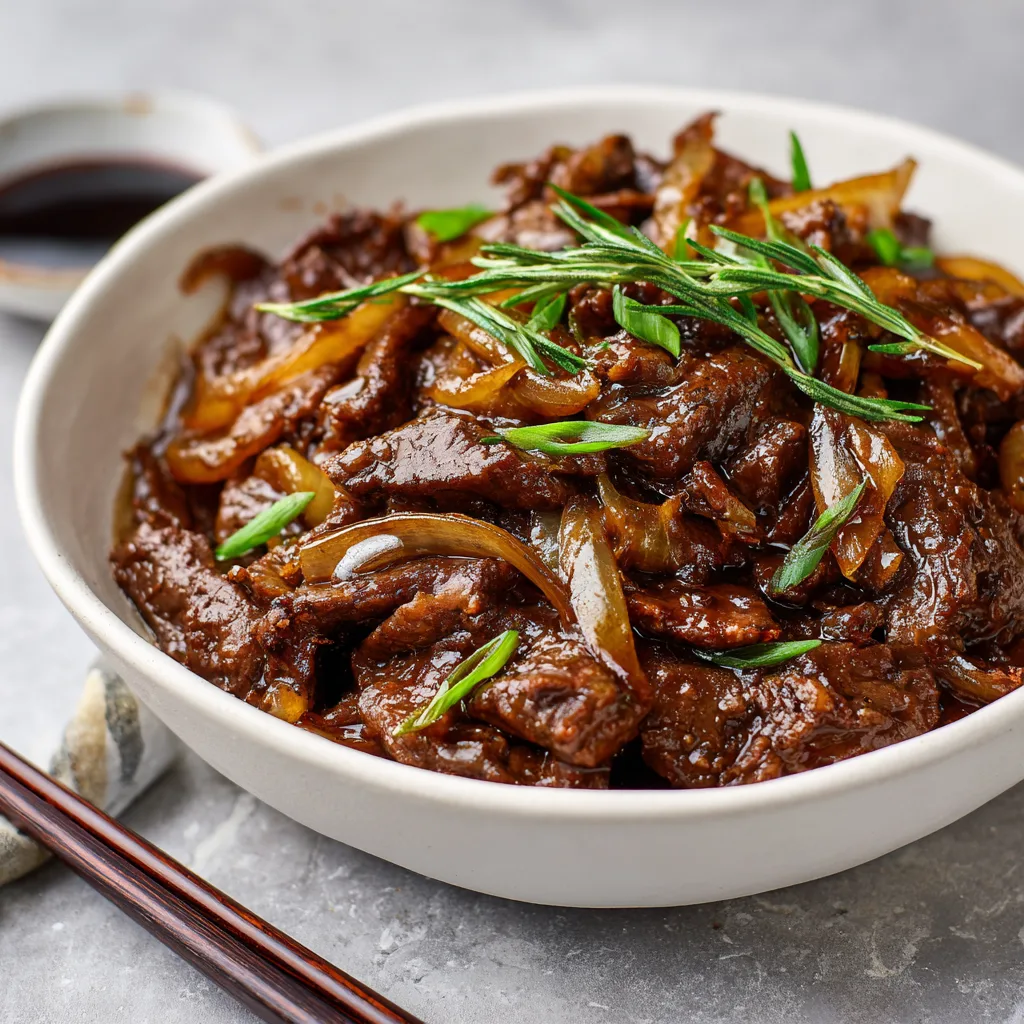
Chinese Beef Onion Stir Fry
A classic takeout favorite made better at home. Tender marinated beef slices stir-fried with sweet onions in a savory, glossy brown sauce.
Ingredients
Equipment
Method
- Slice beef thinly against the grain. Combine with marinade ingredients (1 tbsp soy sauce, wine, 1 tsp cornstarch, baking soda, 1 tbsp oil). Let sit for 15-20 minutes.
- In a small bowl, whisk together all sauce ingredients: soy sauces, oyster sauce, sugar, sesame oil, white pepper, 1 tsp cornstarch, and water.
- Heat wok over high heat. Add 1 tbsp oil. Sear beef in a single layer for 1-2 minutes until browned but not fully cooked through. Remove beef and set aside.
- Add remaining oil to the hot wok. Add onion wedges and stir-fry for 2-3 minutes until charred at edges but crisp.
- Add garlic, ginger, and white parts of green onions. Stir-fry for 30 seconds until fragrant.
- Return beef to the pan. Whisk sauce and pour over ingredients.
- Toss everything continuously for 1-2 minutes until sauce thickens and coats the beef.
- Turn off heat, stir in green onion tops, and serve immediately with rice.
Notes
Freezing the beef for 20 minutes makes it easier to slice thinly.
Cultural Context
Beef and onion stir-fry is a dish that bridges the gap between home cooking and banquet dining in Chinese cuisine. In Cantonese cuisine, the emphasis is often on the freshness of the ingredients and the balance of the sauce—never too sweet, never too salty. The use of onions is particularly significant; in Traditional Chinese Medicine (TCM), onions are believed to promote the flow of “Qi” (energy) and aid digestion, making them a functional as well as flavorful component of the meal.
This recipe captures the essence of a bustling Hong Kong diner or a comforting family dinner in Beijing. It is fast, furious cooking that results in a meal that tastes like it took hours to prepare. So, put down the takeout menu, grab your wok, and get ready to impress your family with the best beef stir-fry they have ever tasted.