Follow Me On Social Media!
Spicy Bulgogi Cheesesteak: The Korean Fusion Sandwich You’ll Make on Repeat

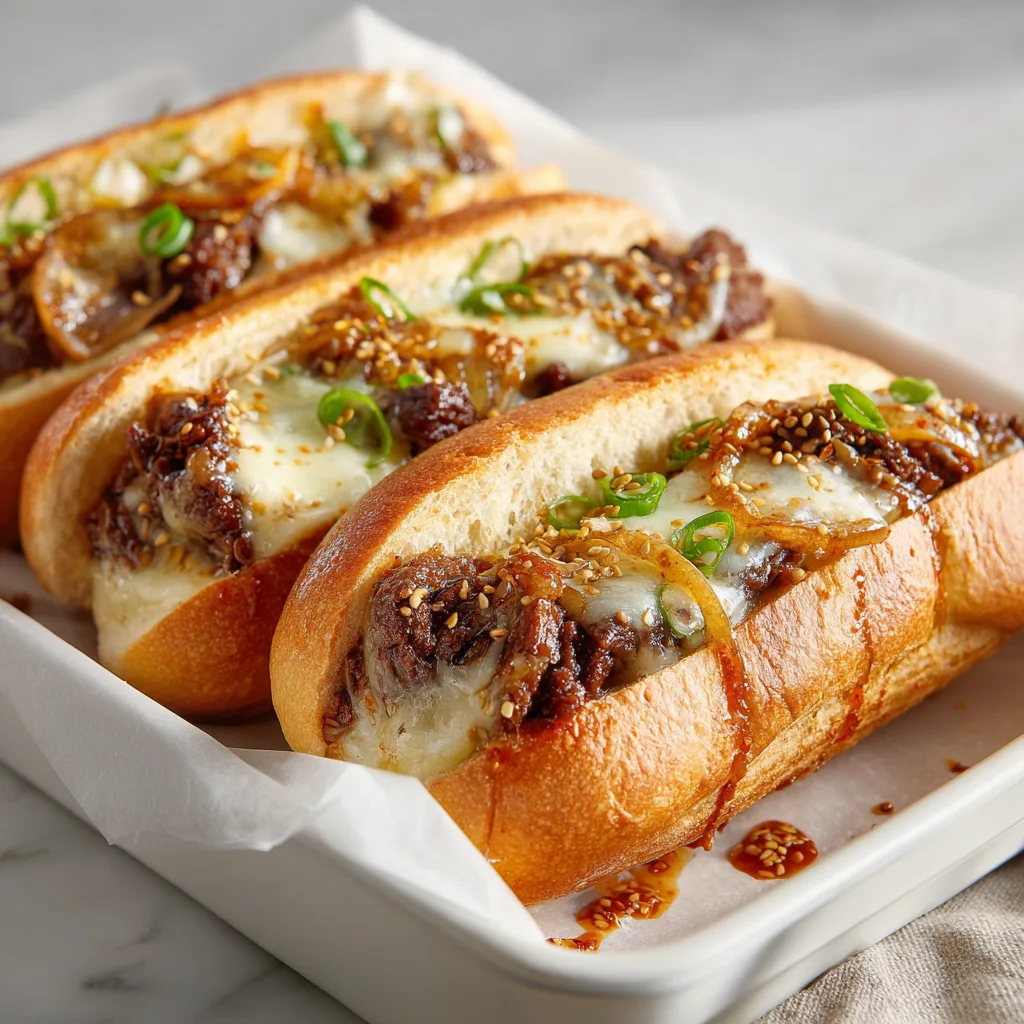
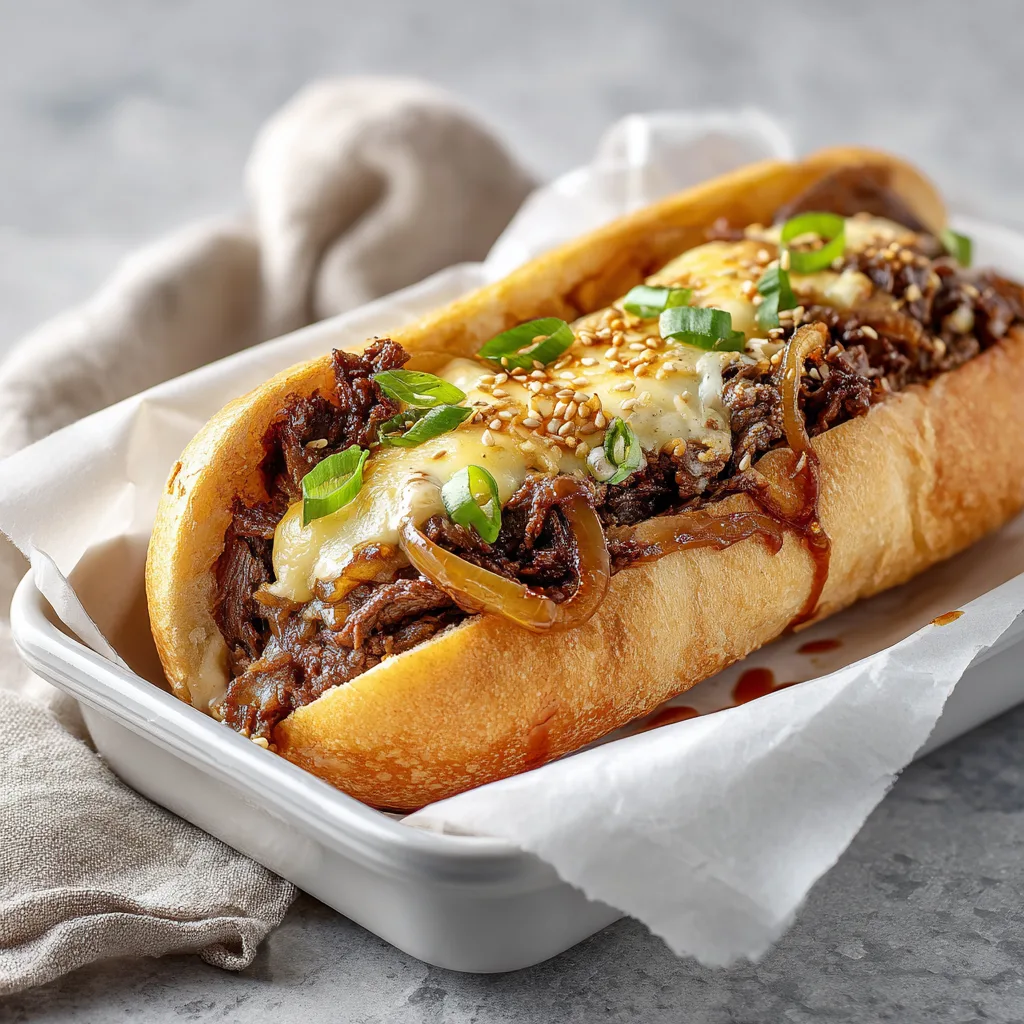
If you’ve ever wondered what happens when the bold, savory world of Korean BBQ collides with the iconic American cheesesteak, the answer is this: the Spicy Bulgogi Cheesesteak. It’s the kind of sandwich that stops you mid-bite — layers of tender, marinated bulgogi beef, sweet caramelized onions, a kick of gochujang heat, and pools of melted provolone cheese, all tucked inside a perfectly toasted hoagie roll. It’s messy, magnificent, and absolutely unforgettable.
This Korean fusion sandwich has been making waves in food culture for good reason. It takes two deeply beloved food traditions — the sweet-savory umami richness of Korean bulgogi and the comfort-food satisfaction of a Philadelphia-style cheesesteak — and fuses them into something greater than the sum of its parts. Whether you’re cooking for a crowd, treating yourself to a weekend project, or trying to impress someone special, the spicy bulgogi cheesesteak delivers every single time.
What Is Bulgogi?
Before we dive into the recipe, it’s worth appreciating where bulgogi comes from. Bulgogi (불고기) literally translates to “fire meat” in Korean, though the cooking method is less about open flames and more about the intensely flavorful marinade that transforms thin slices of beef into something extraordinary. The marinade typically includes soy sauce, sesame oil, sugar or Asian pear (which acts as a natural meat tenderizer), garlic, ginger, and green onions.
Bulgogi has been a cornerstone of Korean cuisine for centuries, originally prepared over open charcoal grills. Today, it’s just as commonly made on stovetop skillets and griddles — which makes it perfectly suited for a cheesesteak-style preparation. The sweet, savory, slightly smoky flavor profile of well-made bulgogi is what gives this fusion sandwich its irresistible depth.
Why This Spicy Bulgogi Cheesesteak Works So Well
The genius of this recipe lies in balance. Traditional bulgogi is slightly sweet and deeply savory. Gochujang — the fermented Korean chili paste — adds a complex, slow-building heat that’s far more interesting than plain hot sauce. Caramelized onions bring sweetness and body. Melted provolone (or American cheese, if you prefer the classic Philly approach) provides the creamy, salty counterpoint that ties everything together.
The hoagie roll is the unsung hero. You want something with a sturdy enough crust to hold the juicy filling without falling apart, but a soft enough interior to absorb all those incredible cooking juices. A lightly toasted roll makes all the difference.
Ingredients
For the Bulgogi Marinade & Beef:
- 1.5 lbs (680g) ribeye steak, very thinly sliced (partially freeze for easier slicing)
- 3 tbsp soy sauce
- 1 tbsp sesame oil
- 2 tbsp brown sugar
- 3 cloves garlic, minced
- 1 tsp fresh ginger, grated
- ¼ cup Asian pear or regular pear, grated (or substitute with kiwi)
- 2 green onions, finely sliced
- 1 tbsp gochujang (Korean chili paste), adjust to taste
- 1 tsp rice vinegar
- 1 tbsp toasted sesame seeds
For the Sandwich:
- 4 hoagie rolls or sub rolls, split and lightly toasted
- 1 large onion, thinly sliced
- 1 tbsp neutral oil (vegetable or avocado oil)
- 1 tbsp unsalted butter
- 8 slices provolone cheese (or American cheese)
- Extra gochujang, for serving
- Sliced green onions and sesame seeds, for garnish
Optional Add-Ins:
- Sliced mushrooms, sautéed
- Thinly sliced bell peppers
- Kimchi, chopped (for extra fermented heat)
- Sriracha mayo, for drizzling
Instructions
- Prepare the beef. Place ribeye in the freezer for 30–45 minutes until firm but not fully frozen. Slice as thinly as possible against the grain — ideally 1–2mm thick. Transfer to a large bowl.
- Make the marinade. In a small bowl, whisk together soy sauce, sesame oil, brown sugar, minced garlic, grated ginger, grated pear, sliced green onions, gochujang, and rice vinegar until combined. Pour over the sliced beef and toss well to coat every slice. Cover and refrigerate for at least 30 minutes, or up to 4 hours for maximum flavor.
- Caramelize the onions. In a large skillet or cast iron pan over medium heat, melt butter with oil. Add the sliced onion and cook low and slow, stirring occasionally, for 20–25 minutes until deeply golden and caramelized. Season with a pinch of salt. Remove from pan and set aside.
- Cook the bulgogi beef. Increase the heat to medium-high. Add a thin layer of oil to the pan and cook the marinated beef in batches (don’t overcrowd) for 2–3 minutes per batch, stirring frequently, until the beef is cooked through and slightly caramelized at the edges. The sugars in the marinade will cause some beautiful char — that’s exactly what you want.
- Combine and melt. Return all cooked beef to the pan along with the caramelized onions. Toss together. Lay slices of provolone cheese directly over the beef mixture. Cover the pan with a lid for 60–90 seconds until the cheese is fully melted and gooey.
- Toast the rolls. While the cheese melts, lightly butter and toast your hoagie rolls cut-side down in a separate dry pan or under the broiler for 1–2 minutes until golden.
- Assemble the sandwiches. Use a spatula to scoop generous portions of the cheesy bulgogi mixture into each toasted roll. Drizzle with extra gochujang if desired. Garnish with sliced green onions and a sprinkle of toasted sesame seeds.
- Serve immediately. These sandwiches are best eaten hot and fresh, while the cheese is still melted and the bread is still crisp.
Pro Tips for the Best Bulgogi Cheesesteak
Slice the beef ultra-thin. This is non-negotiable. Thin slices cook quickly, absorb the marinade fully, and give you that authentic bulgogi texture. The freezer trick is your best friend here — 30–45 minutes of chilling firms the meat enough to slice paper thin with a sharp knife.
Don’t skip the pear. Grated Asian pear (or regular pear) contains natural enzymes that break down muscle fibers, making the beef incredibly tender. It also adds a subtle fruity sweetness that balances the soy and gochujang. If you can’t find pear, a small piece of kiwi works as a substitute.
Caramelize your onions properly. Rushing the onions is one of the most common mistakes in cheesesteak-style cooking. True caramelization takes 20–25 minutes over medium-low heat. The reward is a deeply sweet, jammy onion that complements the savory beef beautifully.
Use a cast iron skillet. If you have one, use it. Cast iron retains and distributes heat evenly, which helps create those slightly charred, caramelized edges on the beef that add incredible flavor.
Adjust your heat level. Gochujang varies in spice level by brand. Start with 1 tablespoon in the marinade and taste before adding more. You can also offer extra gochujang on the side so each person can customize their heat preference.
Variations to Try
Spicy Bulgogi Cheesesteak Bowl: Skip the hoagie roll and serve the beef and onion mixture over steamed white rice or cauliflower rice with a drizzle of sesame dressing. Add pickled cucumbers and a fried egg on top for a complete bowl meal.
Mushroom & Bulgogi Cheesesteak: Add 1 cup of sliced cremini or shiitake mushrooms to the caramelizing onions for an earthy, umami-forward variation that stretches the recipe further.
Kimchi Bulgogi Cheesesteak: Fold ¼ cup of chopped, well-drained kimchi into the beef mixture just before melting the cheese. The fermented tang and extra heat take this sandwich to a whole new level.
Chicken Bulgogi Cheesesteak: Swap the ribeye for thinly sliced chicken thighs and use the same marinade. Cook time will be slightly longer — about 4–5 minutes per batch — but the result is equally delicious.
Lettuce Wrap Version: For a low-carb option, serve the bulgogi cheesesteak mixture in crisp butter lettuce cups instead of a roll. Top with pickled daikon, sliced chili, and sesame seeds.
Serving Suggestions
The Spicy Bulgogi Cheesesteak is a complete meal on its own, but it loves good company. Serve alongside:
- Crispy seasoned fries or sweet potato fries with a gochujang ketchup dip
- Quick pickled cucumbers — thinly sliced cucumbers tossed with rice vinegar, sugar, sesame oil, and chili flakes
- Korean coleslaw — shredded cabbage with a sesame-soy dressing
- Miso soup for a lighter, warming side
- Iced barley tea (boricha) or a cold Korean lager to balance the heat
Cultural Context: Where Two Food Worlds Meet
The Philly cheesesteak is one of the most iconic American sandwiches, born in Philadelphia in the 1930s. Meanwhile, Korean bulgogi has a culinary history stretching back to the Goguryeo era (37 BC – 668 AD). The Korean-American food fusion movement — which exploded in popularity through food trucks, pop-ups, and social media over the last decade — has become one of the most exciting and creative culinary crossovers in modern food culture.
The Spicy Bulgogi Cheesesteak represents exactly this spirit: honoring the integrity and flavor profile of both traditions while creating something entirely new. It’s fusion food at its most honest and delicious.
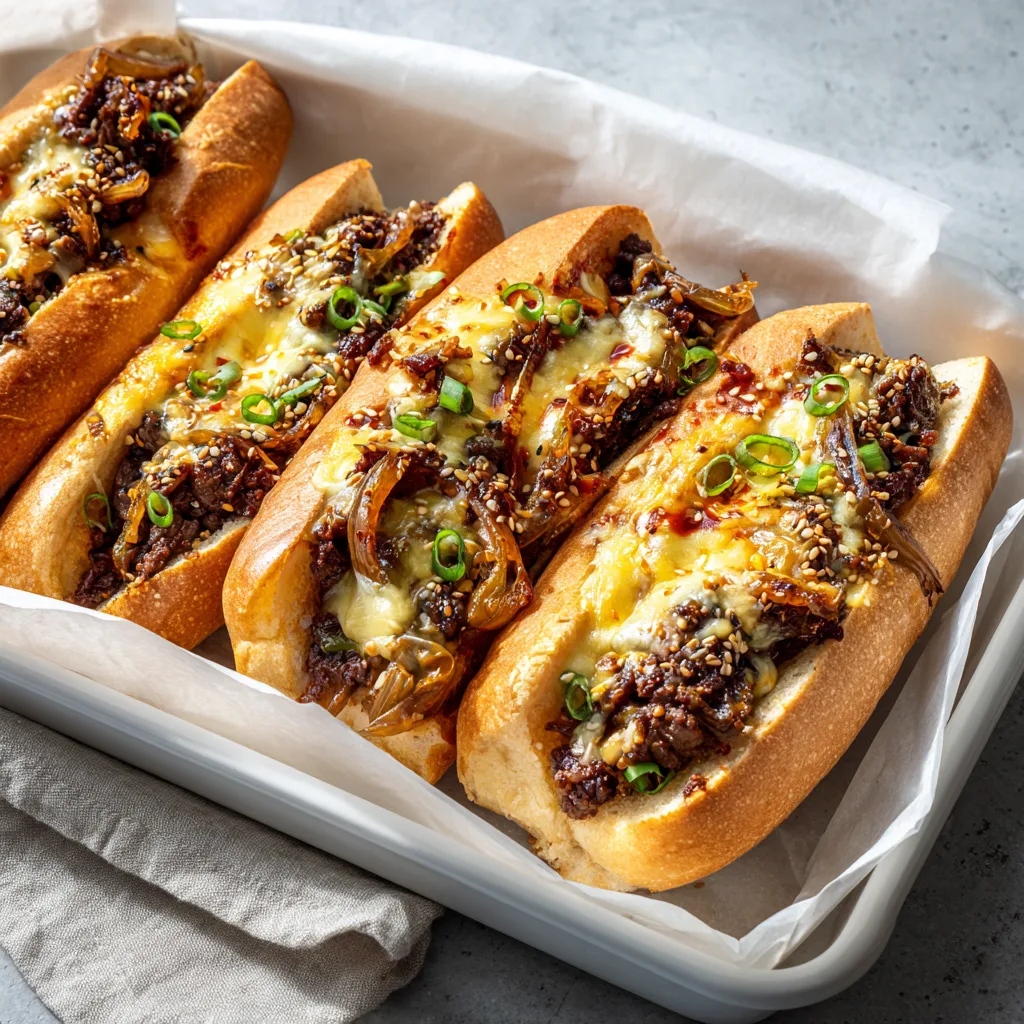
Spicy Bulgogi Cheesesteak
A bold Korean-American fusion sandwich featuring tender gochujang-marinated bulgogi beef, caramelized onions, and melted provolone cheese stuffed into a toasted hoagie roll.
Ingredients
Equipment
Method
- Place ribeye in the freezer for 30–45 minutes until firm. Slice as thinly as possible against the grain, about 1–2mm thick.
- Whisk together soy sauce, sesame oil, brown sugar, garlic, ginger, grated pear, green onions, gochujang, and rice vinegar. Pour over sliced beef, toss to coat, and refrigerate for at least 30 minutes.
- In a large skillet over medium heat, melt butter with oil. Cook sliced onion for 20–25 minutes until deeply caramelized. Season with salt, remove, and set aside.
- Increase heat to medium-high. Cook marinated beef in batches for 2–3 minutes per batch until cooked through and slightly charred at the edges.
- Return all beef to the pan with caramelized onions. Lay provolone slices over the mixture, cover with a lid, and let melt for 60–90 seconds.
- Toast hoagie rolls cut-side down in a dry pan or under the broiler for 1–2 minutes until golden.
- Scoop generous portions of cheesy bulgogi mixture into each roll. Drizzle with extra gochujang if desired.
- Garnish with sliced green onions and toasted sesame seeds. Serve immediately.
Notes
For best results, marinate the beef overnight. Partially freezing the ribeye makes ultra-thin slicing much easier. Adjust gochujang quantity to your preferred spice level. Kimchi can be added to the filling for extra heat and fermented flavor.
Make-Ahead & Storage Tips
The bulgogi beef can be marinated up to 24 hours in advance and kept refrigerated — in fact, a longer marinade produces even more flavorful results. Cooked bulgogi stores well in an airtight container in the refrigerator for up to 3 days. Reheat in a hot skillet for 2–3 minutes, adding a tiny splash of water to loosen the juices. Assemble the sandwiches fresh just before serving for the best texture and experience.