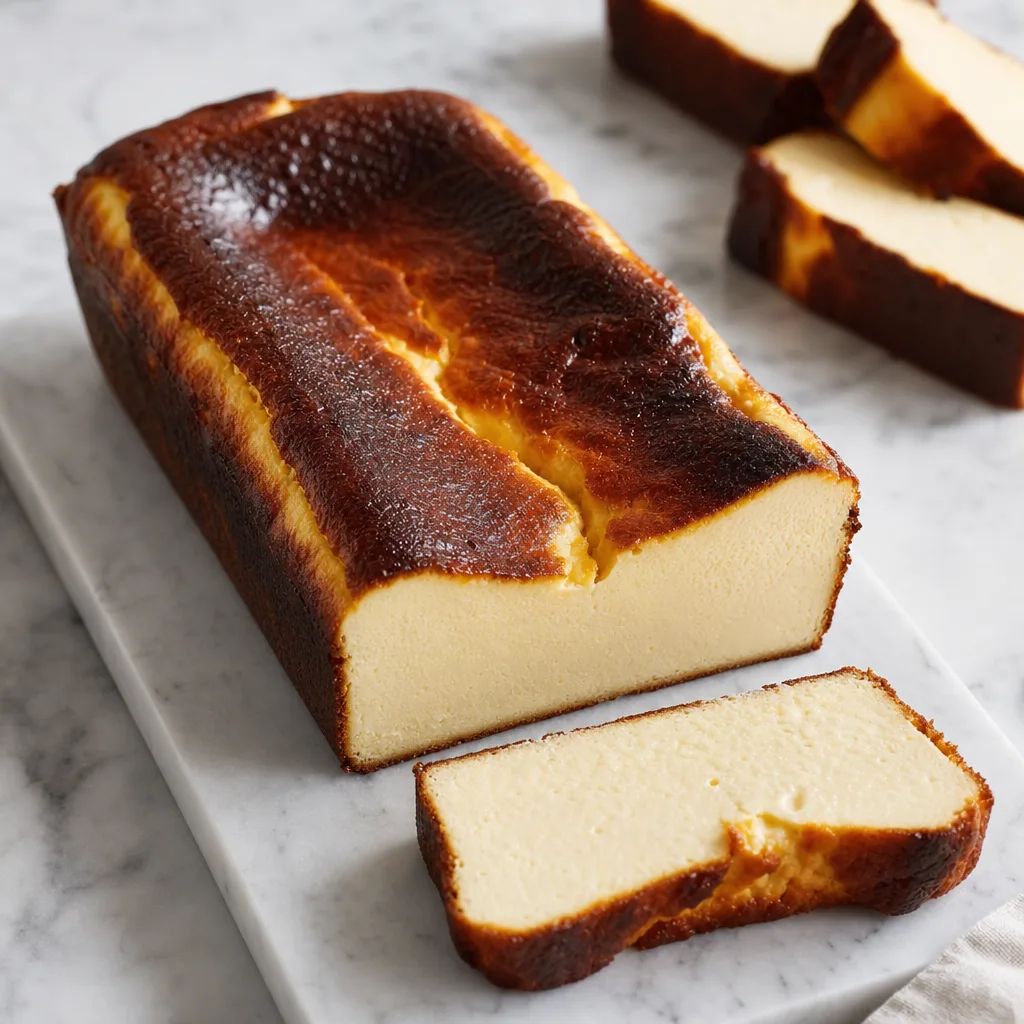
Ingredients
Equipment
Method
- Preheat your oven to 230°C (450°F). Position a rack in the lower third of the oven to minimize direct top heat on the loaf while still encouraging a deep caramelized top.
- Prepare a 9 x 5-inch loaf pan by brushing the interior lightly with butter or neutral oil, then line it with parchment paper. The paper should extend at least 2–3 inches above the pan on the long sides to contain the batter and create a high, crinkled edge that will brown attractively.
- Beat the room-temperature cream cheese in a large bowl with an electric mixer on medium speed until utterly smooth and free of lumps, about 2–3 minutes. Scrape down the sides of the bowl so the mixture is uniform.
- With the mixer running on low, gradually add the granulated sugar and beat until combined and slightly glossy, about 1 minute. Do not over-whip—aim to just dissolve the sugar into the cheese.
- Add the eggs one at a time, mixing briefly after each addition until incorporated. Keep the speed low to avoid incorporating excess air; this helps achieve a dense, custardy interior rather than a bubbly cake.
- Pour in the heavy cream and sour cream (or crème fraîche) and mix on low until the batter is smooth and silky, scraping the bowl as needed.
- Sprinkle the flour and the salt over the batter and fold or mix on low just until the flour disappears. Add the vanilla extract and lemon juice, if using, and mix briefly to combine. The batter should be pourable and uniform with no dry streaks.
- Pour the batter into the prepared, parchment-lined loaf pan. Tap the pan gently on the counter two or three times to release any large air bubbles. Smooth the top with an offset spatula if needed.
- Place the loaf pan on a rimmed baking sheet (this helps catch any overflow and makes it easier to transfer). Bake at 230°C (450°F) for 15 minutes. After 15 minutes, reduce the oven temperature to 200°C (400°F) without opening the door and continue baking for 25–30 minutes more, or until the top has developed a deeply caramelized, nearly blackened color in places and the center still jiggles slightly when you gently shake the pan.
- If the top is browning very quickly and the center is still underdone, move the pan to a lower shelf and continue at the reduced temperature; conversely, if the surface isn’t darkening enough, allow a final 3–5 minutes at the higher temperature but watch carefully to avoid a burnt, acrid flavor. Visual cues matter more than an exact time.
- When the cheesecake is done, remove the pan from the oven and let it cool completely on a wire rack for at least 2 hours. A central crack will likely appear as the cake settles—this is characteristic and attractive. After it reaches room temperature, refrigerate the loaf, still in its pan, for at least 4 hours and preferably overnight; chilling firms the interior and makes clean slicing easier.
- To serve, lift the cheesecake from the pan using the parchment overhang and place it on a cutting board. Trim any excessively dark or bitter edges if you prefer, then slice with a sharp knife warmed briefly under hot water and wiped dry between cuts for the cleanest edges. Dust with powdered sugar and add berries or fruit if desired.
Notes
Baking times are approximate; oven performance varies. Use visual cues: deep caramelization on the surface and slight jiggle in the center.
This recipe intentionally omits a biscuit crust to replicate the pure, skin-to-soft interior contrast typical of Basque cheesecakes.